


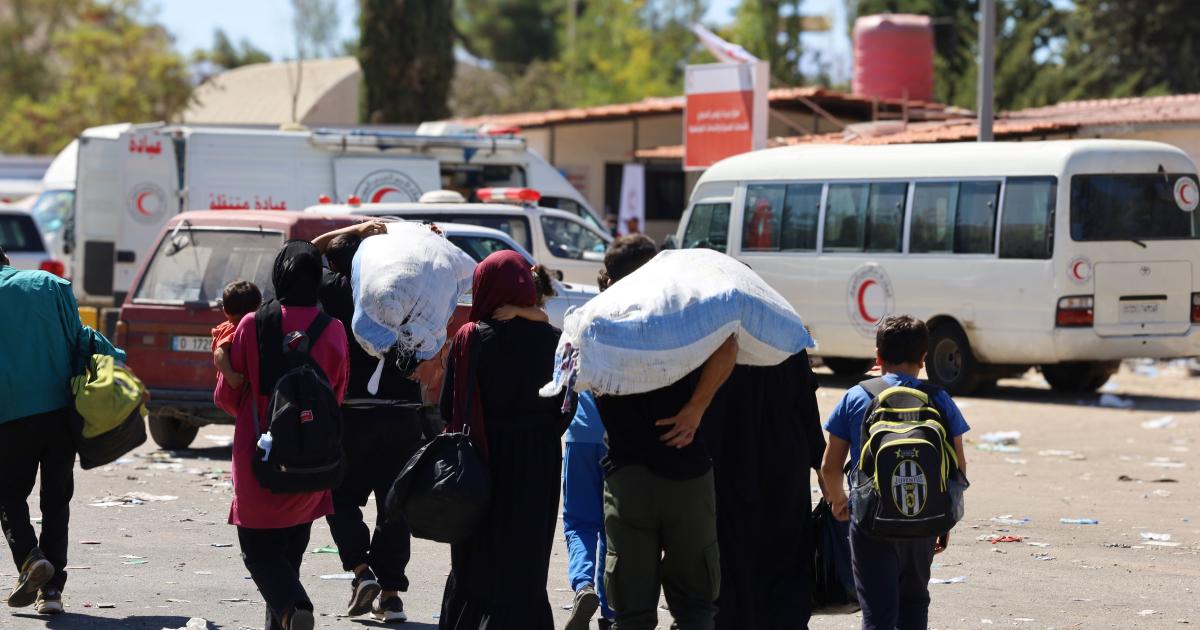

As of the 19th of October, it is estimated that 425,000 people (around 72% of Syrian and 28% of Lebanese) have crossed the border to continue their way to various governorates. Many are traveling by taxi, bus, or on foot. These individuals – primarily women, children, and elderly people – arrive exhausted having endured weeks of mounting fear and uncertainty. Their future remains unclear as they seek safety in a country already burdened by over a decade of conflict.
While thousands are being housed in designated shelters across Syria, the majority have been hosted in communities across Homs, Rural Damascus, Raqqa, Aleppo, Dara’a and other governorates. In a country where critical infrastructure, livelihoods, and the provision of essential services, including water, electricity and healthcare, have been severely eroded by years of conflicts and crises, any additional strain will be extremely difficult to absorb and will require an enhanced and coordinated collective humanitarian response.
In addition to assistance, protection and safety for all displaced persons, wherever they are, will also be tantamount. The ICRC is working in partnership with the Syrian Arab Red Crescent (SARC) to assess and meet the immediate needs of those crossing the border, staying in shelters or hosted in communities.
Emergency response has been bolstered, allowing the ICRC and SARC respond effectively to some of the more critical needs, such as water and hygiene, medical care, food and protection.
We acknowledge Source link for the information.