



Published July 21, 2025
Nikki Reisch, Director of the Climate and Energy Program at the Center for International Environmental Law, Johanna Gusman, Senior Attorney at the Center for International Environmental Law, and Upasana Khatri, Senior Attorney at the Center for International Environmental Law.
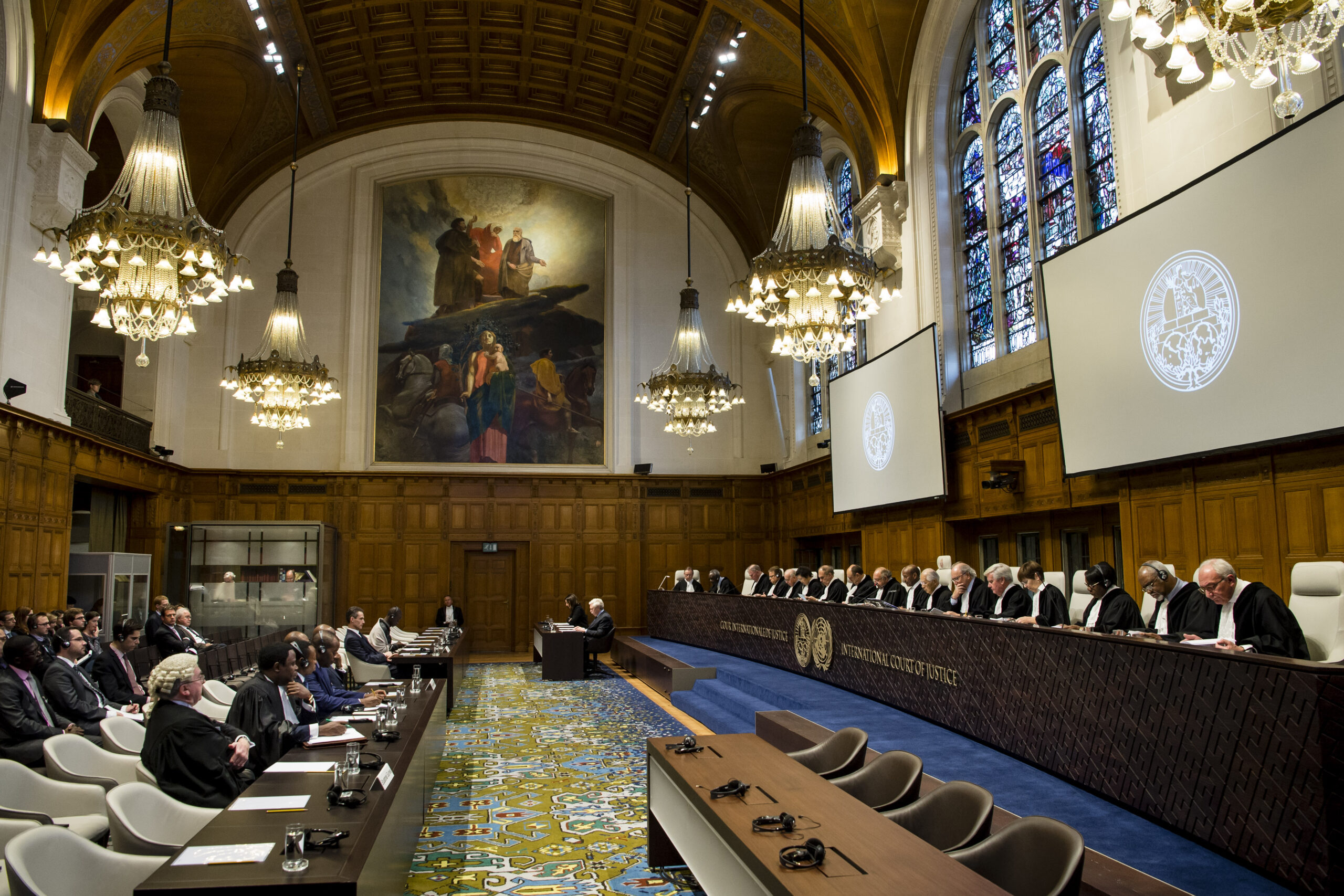
There were no oil company executives present at the International Court of Justice (ICJ) in December 2024, when the world’s highest judicial body heard arguments about States’ legal obligations on climate change. But make no mistake: fossil fuels were on trial. As State after State recounted the polluting conduct that has pushed the world to the brink, one truth was inescapable — there is no way to solve the climate crisis or remedy its mounting consequences without confronting its root cause: fossil fuels.
When the ICJ issues its historic advisory opinion on climate change on July 23, it has an opportunity to do what too many other judicial and political authorities have shied away from: name fossil fuels as the main culprit and spell out the legal duties not only to phase them out, but also to hold fossil fuel polluters to account.
Fossil Fuel Producers in the Hot Seat
The ICJ’s oral hearings on climate change put fossil fuel producers under scrutiny – and pitted them against the rest of the world. Standing before the judges in The Hague, numerous states and international organizations called out fossil fuel pollution as the central problem and phaseout as the only real solution. As the World Health Organization (WHO) told the Court: “[O]nly a rapid and equitable phase-out of fossil fuels can protect the health of both people and the planet from the climate crisis.”
When the cause of climate change and its irreversible damage is known, States are under a legal duty to prevent it — at very minimum, not to make it worse.
Yet, some countries continue to expand fossil fuel production. Vanuatu, which brought the issue of climate to the ICJ, together with Pacific Island youth, did not mince words in laying responsibility for the crisis at the feet of the world’s largest emitting fossil fuel producers. Far from reining in the oil, gas, and coal that are warming the planet, Vanuatu explained, those States are “proactively expanding their fossil fuel production and consumption, paying lip service to their climate commitments” and ignoring the “due diligence that was and is required from them.”
At the close of oral proceedings, Judge Sarah Cleveland asked parties directly: what are the specific obligations for States within whose jurisdiction fossil fuels are produced? The vast majority of countries that submitted answers agreed that settled principles of international law— including the transboundary harm and precautionary principles — require constraints on fossil fuel production and use.
International Courts Are Raising the Bar
On July 3, the Inter-American Court of Human Rights (IACtHR) issued its landmark advisory opinion on climate change, acknowledging that human rights law requires control of fossil fuels. In its sweeping ruling, the Court recognized fossil fuels as the root cause of the crisis, that certain sectors, like oil and gas, play an outsized role in generating planet-warming emissions, and that States must regulate and hold those corporate polluters to account. Like the International Tribunal for the Law of the Sea (ITLOS) in its climate advisory opinion of May 2024, the Inter-American Court outlined a heightened due diligence standard for preventing damage to the climate system, emphasizing that States’ have a legal obligation to control emissions from both public and private entities.
The Inter-American Court went even further, characterizing the obligation not to cause irreversible harm to the environment and the climate as jus cogens, meaning a prohibition that cannot be set aside and that all States must follow. As such, States must act to prevent and cease conduct that causes such harm. That includes at the very least, controlling and monitoring high emitters, like the fossil fuel industry, and implementing the ‘polluter pays’ principle where applicable.
Breaking the Fossil Fuel Taboo
The science unequivocally points to fossil fuels as the chief cause of the crisis, but pointing the finger at fossil fuel polluters remains taboo.
After nearly thirty years of UNFCCC negotiations, even mentioning fossil fuels is still akin to blasphemy, even under agenda items like “just transition” — the very process meant to wean the globe off oil, gas and coal. Naming the known source of the planetary crisis should not make countries a pariah amongst peers. And refusing to name it won’t make the responsibility of the biggest fossil fuel polluters disappear.
Even as UN experts affirm the need to uproot the fossil economy and tackle the crisis at its source, resistance lingers in multilateral fora. In June, the UN Special Rapporteur on Human Rights and Climate Change, Elisa Morgera, presented a groundbreaking report to the Human Rights Council emphasizing the urgent need to defossilize our economies. The report was the first from the UN to focus squarely on the human rights harms of fossil fuels and the corresponding obligations to phase them out this decade. Yet, mere mention of fossil fuels within international decisions remains controversial.
On the heels of Morgera’s presentation, oil and gas-producing countries with vested interests in the status quo blocked any reference to fossil fuels in this year’s Human Rights Council resolution on climate change. But removing “fossil fuels” from the text does not alter the facts or absolve States of responsibility: fossil fuels are driving climate destruction, and States must rapidly reduce their production and use. That’s why a growing number of States support the call for a Fossil Fuel Non-Proliferation Treaty, a legal agreement to tackle the problem at its source and cooperate in implementing existing legal duties to phase out oil, gas, and coal. Nothing short of that will protect human rights or the planet from climate destruction and harm.
When Politics Break Down, the Law Can Break Through
The ICJ can make clear that fossil fuel phaseout is not a matter of political opinion but of legal obligation. Adding its legal imprimatur to the imperative to phase out oil, gas, and coal, could hasten the just transition to a livable future. With broad jurisdiction to interpret all sources of international law, from treaties to custom, the ICJ can look beyond the climate agreements and ground the obligation to tackle the root cause of the crisis in environmental and human rights law, including the transboundary harm rule and longstanding principles of state responsibility.
If the duty to phase out stems from multiple laws, countries cannot hide behind the Paris Agreement’s silence on fossil fuels. Showing how climate duties stem from diverse laws limits countries’ recourse to legal loopholes in one treaty or another, and multiplies the avenues for accountability, bolstering demands for climate action under complementary frameworks. And when multiple sources of law require or prohibit the same thing, it is that much harder for any State or company to say the rule doesn’t apply to them or they don’t have to act.
This is no time to tiptoe or hesitate. Climate devastation is blatant, and courts should be equally blunt in spelling out what it will take for countries and companies to comply with their legal obligations to prevent, mitigate, and remedy such harm. Science makes clear that fossil fuel phaseout is necessary and effective to curb climate change and its disastrous consequences. Courts should, too. Far from opening the floodgates to more litigation, clear legal guidance from the Court could make future cases unnecessary if States and corporations take their cues directly from the Court’s conclusions. And one thing is certain: we cannot wait the decades it would take to litigate the phaseout or sue over every aspect of the transition to a fossil-free future.
No deference is owed to climate-destructive conduct. The leeway States have to determine how they fulfill their legal obligations does not permit conduct that makes compliance impossible.
In implementing their duty to prevent significant harm to the climate system, the environment, and human rights, States retain no discretion to inflict such harm or to allow others to do so. But that is precisely what continuing to authorize, subsidize, and engage in fossil fuel production and use does. States cannot claim to limit emissions and transition away from fossil fuels while subsidizing fossil fuels on the side. To suggest that it’s up to States whether to curb fossil fuel production and use would be to conflate discretion with derogation.
The ICJ should join ITLOS and the IACtHR in ending the era of impunity for big polluters, and make clear that the law applies to businesses, too.
The Science is Settled; the Law Should Be Too
When Pacific Island States and other climate-vulnerable communities brought climate change to the ICJ, it was not only a reflection of their courageous leadership, on the frontlines of climate impacts and the forefront of the movement for climate justice. It was also a reflection of their profound frustration with rich countries’ political paralysis on climate and their reckless refusal to phase out fossil fuels.
For small island states, the consequences of fossil-fueled climate change are not abstract; they are as concrete and devastating as the eroding coastlines and rising seas, the storm-ravaged cities and submerged cultural grounds. For too many communities, climate change means lost land, home, livelihoods, place, and identity.
The International Court of Justice should rise to the occasion and build on the foundations laid by ITLOS and the IACtHR. It should not stop at recounting the science.
To acknowledge fossil fuels as the cause of the climate crisis, but stop short of recognizing the necessity and duty to phase them out would be like diagnosing a disease but withholding the cure.
Regardless of where the ICJ’s advisory opinion lands, the verdict on fossil fuels is in. The facts are plain and the legal duties flow from them: fossil fuels drive climate change, and States have a legal obligation to phase them out. If the law requires preventing the harmful effects of climate change, then it requires preventing its known causes. To hold otherwise would be to deprive the law of its reason and reach. The science is settled; it is high time for the law to be, too.