



Published November 6, 2025
By Barnaby Pace, Senior Researcher at the Center for International Environmental Law.
This piece is part of a multi-part CIEL blog series unpacking the law, politics, and power shaping COP30 — and what it will take to deliver climate justice.
Artificial Intelligence (AI) products are everywhere— from, writing and research assistants, to children’s toys to controlling military operations.
Users are constantly having AI tools pushed in front of them, even when they add little value, present well-known flaws like hallucinations, and can be used to help spread disinformation— including climate disinformation. AI queries and image generation requests depend on energy-hungry data centers that require vast processing power and constant cooling with enormous amounts of water. These facilities are multiplying across the United States and globally, accelerating demand for electricity.
Companies are racing to deploy AI tools, scared of missing out on the AI hype; in turn this is driving concern over where the power will come from. The fossil fuel industry is exploiting the moment to try to justify its own expansion.
Big Tech’s Climate Illusion
Big tech firms are ploughing hundreds of billions of dollars into a race for AI capabilities, with analysts estimating that big tech investments in the US, powered by data center spending, has surpassed US consumer spending.
Behind every AI model are sprawling data centers— physical infrastructure that requires massive processing capacity, constant electricity to stay online, and large quantities of water to cool both the data centers and any fossil-fuelled power plants powering them. Globally, data centers consume around 1.5% of all electricity, and that number could double or even triple within the next few years. A study by the Öko Institut and Greenpeace estimates data center emissions at 212 million tons of CO equivalent in 2023, rising to 355 million tons by 2030.
Big tech companies have sought to appear climate-friendly for years by making massive purchases—on paper, at least—of renewable power contracts and carbon credits. The five biggest tech companies claim that their data centers match their power demand with “100% renewable” energy, though this claim doesn’t reflect the actual source of the electricity they use. The Guardian recently revealed that the five biggest tech companies’ actual emissions may be seven times higher than officially reported.
And fossil fuel companies have noticed.
Promoting Carbon Capture, Spreading Myths
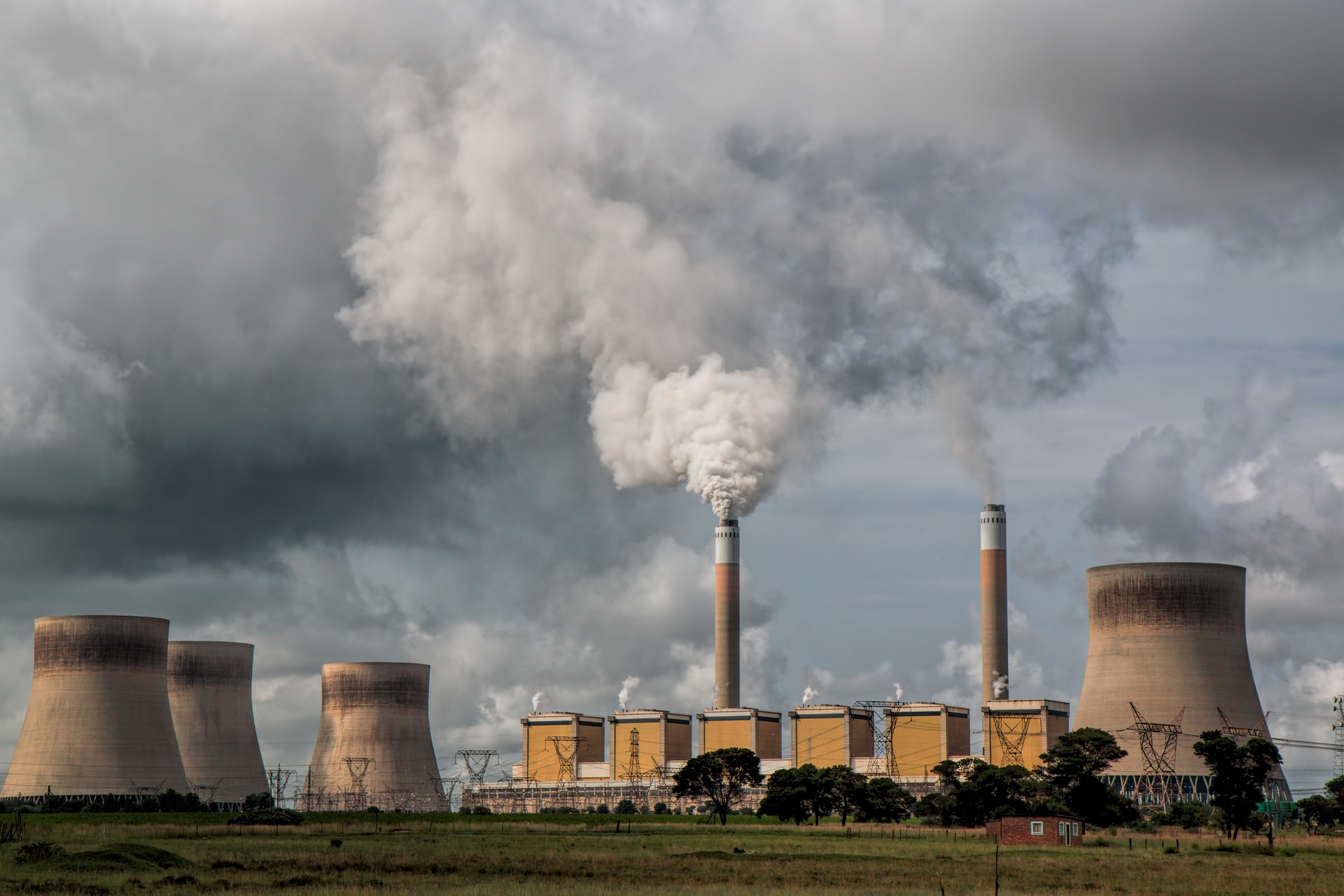
Fossil fuel companies and pro-carbon capture trade groups are capitalizing on AI’s growing energy demand to justify a new wave of dirty fossil-fuelled power plants— often wrapped in the fig leaf of carbon capture and storage (CCS) to appeal to big tech companies’ desire to be seen as green. This, despite the evidence that CCS is a smokescreen push by fossil fuel companies to make it appear that oil, gas, and coal can magically turn into “low carbon” fuels.
ExxonMobil, for instance, claims that AI demand for reliable energy means that “As the largest producer of oil and natural gas in the United States, ExxonMobil is uniquely positioned to meet this challenge.” The company announced plans for a gas power plant equipped with CCS to supply “high-reliability electricity” to a data center.
Chevron has made similar pitches for new gas power plants to power data centers with “affordable, reliable energy.” The company hinted at the use of carbon capture without committing to it instead saying they will be “designed with the flexibility to integrate lower carbon solutions, such as carbon capture and storage.”
Pitches for fossil fueled data centers are not limited to the US. Italy’s fossil fuel giant Eni is marketing new fossil gas power plants with CCS as “blue power,” citing data centers’ rising demand as justification. Meanwhile, the Global CCS institute, a trade group backed by major fossil fuel players, hosted an event at the 2025 New York Climate Week promoting gas power plants with CCS or merely “capture-ready” plants as ideal infrastructure for data centers.
Even coal power is trying to come back. One company is now advertising US-based “ultra-low-carbon coal power” for fast-growing applications like data centers and artificial intelligence, a move supported by an April 2025 US executive order pushing coal as a power source for data centers.
The Carbon Capture Smokescreen
Carbon capture has become the fossil industry’s favorite lifeline — a convenient myth that lets polluters claim they can keep burning fossil fuels while staying “low-carbon.”
But the record tells a different story. 88% of CCS projects have failed, while close to 90% of proposed CCS capacity in the power sector was never built. Of the eight coal projects funded with $684 million in US public money, only one — the Petra Nova project in Texas — ever came online, capturing far less CO2 than claimed and then used captured CO2 to extract more oil, making it likely a net emitter.
Since 2005, the fossil fuel industry has spent $954 million lobbying the US government in favor of carbon capture, with half of the lobbying by just fifteen organizations, all of which have direct ties to fossil fuels. In return fossil fuel companies stand to receive over $30 billion in US subsidies for CCS through 2032 according to an official estimate.
The US government continues to heavily subsidize the technology, offering up to $85 per ton of captured CO2 through the 45Q tax credit—regardless of whether the gas is buried underground or used for increasing oil production, as over 80% of captured carbon capacity has been used historically. This undermines the claimed climate benefits from CCS when more CO2 is released from burning the oil produced.
A 2023 Oxford University report found that CCS deployment would cost the world at least $30 trillion more than a pathway based primarily on renewable energy, energy efficiency, and electrification. On the other hand, renewables are recognised as the quickest to deploy new power sources.
AI and CCS: The Perfect Mismatch
The attention to AI’s exploding power needs are being exploited to try to extend the life of fossil fuels dressed up with a CCS disguise. Fossil companies pitch gas and coal plants with CCS as the “affordable” and “reliable” solution to AI’s electricity hunger — despite the reality that CCS, largely fails to work, adds costs, delays, and risks without ever solving the emissions problem.
The implication that fossil fuels in general are essential for an “affordable” and “reliable” energy system is a well-worn and false narrative spread by oil, gas, and coal companies.
This strategy isn’t about meeting AI’s power needs; it’s about ensuring fossil infrastructure remains relevant to extend the lifetime of fossil fuels and delay the implementation of alternatives. CCS falsely lets oil and gas giants appear green, delay the renewable transition, and continue polluting — all while collecting massive government handouts.
Meanwhile, real solutions already exist. Solar and wind power are regarded as very reliable, not least because sunrise and sunset, as well as weather patterns, are highly predictable. Additionally, advancements in flexibility and storage technologies help manage variability in renewable generation.
Renewables stand out as both the lowest-cost and quickest-to-deploy power generation. Renewable power has been the cheapest form of power for the last 10 years, while the cost of new gas-fired power has hit a 10-year high. Even in the US, where gas prices are only a quarter of prevailing gas prices in Europe and Asia, unsubsidized new solar plants are within touching distance. Carbon capture systems, even with very generous subsidies, inevitably add substantial costs on top of other fossil power costs.
Renewables are the truly affordable and reliable energy of the 21st century — not fossil fuels wrapped in carbon-capture fantasy.
The Costs of the Illusion
CCS is more than a waste of money– it actively harms communities and ecosystems.
Forgotten in the fossil fuel pitches for gas power is that CCS can enable and actually worsen harm to communities already burdened by fossil fuel infrastructure with increased air pollution. CCS can also pose significant risks of leakage and other harms stemming from transporting and storing carbon dioxide.
CCS perpetuates the fossil-fuel-driven climate crisis, biodiversity loss, the damage to public health caused by burning fossil fuels, as well as the other harms from petrochemical and plastic pollution. It perpetuates environmental injustice with industrial pollution in already overburdened neighborhoods.
Each dollar spent on CCS diverts resources from genuine climate solutions: renewables, electrification, energy efficiency, and public investments in clean infrastructure.
The Fossil Fuel Hallucination
Ultimately, CCS is merely a hallucination tied to the latest hype surrounding AI. The fossil fuel industry has found in AI a new narrative to justify its survival — and in carbon capture, the perfect illusion. But CCS doesn’t make fossil fuels clean; it just keeps them burning. It doesn’t curb emissions; it locks them in.
An analysis by CIEL found that at least 480 CCS lobbyists registered for the COP29 climate negotiations. Many will return to COP30, selling the fantasy that fossil fuels are essential for AI.
AI may be transforming the digital world, promising solutions to virtually every problem, including climate change, but it must not be used to entrench the industries destroying the physical world. The world doesn’t need fossil fuel-powered AI. It needs a clean-powered digital future — one rooted in renewable energy, accountability, and justice.
AI’s Power ProblemPower demand from AI is a real problem. AI was recently estimated to use up to 20% of data center’s power use, slightly more than bitcoin mining uses at present, but it could soon take up nearly half of data center power usage (excluding cryptocurrencies) in the very near future. Globally data centers accounted for around 1.5% of all electricity use in 2025 but analysts (who are assuming that AI demand is not a massive bubble) are projecting ballooning energy consumption with electricity demand could double or even triple within the next few years.. This spiking demand for electricity is already impacting areas with a concentration of data centers being built, pushing power bills higher. At present around 40% of the world’s data centers are in the United States with it also being the most important market for data center growth. However, according to a preprint of a forthcoming study 95% of US data centers are in areas with dirtier than average electricity grids, using around 4% of total US electricity consumption. Data center energy demands come with sizable carbon emissions, 212 million tons of CO2 equivalent emissions in 2023 and a projected 355 million tons in 2030 according to a recent study by the Öko Institute and Greenpeace. Data centers then join a list of growing sources of electricity demand, competing with efforts crucial to our response to the climate crisis through electrifying our buildings, transport and industry with renewable energy. Locking in further fossil fuelled power generation would only take us backwards. The purpose of carbon capture as a lobbying move though is to extend the lifetime of fossil fuels and delay the implementation of alternatives.
|

The post CCS and AI: A New Escape Hatch and Vehicle for Misinformation appeared first on Center for International Environmental Law.


