



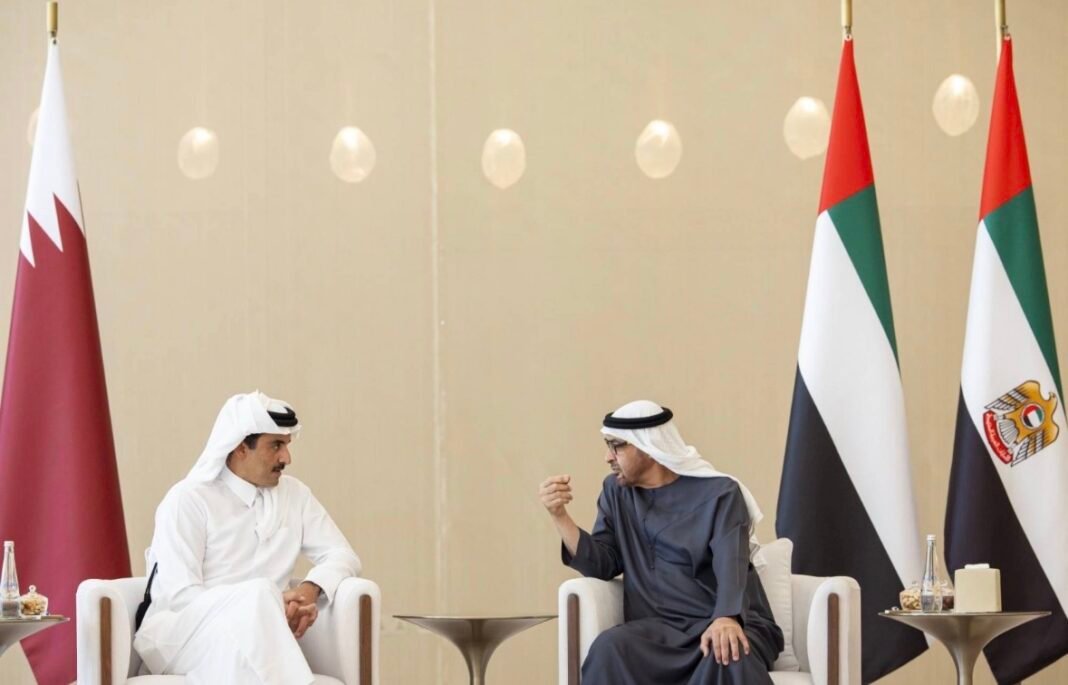
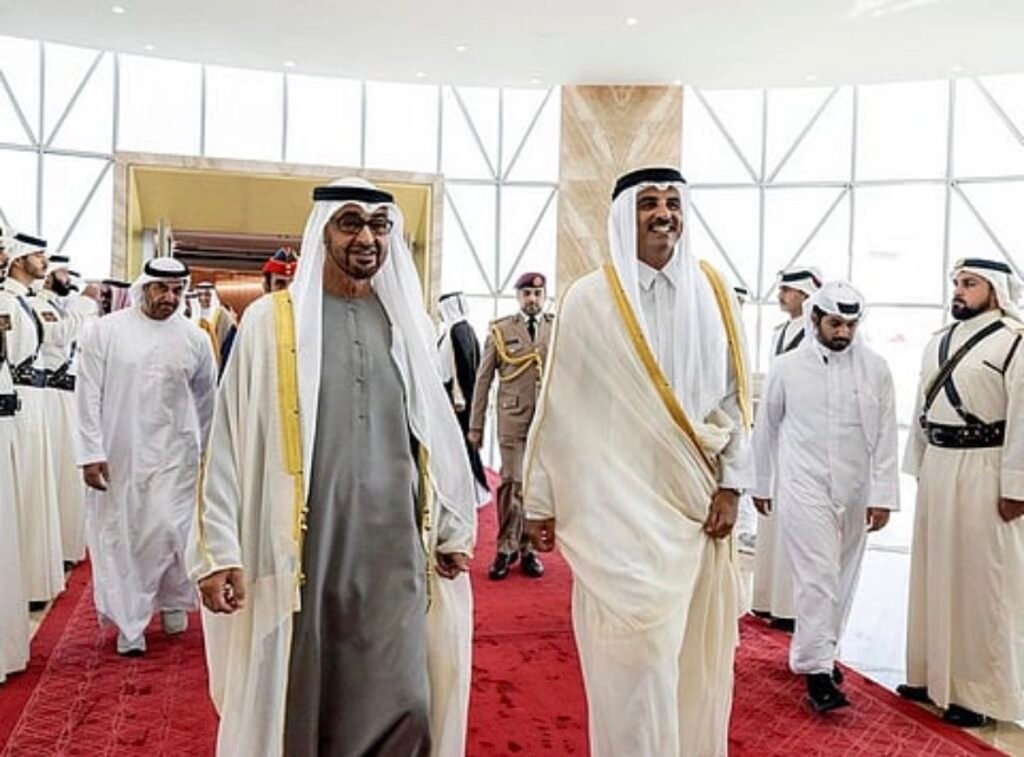
La rencontre entre Mohamed ben Zayed Al Nahyan et Tamim ben Hamad Al Thani dépasse largement le cadre du protocole diplomatique. Elle intervient à un moment charnière pour la région du Golfe, où les équilibres évoluent et où la coordination est devenue une nécessité stratégique. À Abou Dhabi, au-delà des images officielles et des déclarations de courtoisie, une vision plus large se dessine : celle de reconnaître que l’influence collective de la région repose sur sa cohésion interne.
The United Arab Emirates and Qatar are bound by history, geography, comparable social structures, and a shared ambition for accelerated modernization. The years of tension demonstrated the political and economic costs of fragmentation. The current phase, marked by reconciliation and gradual normalization, opens the door to a more mature partnership—less emotional, more strategic, and firmly grounded in long-term interests. This face-to-face meeting between the two leaders embodies that evolution. It reflects a determination to move decisively beyond past misunderstandings and anchor the relationship in a constructive and durable framework.
The regional context demands such realism. Persistent crises across the Middle East, geopolitical realignments, great-power rivalries, and uncertainties in global energy markets compel Gulf states to act in concert. The UAE and Qatar possess considerable assets. Both are major financial actors with powerful sovereign wealth funds and global investment reach. Both have invested heavily in economic diversification, technological innovation, and proactive economic diplomacy. Together, they can exert greater influence in international negotiations, shape global energy trajectories, and contribute more effectively to regional stability.
This meeting also represents a concrete opportunity to structure genuine joint action. Beyond traditional bilateral exchanges, it could mark the beginning of more institutionalized strategic dialogue, whether in diplomatic coordination, security cooperation, or industrial partnerships. The complementarities are evident. The UAE’s experience in economic diversification and diplomatic projection can align with Qatar’s gas strength and its financial and media influence. In a rapidly changing international environment, such synergy could become a decisive strategic lever.
There is also a powerful symbolic dimension. The visible rapprochement between Abu Dhabi and Doha sends a signal to the wider Gulf Cooperation Council. Unity is not a slogan; it is a condition for strength. The Gulf’s international credibility depends on its ability to speak with coherence when its core interests are at stake. The meeting between Mohamed bin Zayed and Tamim bin Hamad illustrates this growing awareness. It suggests that the period of division belongs to the past and that the future lies in strategic coordination.
Economically, the prospects are significant. The global energy transition, the rise of artificial intelligence, the transformation of supply chains, and the competition to attract talent all present areas where enhanced cooperation could yield tangible results. Both states have the financial capacity, institutional stability, and strategic vision required to build ambitious joint projects. In a world defined by uncertainty, this convergence can provide a stable and reassuring regional platform.
Beyond state interests, this dynamic can also benefit civil societies, universities, research centers, and emerging entrepreneurs. A structured and stable relationship fosters human exchanges, academic partnerships, and cultural collaboration. It contributes to shaping a more integrated regional identity—one capable of sustaining global ambitions while preserving its distinctiveness.
This moment can therefore be seen as another step toward greater political maturity in the Gulf. Stability is not proclaimed; it is built through repeated gestures, confidence-building mechanisms, and a shared strategic vision. By meeting and affirming their commitment to cooperation, the two leaders are laying the foundations for a relationship that may evolve toward deeper strategic integration. If this trajectory is sustained, it could durably reshape the regional landscape and strengthen the Gulf’s position as a pole of stability and influence on the international stage.

