



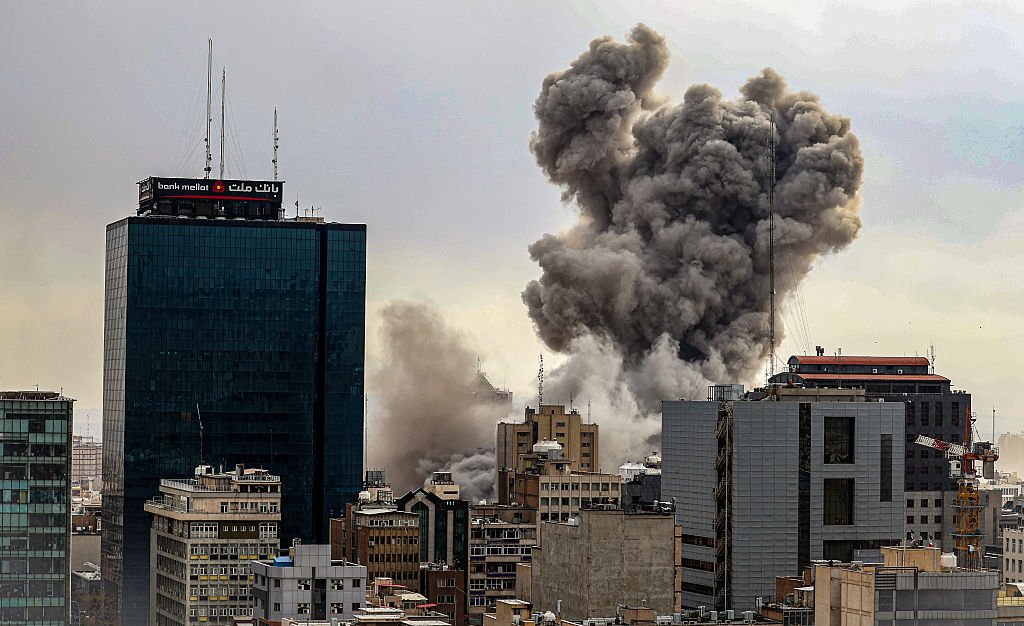
Wars are rarely sold on lies alone. They are also built on well-known facts.
Saddam Hussein was a brutal dictator. The Iranian regime represses and kills its own people. Venezuela lived under corrupt authoritarian rule and the Cuban regime’s record on human rights and freedom has been abysmal. There is little disagreement on any of these points in modern political discourse.
They also form the justification used to launch wars of choice.
In each case, a complex situation ends up being reduced to a binary moral decision, echoing the 2003 divide that cast America as decisive and Europe as hesitant. The question then shifts almost immediately from what should be done to whether one is willing to act. From that point on, deliberation is seen as hesitation and doubt is seen as weak or disloyal. This is where the real damage begins.
If truth is the first casualty of war, nuance is the second.
Iraq still stands as the clearest example. The claims about weapons of mass destruction proved false and accusations of terrorism were never substantiated. Later, when these arguments collapsed, the moral framing coalesced around the merits of removing a brutal dictator from power.
Once this kind of political crusade gains momentum, nuance is drowned under calls for “moral clarity.” Any complex discussions are soon ignored by a political environment reshaped by inertia. Such debate would require acknowledging that a regime can be brutally oppressive while also recognising that military intervention may deepen instability rather than resolve it. It also forces a distinction between moral judgment and strategic choice. In too many cases, that distinction is the first thing to disappear.
The current digital environment accelerates this intellectual collapse by rewarding moral clarity over complexity, constraining the space for sound strategic judgment.
The current war in Iran is following a similar path. The nature of the regime is not in question, but what’s at stake has been absorbed into a broader justification for escalation. War proponents paint criticism of their approach as sympathy for the regime and the debate begins to close in on itself as politicians are forced to choose sides.
Cuba sits in an early phase of this same process. Regime change is discussed as the only outcome rather than the risks of chaos and instability. Internal dynamics are flattened into a single storyline that leaves little room for deeper understanding to inform strategic choices. What disappears is the ability to think clearly about consequences and by the time policy choices become urgent, the options are poor and few.
Nuance is not indecision but the capacity to simultaneously hold two or more truths in tension long enough to see the full shape of a problem. It allows for the possibility that opposing a regime does not commit one to supporting a war against it. It creates space to ask what follows the initial intervention, rather than assuming the removal of a leadership structure automatically resolves any underlying conditions.
Without this space for complexity, strategy becomes boxed in and non-kinetic tools lose primacy. Decisions start to feel predetermined and risks get absorbed into the narrative rather than examined on their own terms. The result is not clarity but strategic blindness masquerading as certainty.
Across most European capitals, there is still a more complex view of the Iran war. The nature of the regime in Tehran is not in question, but whether the war unfolding against it will produce anything resembling regional or global stability. That distinction still exists in European thinking, even as it’s becoming harder to sustain.
For Washington and Tel Aviv, the war is presented as necessary and justified. In that context, the space between opposing the Iranian regime and questioning the war has little space to breathe.
Europe is being pulled toward alignment with a narrative it does not fully accept, while lacking the cohesion and weight to impose a different one. European governments continue to speak in the language of restraint and international law, but they are doing so in a context moving in the opposite direction. The longer this continues, the more costly it becomes to sustain a position that distinguishes between the Iranian regime and the war against it.
Cuba sits at the beginning of the same narrative trajectory, where a repressive system risks being folded into a familiar moral framing where a forced regime change is the only answer. Europe must get ahead of this curve early and insist on the distinction between a toxic regime and forcefully toppling it.
Europe has not lost this perspective, but it’s now operating in a world where its closest allies have.
The Iran war and the limits of American power
The war with Iran has exposed a familiar paradox in American power. The United States…
4 minutes
Source:
www.euractiv.com