



This year, Greenland found itself the focus of a transatlantic feud – one that tested European resolve and projected Mette Frederiksen as a composed premier. And after fending off the president of the Free World, she seized the moment to snatch a home victory.
Yet as it turned out, the Danish election had little to do with the geopolitical crosswinds the kingdom has faced in recent months.
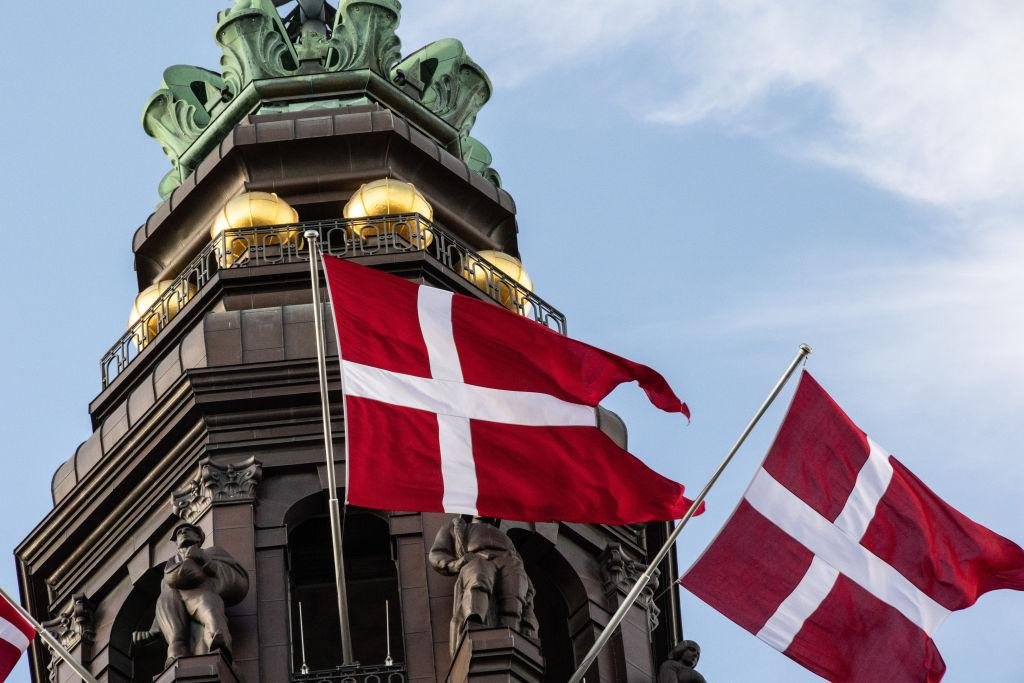
The Danish Parliament, residing at Christiansborg Palace (aka. Borgen – namesake to the infamous TV-series on Danish politics) was draped with Danish flags throughout election day. Across the street, two other flags were hoisted outside Copenhagen City Hall, reminders of the external tensions brewing around the small country.
On the eastern flagpole flew the Ukrainian flag – Copenhagen has been one of the biggest contributors to Kyiv’s fight against Russia. On the western pole, the Greenlandic flag fluttered. As if to remind Danes what they were up against, the US ambassador to Denmark (and PayPal co-founder) Ken Howery showed up unannounced while votes were being tallied, popping into the election gathering of the governing parties before making a swift exit.
To international onlookers, the stakes were clear: Danish sovereignty in an increasingly predatory world.
But voters were looking elsewhere. Ballots were cast on anger about losing a public holiday, the country’s oversized pig population, and a wealth tax – all issues on which Frederiksen’s sang-froid in the face of Trump held little sway.
The result is a scattered electorate, with only three parties inching past 10% of the vote. It makes for some tricky maths as any viable coalition will consist of at least four parties.
On Thursday, King Frederik X – after consultations with all 12 political leaders – asked Frederiksen to try to form a government combining the Greens, her Social Democrats, and the centrist Social Liberals. Such a formation would exclude the pipe-smoking foreign minister Lars Løkke Rasmussen. But his support would still be needed to secure a majority.
Danish media pundits figure that centrist Rasmussen is likely to demand some key ministries in return – including his current one. But after heading Denmark’s right wing for a decade until 2019, his involvement may prove a deal-breaker for the far-left Red-Green Alliance – whose backing would be essential for any left-leaning government.
Frederiksen spent much of this year stressing the need to show strength and unity. Though the threat may have passed, the coming weeks will once more put these qualities to the test.
Roundup
EU-US trade deal approved despite concerns over ‘imbalance’ – MEPs have backed the EU-US trade deal on the condition that the Socialists’ demands are kept in the final text. The deal scraps tariffs on hundreds of US industrial and agricultural goods while slapping a 15% blanket tariff on the EU.
Commission says porn sites fail child safety requirements – Four major adult content websites, including Pornhub, are failing online child safety requirements, the Commission said. This follows an investigation since May 2025 over concerns that four major adult content websites were failing to protect minors by not having effective age checks in place.
Parliament adopts ‘historic’ anti-corruption directive – The European Parliament on Tuesday approved a new EU anti-corruption directive. The proposal comes after the cash-for-influence scandal of Qatargate in 2023 and sets out rules that will harmonise definitions and criminal penalties for corruption offences such as bribery, embezzlement, and trading in influence at the EU level.
Across Europe
Iran’s missile threat to Europe – Iran’s firing of two ballistic missiles at a US base in the Indian Ocean last week has raised fresh concerns that European capitals could fall within range. This is the first attack on Diego Garcia, the remote atoll located 3,800 km from Iran’s mainland.
France moves to curb carcinogenic cadmium in fertilisers – France is set to tighten limits on cadmium, a carcinogenic heavy metal found in everyday foods, as new evidence shows widespread exposure across the population. Cadmium can accumulate in soil and crops when used in phosphate fertilisers, and is a known carcinogen at high levels of exposure.
German Armed Forces Association calls for war economy readiness – The defence industry needs to reach a higher production capacity, including by introducing round-the-clock operations, the chairman of the German Armed Forces Association said this week. European governments have been pushing their national defence industry to increase its output amid the rapid rearmament of the continent.
Source:
www.euractiv.com