





You’re reading Rapporteur on Monday 27 April. This is Eddy Wax, joined by Nicoletta Ionta in Brussels.
Need-to-knows:
🟢 Fraud allegations are rocking an EU advisory body🟢 Magnus Brunner summoned by MEPs over Taliban meeting🟢 Hungary’s Péter Magyar is expected in Brussels this week
On the roundabout: Iran exhibition draws political attention
Today’s edition is powered by SUSE
Sovereignty Self Assessment
Explore how digital sovereignty reshapes risk, regulation and resilience across your cloud estate. Take SUSE’s free self-assessment to see where you stand today, uncover key risks to contracts and data, and get clear, practical steps to strengthen control without slowing innovation.
Learn more here.
From the capital
The story begins on a Monday morning in early March, when folded white envelopes containing anonymous letters appeared on staff desks. Some even dropped through their letterboxes at home.
Puzzling over this strange missive that day were dozens of staffers at the European Economic and Social Committee, or EESC, a consultative body with an annual budget of €165 million that brings together employers and trade unionists to advise EU policymakers.
Though not regarded as a centre of power in Brussels – and regularly the subject of calls for its abolition – the EESC is now playing host to a gripping drama that has not previously been reported.
A few dozen letters reached their targets before the order went out to stop their distribution. Signed “staff representatives,” they alleged that Isabelle Le Galo Flores, the organisation’s secretary general since 2024, had rigged public contracts for her friends. Enclosed was a photo purportedly showing Flores posing with successful bidders.
“We are writing to you today in order to share the concern, widespread among staff … concerning serious misconduct and misappropriation of public funds by our secretary general,” the letter said.
Two days later, EESC President Séamus Boland acknowledged the situation in an email to staff, stating he was aware of the letters. “I want you all to know that I take this matter very seriously and that we are monitoring this situation very closely. I am taking all the appropriate measures with all the competent authorities,” he wrote.
In the weeks since, things have taken a turn, with some staffers expressing concern that an internal investigation to root out the apparent whistleblowers has gone too far. “Halt the witch hunt,” three trade unions wrote in a joint email circulated last week, claiming that emails and internet usage had been subject to review – a step they described as excessive and arbitrary.
An EESC spokesperson rejected the allegations, stating that the review, now concluded, “did not in any way involve accessing staff email accounts or internet usage.” The spokesperson added that the EU’s anti-fraud office, OLAF, had opened an examination and that further comment would be inappropriate at this stage.
The scandal is all the 700 staff are talking about, albeit in hushed tones. “The atmosphere is really horrible,” one staffer told me. “People are afraid.”
If you have more information to share please get in touch. You can reach me on Signal using the handle EddyWax.94
Brunner summoned over Taliban visit
MEPs have summoned Magnus Brunner, the EU commissioner for home affairs, to answer questions about a planned visit by a Taliban delegation to discuss deportations, parliamentary officials told Rapporteur. The exchange will take place behind closed doors in Parliament’s civil liberties committee.
The move comes amid mounting unease in Brussels over EU engagement with Afghanistan’s rulers. Euractiv was first to report that a delegation could travel to Brussels before the summer for talks on returning Afghan nationals.
Tineke Strik, a Green MEP, criticised the plan as “completely insane,” citing persistent human rights violations in the country. “The Taliban is not recognised by any EU government, nor the Commission as [the] legitimate government of Afghanistan and several Taliban Ministers are currently facing EU sanctions. I demand an explanation from Commissioner Brunner,” she told Nicoletta.
Magyar to meet von der Leyen
Péter Magyar is set to meet Ursula von der Leyen in Brussels on Wednesday for talks aimed at unblocking billions of euros in EU funds that have been frozen over rule-of-law and corruption concerns, a Commission official confirmed. It’s the PM-in-waiting’s first visit to Brussels since his election win.
But as far as some people are concerned, the election’s not over yet. Magyar’s colleague Gabriella Gerzsenyi, a former EU Commission official, circulated an email to MEPs on Friday addressing allegations made during the campaign. She and party official Márton Hajdu had been accused of acting as spies for Viktor Orbán, Russia and China by … MEP Klára Dobrev. Dobrev’s socialists were wiped out in the election.
“We strongly reject all accusations,” she wrote, characterising the claims as a desperate attempt by Dobrev to stay politically afloat. Gerzsenyi added that legal action would follow: “We will proceed with the necessary legal steps under national law.”
Forget the E6, what about the E21?
Luxembourg’s PM Luc Frieden has slammed efforts by Germany and France to strengthen the supervisory powers of the EU’s financial watchdog.
His remarks come after the so-called E6 group – which includes Germany, France and the next four biggest European economies – wrote to the Commission last month expressing support for centralising financial oversight at the Paris-based European Securities and Markets Authority (ESMA).
“There is an ‘E21’, if you speak of an ‘E6’, which means that six countries do not decide what 27 have to do,” Frieden told Euractiv at last week’s EU summit in Cyprus. The conservative leader also criticised Brussels’ push to introduce new bloc-wide taxes. Read the interview.
Ex-commissioners vie for College of Europe job
The College of Europe in Bruges, the EU’s elite finishing school, is set to appoint a new rector this week following the departure of Federica Mogherini, who resigned last year after her arrest on fraud allegations.
Cecilia Malmström, a former EU trade commissioner, is among the shortlisted candidates, Euractiv’s Magnus Lund Nielsen first revealed on Friday.
Other heavyweights are also in contention, including Frans Timmermans, the former Commission executive VP, and Marc Van der Woude, the senior judge who, according to MLex, announced last month that he would step down as president of the EU’s General Court (the one below the Court of Justice). Several other candidates are understood to be in the mix. A final decision is expected on Thursday.
EU launches Mandelson probe
Things are heating up in Brussels for Peter Mandelson, the British ambassador to the US who was sacked over his ties to Jeffrey Epstein. OLAF, the EU anti-fraud body, confirmed to Euractiv’s Elisa Braun that it has opened an investigation into Mandelson, who served as EU trade commissioner from 2004 to 2008.
The confirmation follows an earlier disclosure by the European Commission that it had launched an internal investigation and referred the case to OLAF. Documents released in February by the US Department of Justice suggest Mandelson shared sensitive government information with Epstein, including details of a €500 billion eurozone bailout in 2010.
Mandelson denies any wrongdoing. He was arrested at the time in the UK over allegations of misconduct in public office. OLAF declined to comment further.
Schuman roundabout
IRAN EXPO: A group of Iranian activists displayed photographs of victims of the country’s Islamic regime in central Brussels. The travelling exhibition has already stopped in Berlin and Paris, and is set to continue to Milan and Geneva.
Denis Ducarme, a former minister and current MP, attended the event alongside Melissa Amirkhizi, a Brussels city councillor. Organisers told Magnus that those involved were working on a freelance basis and that the exhibition had no financial backing.
The capitals
BERLIN 🇩🇪
Friedrich Merz on Friday rejected calls to increase borrowing in discussions over the EU’s 2028-2034 budget, urging a reprioritisation of spending instead. Speaking at a leaders’ meeting in Cyprus, he said higher debt and joint European bonds were “out of the question” from Germany’s perspective, adding that many in the bloc shared Berlin’s stance.– Victoria Becker
PARIS 🇫🇷
Emmanuel Macron said an incident in which a gunman charged a media gala attended by Donald Trump over the weekend was “unacceptable,” adding that violence has no place in a democracy and offering his support. EU foreign policy chief Kaja Kallas later said she was relieved there were no casualties, stressing political violence has no place.– Christina Zhao
MADRID 🇪🇸
Pedro Sánchez on Sunday criticised agreements between the centre-right Popular Party and the far-right Vox to govern the regions of Aragón and Extremadura, singling out a controversial “national priority” clause favouring Spaniards in access to public aid. Speaking at a rally in Córdoba ahead of the 17 May elections in Andalusia, he said the deals “trample on the Constitution and violate the principle of non-discrimination.”– Inés Fernández-Pontes
LISBON 🇵🇹
A Portuguese parliamentary working group has recommended a minimum of 72 hours of energy autonomy for critical infrastructure following the 28 April 2025 blackout. Rapporteur Paulo Moniz said regulators stressed local, cost-effective resilience over grid expansion. The draft report calls for legally mandated requirements, including at least 24 hours for less critical facilities, alongside regular audits with publicly reported results.– Alexandra Noronha
BRATISLAVA 🇸🇰
Kežmarok city mayor and MP Ján Ferenčák said he was attacked by an unidentified man on Saturday evening, sustaining a head injury. Speaking to JOJ 24, he suggested the assault may be linked to his criticism of the governing coalition. Recently expelled from Hlas, Ferenčák has accused authorities of targeting him. The party rejected his claims.– Natália Silenská
BELGRADE 🇷🇸
The Venice Commission on Friday issued nine recommendations to align Serbia’s controversial judicial laws with European standards, following a dispute with the EU over judicial independence. Enlargement Commissioner Marta Kos warned that failure to comply could jeopardise more than €1.5 billion in funding under the Growth Plan. The Serbian government previously said it would implement the measures.– Bronwyn Jones
ZAGREB 🇭🇷
The Three Seas Summit will take place in Dubrovnik this week, alongside a business forum bringing together policymakers and investors. The initiative links countries between the Black, Adriatic and Baltic seas to advance energy, transport and digital infrastructure across 13 EU states. Flagship projects include the Via Carpathia highway and energy interconnectors aimed at boosting regional security and reducing reliance on external routes.– Bronwyn Jones
PRISTINA 🇽🇰
A court on Friday convicted three Kosovo Serbs over their role in the September 2023 Banjska attack, in which a police officer was killed. Most of the armed group fled to Serbia after a shootout. Milan Radoičić, then-vice president of Srpska Lista, the main Kosovo Serb party backed by Belgrade and closely aligned with President Aleksandar Vučić’s SNS, later admitted organising the group behind the attack. He remains in Serbia despite repeated calls from Kosovo and EU officials for accountability.– Bronwyn Jones
Also on Euractiv
INTERVIEW: Stop shaming older victims of AI scams, Interpol official says
Europe’s older generation is becoming a prime target in the AI scam era, as fraudsters…
7 minutes
Interpol official Nick Court warns that AI-driven fraud is rapidly scaling across Europe, with cases rising sharply as criminals deploy deepfakes, multilingual tools and psychological manipulation to target victims, particularly older people, often turning romance scams into investment fraud or sextortion.
In an interview with Euractiv, he argues that stigma around victims is helping criminals thrive, stressing that fraud is now one of Europe’s most prevalent crimes and that responsibility must also fall on tech platforms with the capacity to detect and disrupt it.
Free passage is fading: Europe needs a navy
Since January 2025 it was clear that US disengagement could eventually leave Europe’s vital sea…
4 minutes
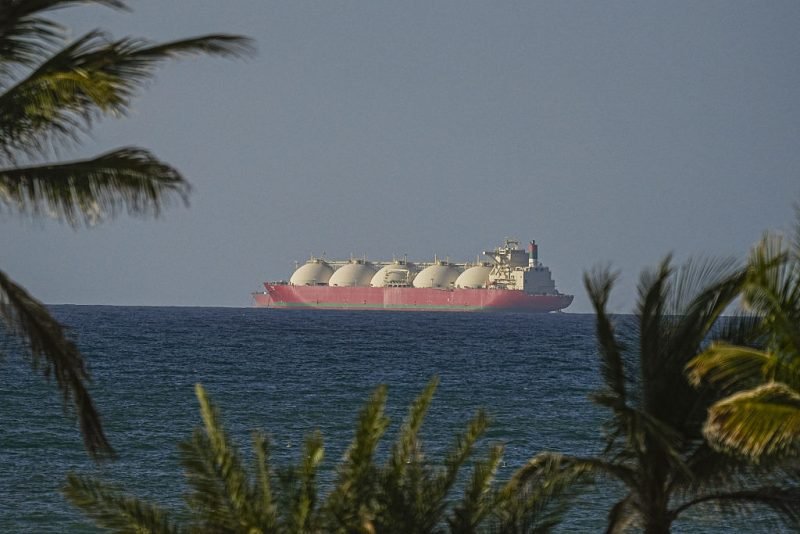
Euractiv columnist Chris Kremidas-Courtney warns that Iran’s imposition of discriminatory transit charges in the Strait of Hormuz risks setting a destabilising precedent, encouraging other coastal states to monetise critical chokepoints and erode the rules-based maritime order.
With US enforcement capacity constrained, he argues Europe must rapidly develop credible blue-water naval power to safeguard vital sea lanes, as legal norms alone will not prevent coercion or fragmentation of global trade.
Contributors: Magnus Lund Nielsen, Thomas Moller Nielsen, Elisa Braun
Editors: Christina Zhao, Sofia Mandilara, Charles Szumski
Source:
www.euractiv.com