



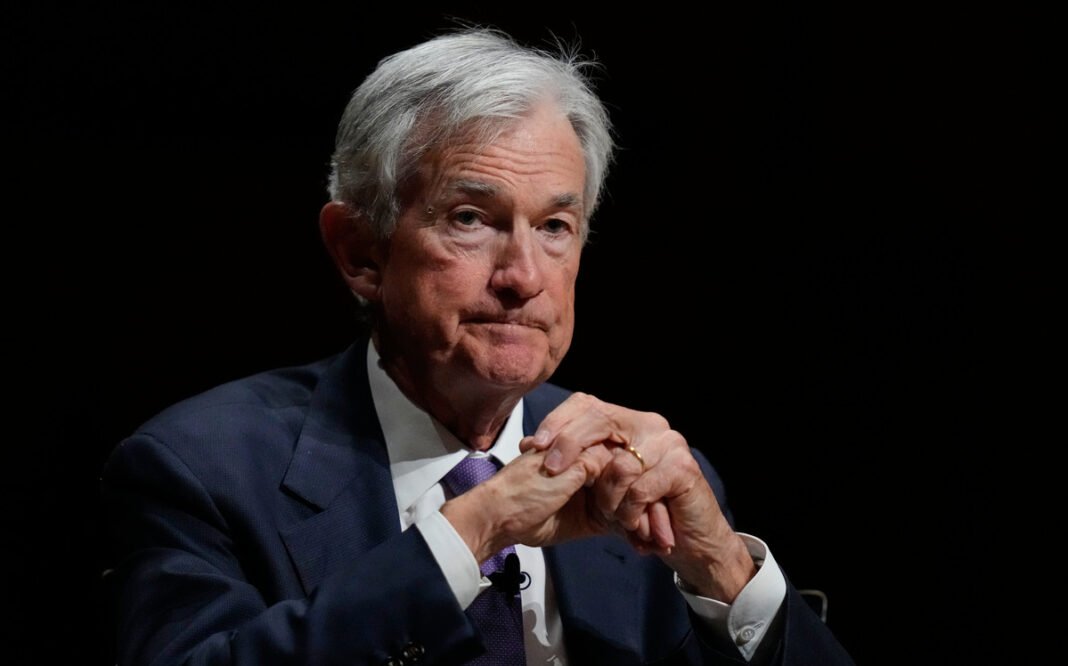

Warsh got additional news today: Powell in his post-meeting press conference said he plans to stay on as a governor after his chairmanship ends, which will at least temporarily prevent Trump from having another opening to fill on the central bank’s board. Powell made clear that his decision was tied to the Justice Department’s moves to open a criminal investigation into the Fed’s headquarters renovations and that he is otherwise ready to retire.
The DOJ said on Friday that it would defer to the Fed’s inspector general on an investigation. That opened the way for Sen. Thom Tillis (R-N.C.) to end his blockade of Fed nominees, since he saw the probe as an attempt to undermine central bank independence.
Powell, who has expressed similar fears, said that while he was “encouraged” by the DOJ move, he would wait to leave the Fed board until the probe was “well and truly over, with finality and transparency.” He said he planned to keep a low profile after his chairmanship and congratulated Warsh, who was approved on a party-line vote by the Senate Banking Committee earlier Wednesday, on the advancement of his nomination.
“There’s only ever one chair of the Federal Reserve board,” Powell told reporters.
A Fed chief has to wrangle a sprawling committee of Washington-based board members and regional Fed presidents, a task to which Powell has dedicated extensive effort. He has followed the practice of his predecessor, Janet Yellen, who would talk to every committee member before each rate-setting meeting.
Warsh previously served as a Fed board member from 2006 to 2011. But he will have to build goodwill among its current policymakers, especially in the wake of his stark criticism of the institution. He has suggested that Fed officials should speak publicly less often, though as chair he will not have direct control over whether they do so.
The statement language objected to by the three policymakers — Cleveland Fed President Beth Hammack, Minneapolis Fed President Neel Kashkari and Dallas Fed President Lorie Logan — was in previous iterations of the document, which is generally only tweaked in small ways after every meeting to reflect the latest economic developments.
But central bank officials have grown more wary about the potential for a reacceleration in inflation in the wake of the war in the Middle East, which has persistently driven oil prices above $100 a barrel. Their dissents indicate that they now see rate hikes as being just as likely as rate cuts.
“In considering the extent and timing of additional adjustments to [the Fed’s policy rate], the Committee will carefully assess incoming data, the evolving outlook, and the balance of risks,” according to the statement. The word “additional” suggests a bias toward rate decreases, since the Fed most recently cut rates three times late last year.
There was also a dissent on the substance of the decision itself. Fed board member Stephen Miran, who last year served as chief economist to Trump, preferred to lower rates. But Miran is serving on an expired term, and Warsh has been nominated to that open board seat, meaning Miran will have to leave once Warsh is confirmed, as expected.
The last time four officials dissented during a Fed rate meeting was October 1992.
It is unclear whether Warsh will immediately push for rate cuts, though Trump has indicated that’s what he expects. Powell in his press conference warned that Fed independence is “at risk.” The president has attempted to fire fellow board member Lisa Cook, a matter before the Supreme Court, and the Fed has also fought with the administration over its subpoenas.
“We’re having to resort to the courts to enforce our legal — it’s not so much independence — it’s really the ability to make monetary policy without political considerations,” he said. “We’ve been successful so far, but that’s not over.”
Source:
www.politico.com