





Edwin Hubble found that distant galaxies travel away from Earth faster than nearer ones.Credit: New York Public Library/SPL
Universe: A Guide to Everything Helge Kragh Reaktion (2026)
What is the Universe? Should we think of it as a thing or a set of ideas? Acclaimed historian of science Helge Kragh grapples with such deep questions in his latest work, which he acknowledges is “a small book about a big subject”.
Universe is a distillation of Kragh’s many writings on the history of cosmology. Rather than describing what the Universe looks like, his focus is on how conceptual models have evolved, from those of the ancient Greeks to today’s. Presenting these frameworks in simple, dramatic and refreshing ways, his account is lucid, coherent and captivating.
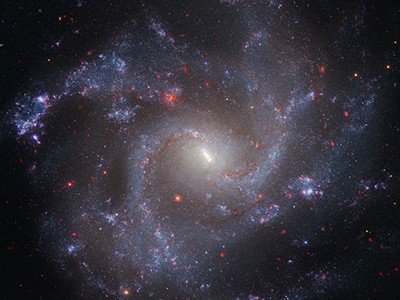
The expanding Universe — do ongoing tensions leave room for new physics?
The Universe, Kragh explains, refers to “everything that has, has had or will have a physical existence” and includes “all kinds of matter and energy as well as the totality of space and time”. Terms such as cosmos and cosmology — as well as cosmetics and cosmetology — are rooted in the Greek word kosmos, which refers to order, harmony and beauty.
The Universe is not an object, Kragh reasons, because one must be able to stand outside an object to fully appreciate its nature. Furthermore, it transcends observation. Because light travels at a fixed speed in a vacuum, we can see only part of the Universe, out to roughly 14 billion parsecs (about 46 billion light years), although that’s vast enough to encompass 500 billion galaxies.
The apparent nature of the Universe varies with the observer’s perspective and Kragh takes us on a journey through many proposed types of universe. Aristotle and other ancient Greek philosophers argued that the planets and stars moved around Earth in a series of concentric spheres; then, in the sixteenth century, Nicolaus Copernicus proposed that the Sun instead lay at the centre. Other models place the Milky Way at the heart of the cosmos, whereas some have no centre at all. Some theoretical universes look much the same everywhere, have existed forever and will continue to do so. Others change with time and have a point of creation or death.
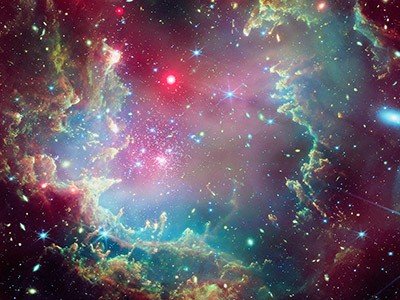
Why we still don’t understand the Universe — even after a century of dispute
Each description is carefully crafted but, as the concepts grow more complex, they become less familiar and more challenging to comprehend. Theories such as infinite time and space, and whether the cosmos has a centre or an edge, are hard to understand because they lie beyond our experiences.
Source:
www.nature.com