



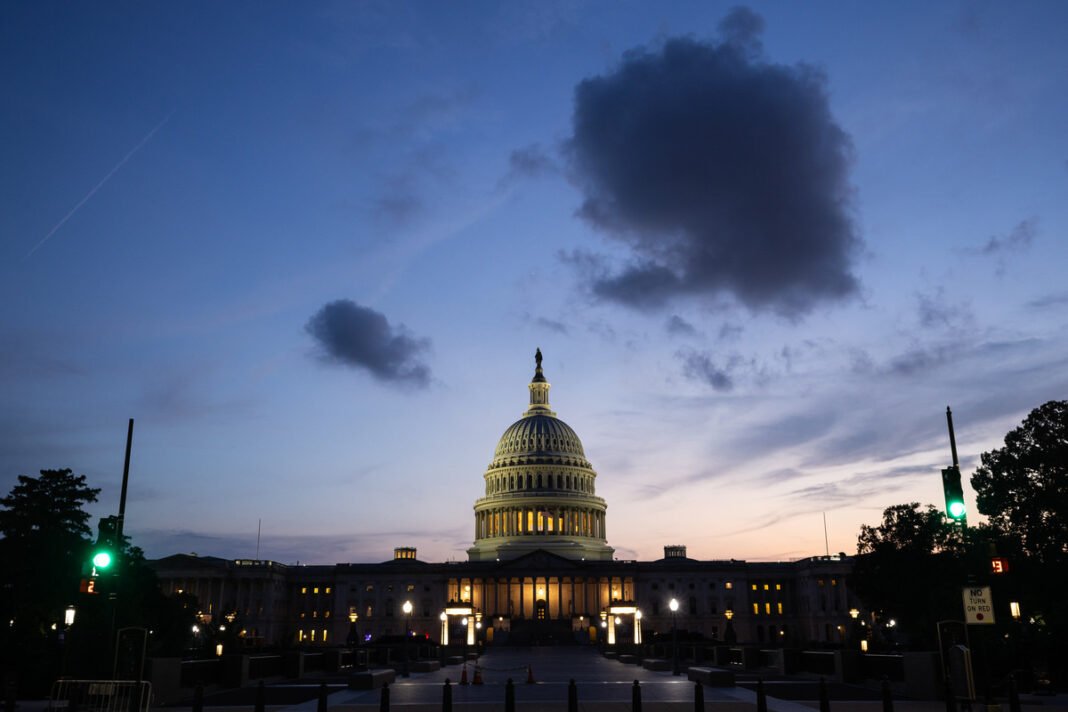

The Senate is scheduled to take up the annual defense authorization measure this week, a major leadership goal of the July legislative sprint ahead of the upcoming extended recess and around which Graham was set to play a key role during floor debate.
“There are no words to describe his impact on the foreign and domestic policy of the United States,” Senate Armed Services Chair Roger Wicker (R-Miss.) said on social media Sunday, adding that “he stood solidly for freedom and strength and he fought for liberty across the globe.”
The most immediate source of anxiety for leadership could be what effect Graham’s absence could have for Blanche, who is scheduled to testify Wednesday before the Senate Judiciary Committee with hopes of being confirmed by the first week of August.
The nominee has faced blowback from members of both parties over Blanche’s handling of the Jeffrey Epstein files and, most recently, his oscillation over the fate of a $1.8 billion “Anti-Weaponization Fund” critics feared would be used to pay damages to Trump’s supporters.
Outgoing Sens. Thom Tillis (R-N.C.) and John Cornyn (R-Texas), who sit on the Senate Judiciary Committee, haven’t committed to voting for him. Another retiring Senate Republican, Bill Cassidy of Louisiana, and GOP moderate Lisa Murkowski of Alaska are also among those who could waver on Blanche if and when his nomination comes to the floor. Graham was a reliable “yes.”
GOP leaders will also need to install a new chair of the Budget Committee as the Trump administration ramps up pressure on Congress to move another party-line package with a $350 billion infusion for the military, along with other conservative priorities.
Graham was set to take the lead on a Senate effort, recently meeting with Defense Secretary Pete Hegseth to discuss using the filibuster-skirting reconciliation bill to bolster the Pentagon amid the ongoing conflict with Iran. He was a major cheerleader for both efforts as a staunch Trump ally and an avowed defense hawk, and his death is a setback for the broader reconciliation push that was already facing steep odds given a truncated window for action and lack of agreement about what provisions should go into the legislation.
The next chair of the Senate Budget Committee will be selected largely by seniority, though the next two Republicans in line after Graham — Sens. Chuck Grassley of Iowa and Mike Crapo of Idaho — already chair the Judiciary and Finance panels, respectively. The next two Republicans in line after that are Sens. Ron Johnson of Wisconsin, who currently chairs the Permanent Subcommittee on Investigations, and Roger Marshall of Kansas.
Source:
www.politico.com