



See All Key Ideas
The giant anteater is easy to turn into a curiosity. Its head narrows into a long tube. It sees poorly. It opens termite mounds with strong claws and gathers insects with a tongue that can reach far beyond its mouth. Its life can appear simple until someone tries to study it. Then it becomes a set of hard questions: where it feeds, how far it ranges, what cover it needs, and how roads, fire, drought, and ranching change its chances of survival.
These were the questions that drew Lydia Möcklinghoff into the Pantanal, the vast wetland in western Brazil and neighboring countries. She died on July 3rd in a plane crash near Campo Grande, Brazil, during a flight connected to Pantanal fieldwork. The cause of the crash was still under investigation. For her colleagues, students, readers, listeners, and the many children who knew her through radio reports from Brazil, the news carried a particular cruelty. She had made a difficult, overlooked animal visible. She had done so with humor, discipline, and a rare gift for explanation.
She did not begin with anteaters. Born in Wilhelmshaven, Germany, she studied biology in Giessen and Würzburg, with an interest in tropical ecology and animal behavior. Earlier, she had imagined becoming a wildlife filmmaker. Work experience in film companies changed her direction. The image mattered less to her than the animal in front of the camera. What was it doing? Why was it doing that? What could its behavior say about the landscape around it?
The anteater entered her life through a university posting. A research placement in Brazil was available at short notice. She went. What might have been a student trip became a career. She first studied giant anteaters in plantations in northern Brazil, then in the Pantanal, where she spent long periods each year from 2009 onward. The place suited her patience. It demanded stamina, improvisation, and close attention to animals that do not perform for human schedules.
Her research was deeply applied. Giant anteaters are threatened across parts of their range, and much about their behavior has remained poorly understood. To protect them, researchers need to know how they use space, which habitats matter, how they respond to disturbance, and what happens when a landscape is cut, burned, drained, or simplified. Möcklinghoff helped turn a species many people recognized only from zoo enclosures into an animal with an ecological life that could be studied, explained, and protected.
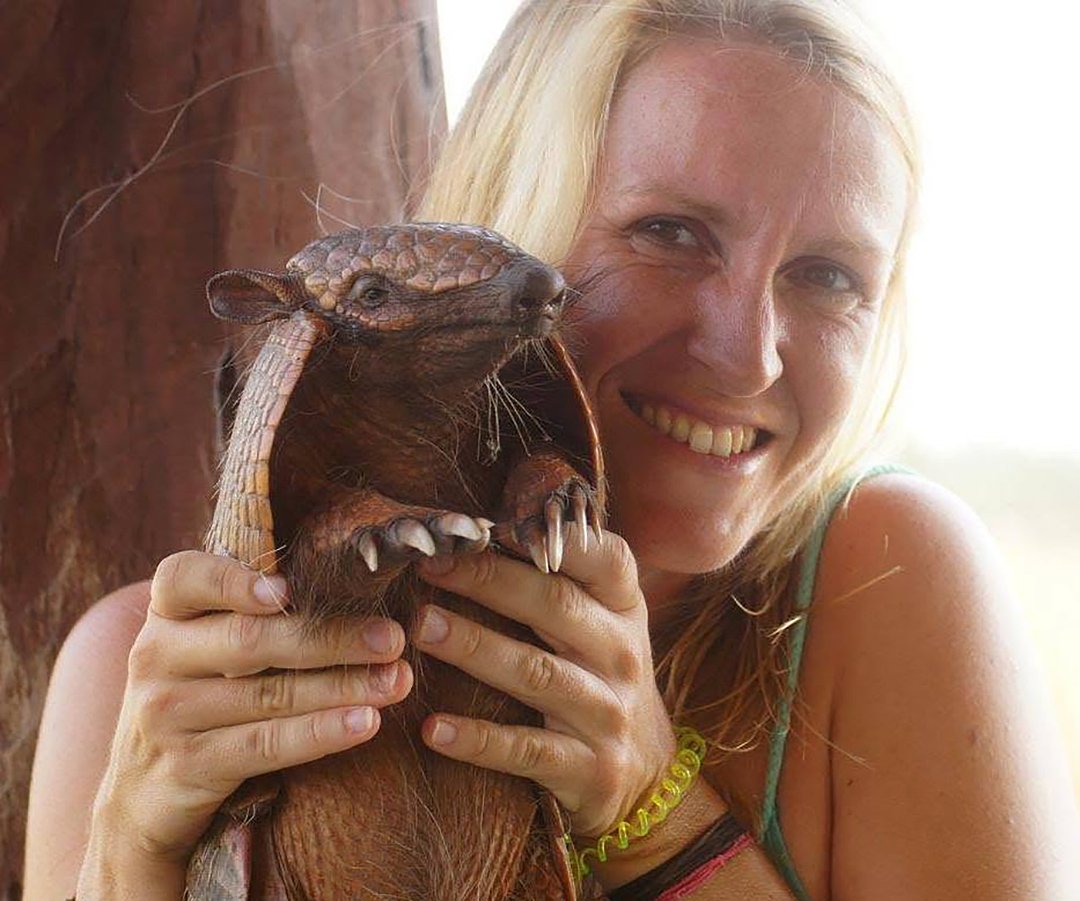
She worked with the Zoological Research Museum Koenig in Bonn and had long ties to Zoo Dortmund, which supported her field research. Colleagues regarded her as one of Germany’s leading experts on giant anteaters. That standing came from field time, repeated observation, and the knowledge that accumulates when a researcher returns to the same place often enough to notice change.
Her affection for anteaters was clear, and it was never sentimental. She enjoyed their strangeness. She liked their focus. She could speak about their poor eyesight, narrow heads, and limited cognitive equipment with amusement, then make the listener reconsider the easy assumptions behind those judgments. Human beings, she suggested, were too quick to measure intelligence by human habits. An anteater did not need to be like us to be well adapted to its world.
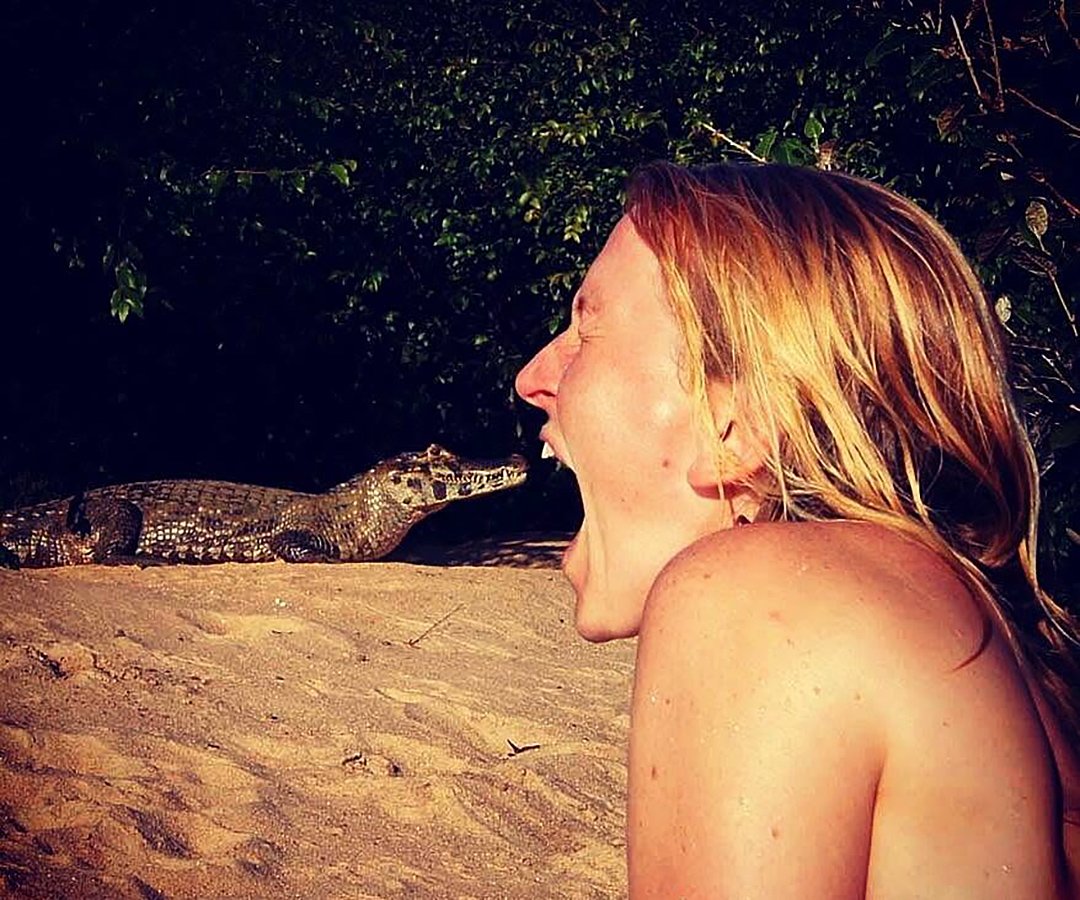
That ability to move from a joke to a serious point made her an unusually effective communicator. Her books, “Ich glaub, mein Puma pfeift!” and “Die Supernasen,” opened field biology to readers who might never read a scientific paper. Her photographs and drawings added another route in. On radio, in films, in science slams, in columns for the Frankfurter Rundschau, and in the podcast “tierisch!”, she treated communication as part of the scientific task. Knowledge had to travel beyond specialists.
Children knew this especially well. For WDR’s MausRadio and related programs, she reported from the Pantanal in a way that respected young listeners. She did not reduce the natural world to cuteness. She took them into the process: looking for tracks, waiting for signals, finding animals, failing to find them, and noticing what else appeared along the way. She made fieldwork sound like work, which was part of its appeal. Wonder, in her hands, was tied to effort.
She also knew the Pantanal was changing. Drought, fire, and pressure on land and water had altered the place where she worked. In her columns she wrote about damage and recovery without treating either as an abstraction. The question was always practical: what allowed an animal, a wetland, or a human community to endure?
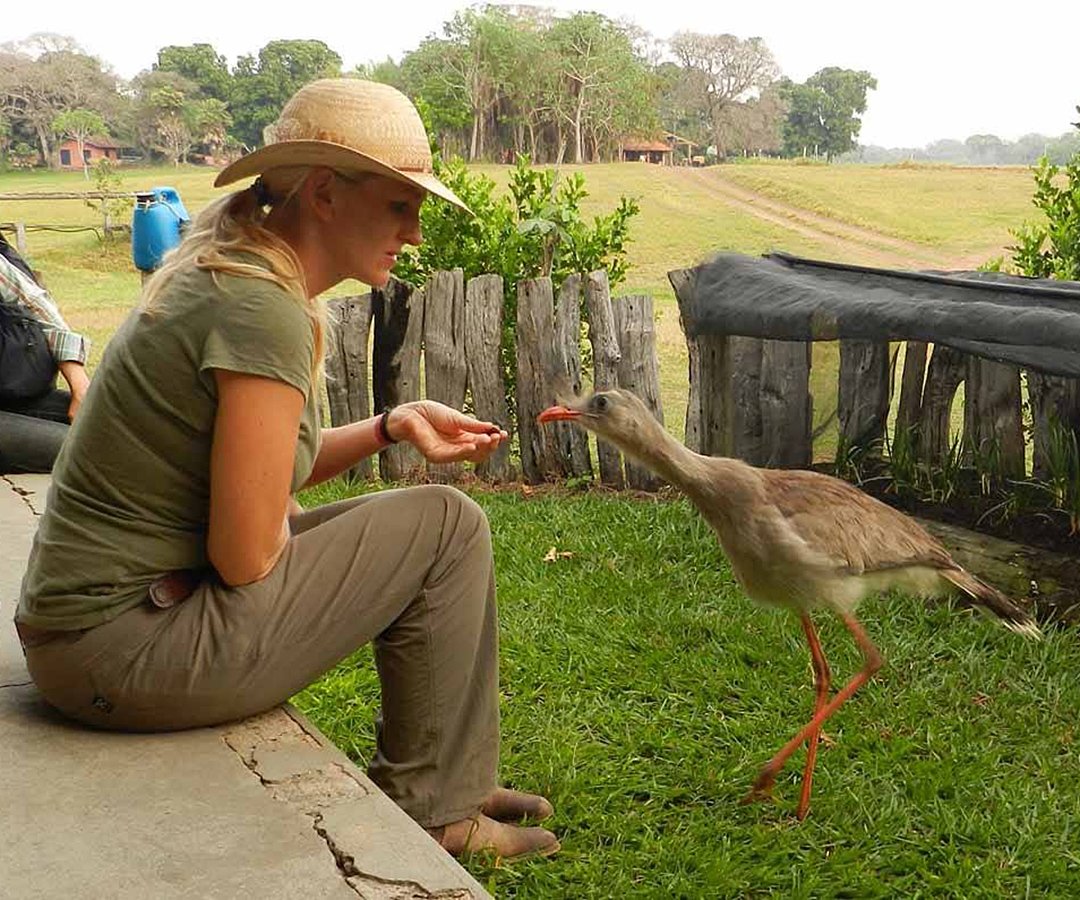
Her public voice mattered because the species she studied could easily be ignored. The giant anteater is not a symbol that can carry a campaign by itself. It does not have the fame of a jaguar or the immediate charm of a primate. Möcklinghoff seemed to understand this as a reason to work harder, rather than as an obstacle. She gave people reasons to care: the animal’s odd beauty, its precision, its vulnerability, and its place in a landscape under strain.
There was courage in that choice. It was not the staged courage of danger sought for its own sake. It was the steadier kind required by field science: returning, observing, explaining, raising funds, repairing equipment, answering questions, and asking people to look again at something they had barely noticed. The work asked for patience. She gave it patience.

The sadness of her death lies partly in how much more she seemed ready to do. She had already become trusted, useful, and clear. She had given an obscure mammal a wider public life. She had shown that a scientist could be exact, funny, generous, and serious all at once. At 45, she still had many field seasons ahead.
Now the work continues in other hands. In the Pantanal, giant anteaters will keep moving through grass, forest edges, ranchlands, and burned places, lowering their long snouts to read a world mostly hidden from human senses. To follow them well will require the qualities Möcklinghoff brought to the effort: patience, accuracy, humor, and care for animals that do not ask for attention. She made that work feel necessary. She made it feel possible.

Cite this article
Rhett Ayers Butler (2026). Lydia Möcklinghoff, champion of the giant anteater, has died in a plane crash. She was 45. Mongabay Conservation news. DOI: https://doi.org/10.66709/news-323146

Source:
news.mongabay.com