



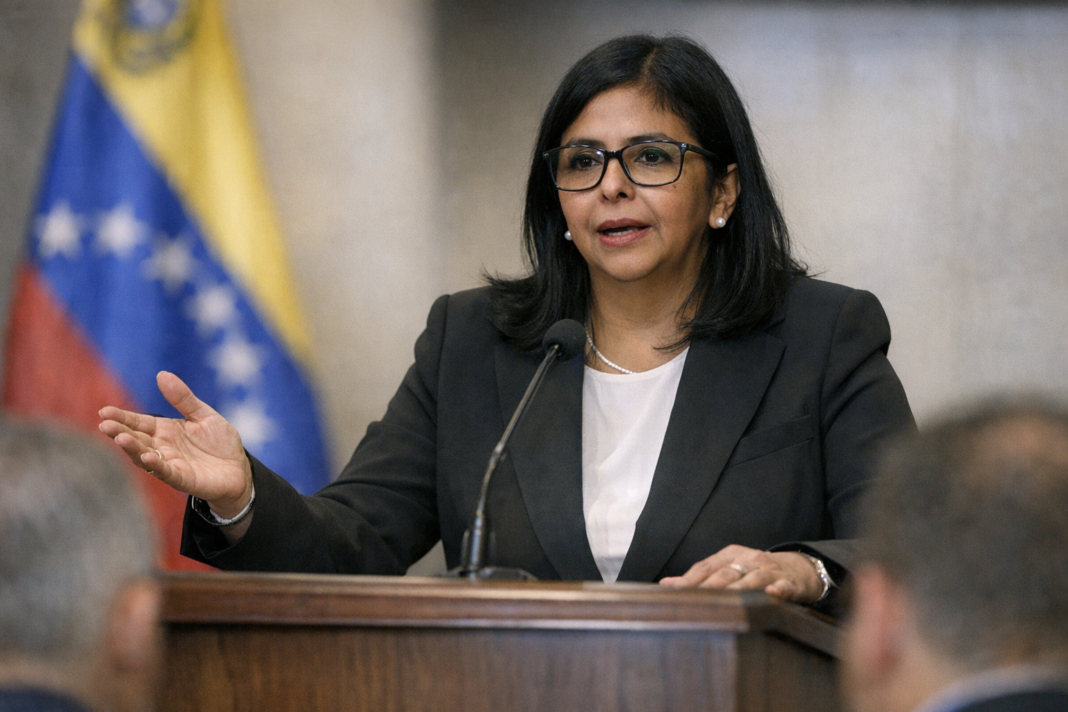
Delcy Rodríguez defended the controversial energy agreement this week, insisting that Venezuela will keep legal ownership and sovereign rights over its hydrocarbon reserves even as the pact entrusts operational control of roughly 65 billion barrels to American entities. The announcement, which has sparked widespread public anger, places immediate questions about who will manage exploitation, revenue distribution and state oversight at the centre of a heated national debate.
In a televised address on Saturday the interim president sought to calm critics by emphasising continuity of state authority while outlining the expected economic advantages the government cites as justifications for the arrangement. The White House has framed the transaction as an unprecedented commercial operation: President Donald Trump has referred to the scale of the deal in public statements, and US officials say it will expand American access to Venezuelan oil reserves. Rodríguez, who assumed power in January amid events surrounding the removal of President Nicolás Maduro, faces the dual challenge of defending the pact at home and persuading foreign partners of its legal solidity.
The pact’s breadth has prompted legal scholars and policy specialists to highlight several unresolved issues, including the precise meaning of “control” in contractual terms, mechanisms for monitoring environmental and social impacts, and the route by which proceeds will be channelled to state coffers. Domestic political actors from across the spectrum have expressed dismay, demanding full disclosure of contractual clauses and guarantees that sovereign prerogatives will not be diluted by long-term foreign operations. Those concerns feed wider anxieties about governance of strategic natural resources.
Regionally and internationally, the agreement could reshape diplomatic alignments and invite scrutiny from institutions that monitor resource governance and international investment. Implementation details remain limited and the coming weeks are likely to determine whether independent oversight, judicial review or diplomatic negotiation will clarify how authority and benefits are to be shared. Observers note that transparent mechanisms and timely publication of contract terms will be critical to defuse domestic opposition and to define the practical contours of the new arrangement between Caracas and the White House.