



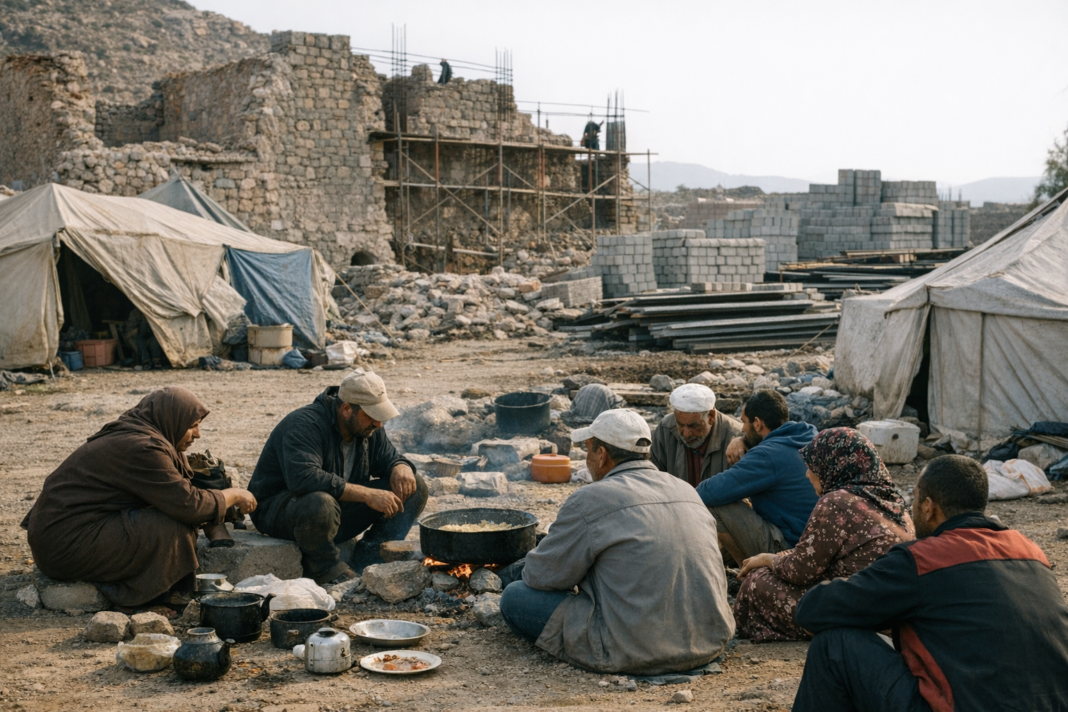
Three years on since the 2023 Morocco earthquake, reconstruction work has visibly altered parts of the affected landscape, yet displacement persists for a notable number of survivors. While new housing and repaired roads mark progress in some towns, observers and residents report that many families continue to live in temporary shelters. Local opinion remains split over how much has been achieved and whether public assistance has reached those most in need.
The rebuilding effort has unfolded unevenly across affected zones. In some urban and accessible localities, damaged homes and community buildings have been replaced or repaired, enabling a return to more stable living conditions. In contrast, people in harder-to-reach or less prioritized areas still face inadequate shelter and limited access to basic services. Moroccan authorities have mobilized funds and programs for reconstruction, but questions about timeliness, allocation and pace of delivery persist within communities.
Residents and local leaders describe two competing narratives: one emphasising visible recovery and renewed infrastructure, the other highlighting lingering emergency conditions and unmet needs. These differing assessments reflect variations in how quickly aid was delivered, local capacity to rebuild, and the complexity of repairing infrastructure across varied terrain. Prolonged displacement has practical consequences for families’ livelihoods and community life, complicating return to work, schooling and normal routines.
At the three-year mark, the situation illustrates both the gains from concerted reconstruction and the gaps that remain between policy commitments and on-the-ground realities. Continued attention to equitable distribution of resources, long-term housing solutions and rebuilding resilient infrastructure will determine whether progress translates into durable recovery for all affected populations. The anniversary has prompted renewed scrutiny of what has been completed and what still needs to be done to close the remaining humanitarian and reconstruction gaps.