



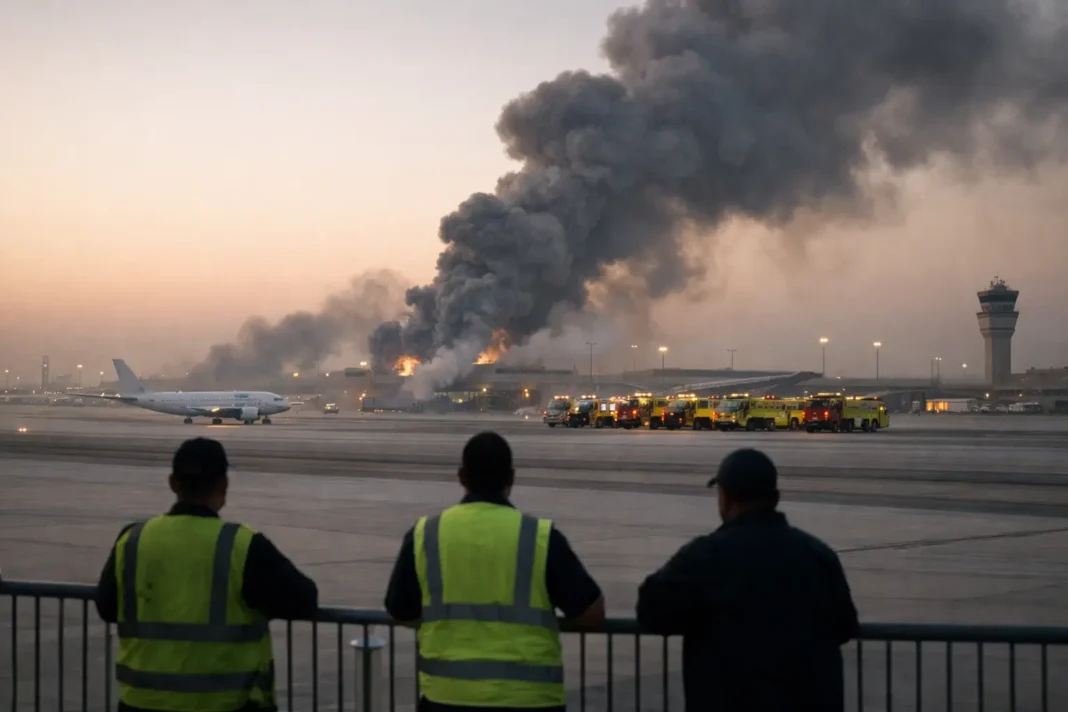
Houthis’ strike on Riyadh’s international airport on Oct. 10, which killed 13 people and wounded hundreds, has underscored a marked escalation in cross-border violence and a deliberate effort by the movement to reposition its rationale for military action. In the days that followed, further missile and drone barrages—less deadly but disruptive—coincided with a high-profile oil-producers conference in the kingdom, amplifying the attack’s economic and symbolic impact. The episode has reopened debate over the conflict’s wider regional dynamics and the extent to which the fighting in Yemen is shaped by local grievances rather than outside direction.
Leaders of the Houthis have increasingly framed recent operations as retaliatory strikes and national defence against Saudi Arabia, rather than as actions carried out at the behest of Iran. Over the past year their campaign has relied on long-range missiles and drones and on attempts to assert influence over maritime choke points such as the Bab el-Mandeb and the Red Sea, tools that can disrupt global trade and pressure Riyadh’s energy exports. This reframing aims to make a case to Yemeni and regional audiences that the movement’s strategy is driven by local objectives and reciprocal logic, not by foreign command.
The movement’s return to high-profile strikes follows a period of intermittent restraint after earlier Red Sea operations in 2023–2025. Its domestic position remains rooted in a decade-long civil war: the Houthis control significant population centres and a large share of territory, while lacking an air force and relying on asymmetric capabilities. An attempted reopening of Sanaa airport and the summer bombing of its runway by Saudi forces helped catalyse a renewed confrontation, and diplomatic contacts—among them meetings between U.S. diplomats and Houthi representatives in Oman in September 2026—have so far not halted the new campaign.
The immediate consequences are both humanitarian and strategic. Attacks on civilian infrastructure inside Saudi Arabia raise the risk of broader escalation, while control over maritime routes threatens international commerce. At the same time, the plight of civilians inside Yemen remains acute after more than a decade of conflict: deteriorating services, constrained movement and economic hardship continue to underlie the violence and will shape how the region responds to any further escalation.
