



Published October 14, 2025
By Cynthia Houniuhi, President, Pacific Islands Students Fighting Climate Change (PISFCC), and Assistant Law Lecturer, The University of the South Pacific, Aditi Shetye, Lead of Strategic Litigation, World’s Youth for Climate Justice, and Researcher in Public International Law and Environmental Law, British Institute of International and Comparative Law, Johanna Gusman, Senior Attorney, Legal Pathways to Fossil Fuel Phaseout, at the Center for International Environmental Law, and Joie Chowdhury, Senior Attorney, Climate Litigation and Accountability at the Center for International Environmental Law.
This piece was originally published by the International Institute for Sustainable Development’s (IISD) SDG Knowledge Hub.
Since the delivery of the historic International Court of Justice (ICJ) Advisory Opinion on States’ obligations in respect of climate change, legal commentary abounds. But this analysis is distinct in that it tells the story behind the law and focuses on what truly made this case stand out: how youth, frontline communities, and movement lawyers came together to ensure the outcome defied the status quo.
How it all began
This was never an ordinary legal case but an ambitious movement. There are many untold stories and many unsung heroes behind this historic ruling. As is often stated – and must never be forgotten – Pacific Islands law students, moved by their lived realities, dreamt up the idea, and led the charge. What first started as a classroom assignment became “taking the world’s biggest problem to the world’s highest court.” And the Court delivered. It put the weight of international law firmly on the side of people and the planet, providing a robust legal blueprint to hold polluters accountable and secure remedies and reparations for climate harm.
Indisputably, these Advisory Opinion proceedings were among the most inclusive in the history of the ICJ. The active participation of Global South/Majority countries, often not historically part of such processes, as well as the unprecedented levels of coordination and alignment on climate justice-centered arguments, are clearly reflected in the outcome. It signals an “opening up” of international law that will shape its evolution and practice.
What made this case transformative
While many organizations provided technical support and assistance, the case was led by youth from its inception. Pacific Island Students Fighting Climate Change (PISFCC), along with the World’s Youth for Climate Justice (WYCJ), reframed climate change not just as a scientific and technical issue, but as a justice crisis – linking human rights, intergenerational equity, and State responsibility in a way that profoundly shaped both the legal arguments and global momentum for climate justice. Frontline youth lawyers and campaigners rooted their vision in deep love for their people, communities, culture, land, and ocean. They refused to accept an incremental approach. Through storytelling, mass mobilization, and grassroots coalition building, they infused a climate justice, Global Majority perspective, within every aspect of the proceedings.
In building the movement infrastructure, PISFCC convened the Alliance for a Climate Justice Advisory Opinion, co-led with WYCJ, bringing together civil society organizations (CSOs) from every region of the world. Together, broader alliances rallied to support the case in every way they could, such as: making legal submissions directly to the Court; organizing expert briefings for delegations on climate justice-aligned arguments; calling for fairer procedural rules; providing drafting support and legal advice; giving input on storytelling strategies for oral arguments; and shaping legal narratives. As is often the case in accomplishing big things, the right people needed to come together at the right time. The Advisory Opinion was bigger than one person or one country. For this case to make a difference, the playbook needed to take to heart the human rights principles international law espouses – inclusion, representation, and self-determination.
It was immediately clear that moving forward, the Pacific and other frontline nations needed to be represented by their own national lawyers in The Hague. Decolonization shifted the landscape from the typical practice where ICJ representation is primarily held by an elite few. In recognition of the youth leadership, some delegations ceded time to youth leaders from PISFCC and WYCJ to speak directly to the Court, each delivering powerful arguments for climate justice and the rights of present and future generations.
Several delegations, especially those from the Global Majority, appeared before the ICJ for the first time, represented not by well-known law firms far away from national shores or by elite academics, but by diverse national delegations composed of diplomats, national lawyers, youth campaigners, and community/Indigenous leaders. This shaped the proceedings in fundamental ways, from securing procedural flexibility, such as allowing submissions via email rather than requiring in-person delivery (a more resource-intensive option that poses challenges for many in the Global Majority), to influencing the substance of legal arguments. Additionally, multiple frontline States and international organizations rooted their submissions in broader structural concerns, highlighting colonial histories and issues of debt justice – all within the context of States’ climate obligations.
Island nations and other climate-affected countries presented technically rigorous arguments, while also painting a vivid picture of their climate realities through videos, witness statements, and resonant storytelling. For example, Tuvalu’s video clip of a 3-D model to show sea level rise using highly localized scientific data, as well as a powerful video from Saint Vincent and the Grenadines titled, ‘The Race: Survival versus Death and Debt,’ made an immeasurable difference in bringing to life what some from the Global North dubbed as “abstract” impacts of climate change. While countries like Australia, the UK, and the US rigidly read from their briefs, avoiding eye contact with the judges, the Pacific Islands and the rest of the Global Majority spoke with conviction and strength that stood in stark contrast to historical polluters.
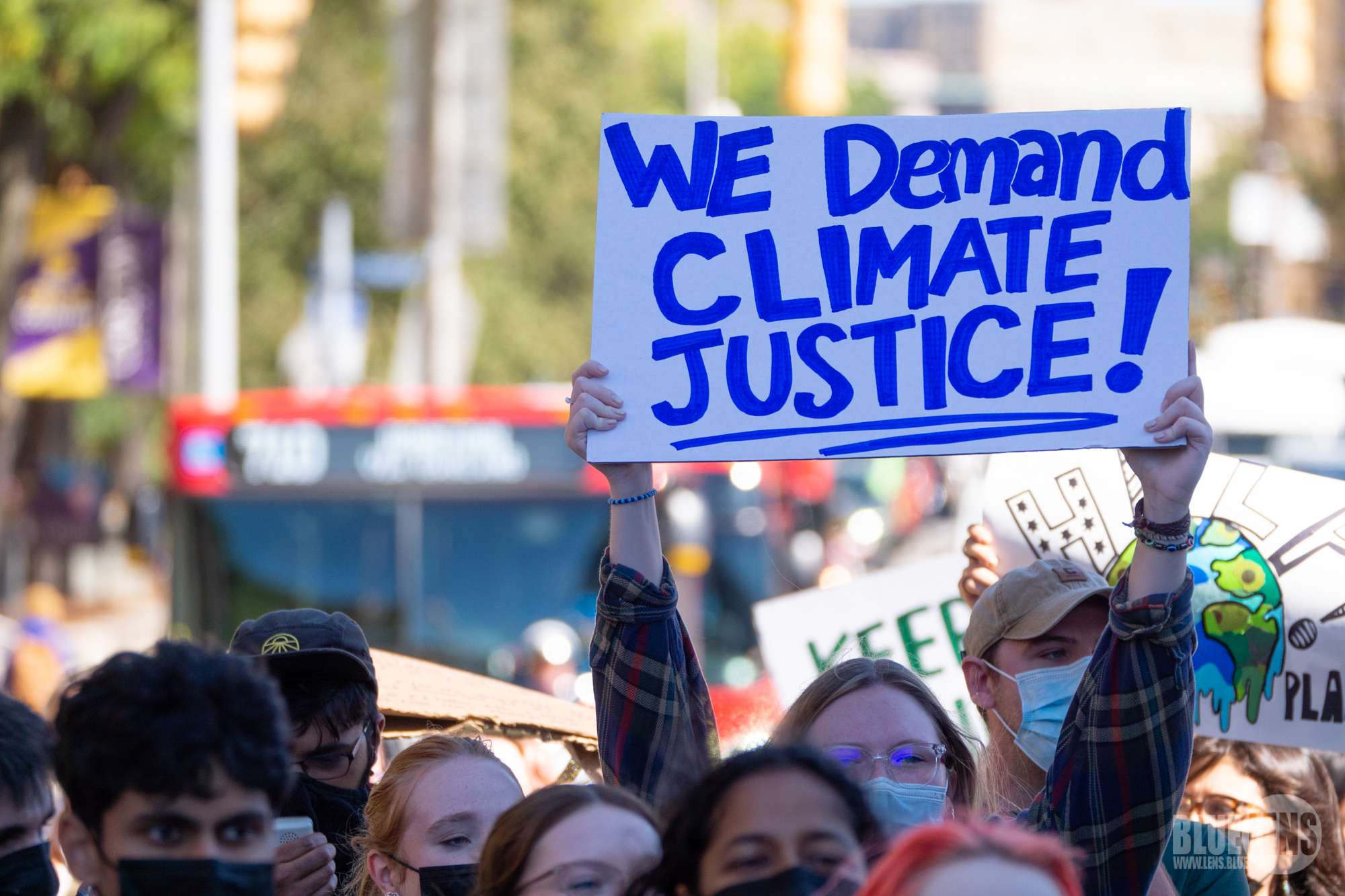
Furthermore, throughout the process, meaningful activism effectively broke down silos between formal proceedings and mobilizations outside the courtroom. During the oral hearings, campaigners organized dynamic events, including a People’s Assembly – an extraordinary testament to collective lived experiences, the outcome document of which was submitted to the Court, ensuring peoples’ demands for climate justice were formally on the record. There were also demonstrations, art exhibitions, vigils, and cultural events to support and complement the formal proceedings in an attempt to maximize inclusivity and participation. The use of technology to center frontline analysis through the Witness Stand campaign, online petitions, and creative social media strategies rendered the technical legalese of the proceedings relevant and accessible to a whole new audience.
Taking this success forward
Movement lawyers brought a flavor of litigious pedagogy to this case that absolutely made a difference. Many of the Pacific, Latin American, Asian, African, and small island developing States (SIDS) lawyers, youth advocates, and even high-level diplomats had backgrounds in human rights, social justice, or community organizing. This movement-grounded process delivered a powerful justice-centered outcome that represents a turning point from which future climate cases can draw lessons and inspiration. In the face of rising seas and eroding land, fossil fuel impunity, and planet-destroying policies, there is strength in this collective win that is transformative for climate justice. This case is not the end. It represents a foundational impetus for change that movement lawyers must build on.

