



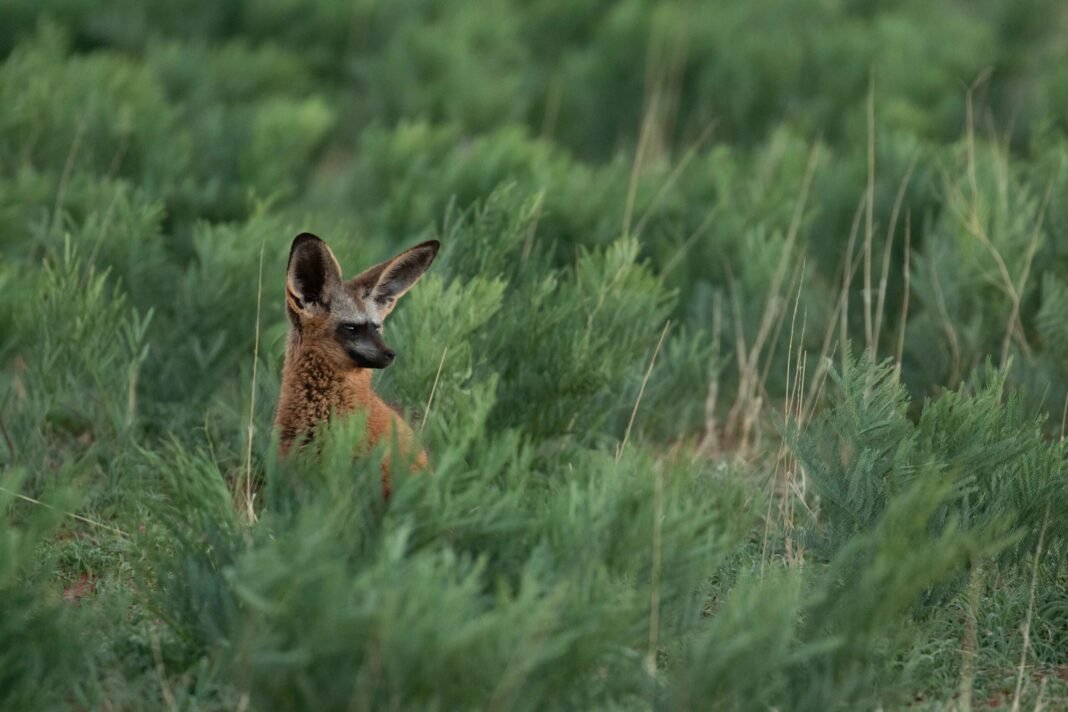

In northern South Africa, the Tswalu Kalahari Reserve in the Kalahari Desert is teeming with life — and carbon credits.
Most carbon credit projects are focused on forests, but globally, soils hold roughly three times more terrestrial carbon than forests. Some scientists also say soil is more stable since it can’t be easily removed in a forest fire or clear-cut.
At Tswalu, decades of wildlife reintroductions are helping to restore the degraded soils of the landscape while generating revenue through carbon markets.
“I think Tswalu shows how rewilding can mitigate climate change through soil carbon storage and improve land productivity,” Duncan MacFadyen told Mongabay’s John Cannon. MacFadyen is the head of research and conservation with Oppenheimer Generations, which represents the family that owns Tswalu.
The Oppenheimer family acquired the reserve in 1999 and eventually expanded it to an area larger than the size of Hong Kong, 118,000 hectares (292,000 acres). Their goal is to rebuild a functioning ecosystem by bringing back native herbivores and predators, and with it, soil carbon.
Locally known as “the waterless place,” the region averages just 10-50 centimeters (4-20 inches) of rainfall annually, but that’s enough for rare, desert-adapted wildlife.
Historically, vast herds of springbok antelope (Antidorcas marsupialis) followed seasonal rains and fresh grass across the landscape. The Indigenous San people compared springbok numbers to the number of stars in the Milky Way. European settlers later described herds stretching some 160 kilometers long and 24 km wide (100 miles by 15 mi).
By the early 1900s, hunting, fencing and roads dramatically reduced wildlife populations, which in turn altered both vegetation and soil chemistry. Repopulating Tswalu with herds of herbivores like springbok, giraffe, kudu and eland is helping the landscape recover.
“They graze, they release urine and dung, and then they move,” Oswald Schmitz, with Yale University in the U.S., told Mongabay. The fertilizer wildlife leaves behind “gets absorbed into the soil, and then it gets absorbed by the plants and enhances productivity of the vegetation,” Schmitz said.
Herbivore dung also provides partially digested matter that soil microbes can easily convert to richer soil and a more stable form of carbon. In contrast, undigested grass and leaves provide fewer nutrients for soil microbes, reducing carbon storage and increasing fire risk.
Researchers found that such microbial benefits only hold true for wild animals, not livestock. Antibiotics used in livestock pass through the animals and into the soil, effectively killing the microbes that underpin healthy, carbon-rich ecosystems.
The Tswalu Kalahari Reserve has so far issued more than 34,000 carbon credits and has ambitions for crossing 275,000 in total. While the science of soil restoration and carbon sequestration is still unfolding, MacFadyen said they are already seeing success.
“The revenue received from the carbon project has truly played a long-term role, I think, in increasing the sustainability of Tswalu.”
Read the full story by John Canon here.
Banner image: A bat-eared fox (Otocyon megalotis). Image courtesy of Tswalu Kalahari Reserve.
Source:
news.mongabay.com