



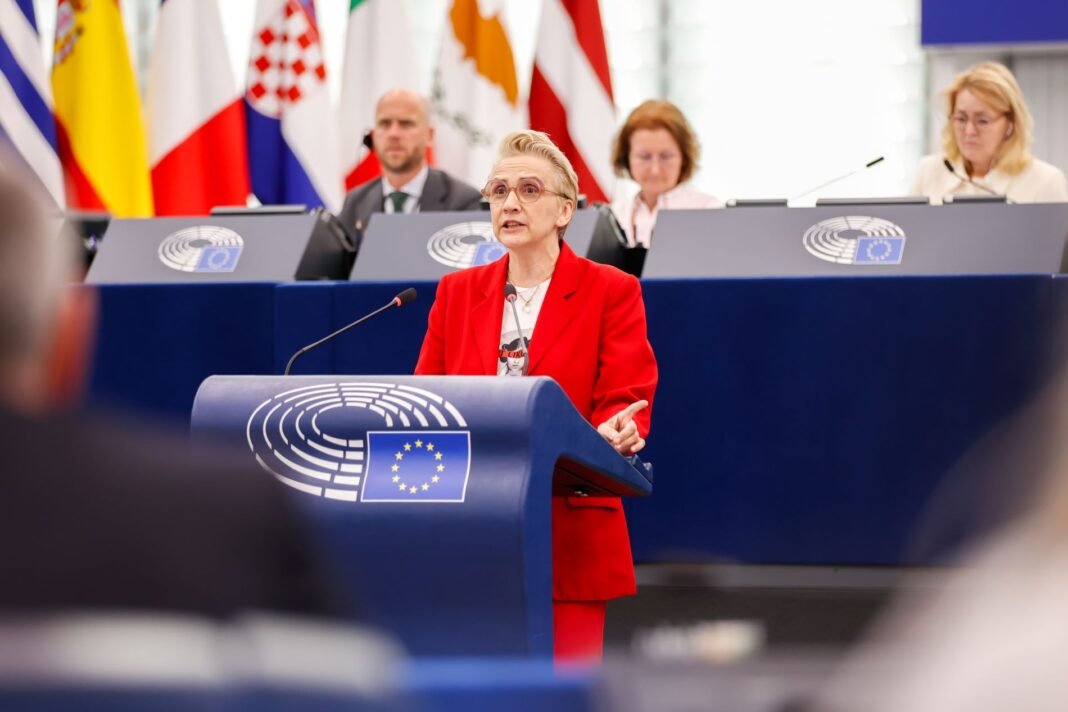

The European Parliament has stepped up pressure on the European Commission to propose an EU-wide definition of rape based on the absence of consent, reopening a divisive legal debate over the bloc’s authority in criminal law.
In a non-binding report adopted on Tuesday, lawmakers called for legislation aligning member states with the Istanbul Convention. The move comes despite resistance from several governments that argue the EU lacks competence to harmonise definitions of rape, a position that led to the issue being dropped from a 2024 directive on combating violence against women.
Backed by 447 MEPs, with 160 voting against and 43 abstaining, the report urges a definition that takes into account coercive circumstances such as violence, threats, abuse of power and fear, as well as cases where victims are unconscious, asleep or under the influence of drugs.
Lawmakers also highlighted “freezing reactions,” an involuntary paralysis in response to fear, as a factor that should be recognised when assessing consent.
The report points to recent high-profile cases, including that of Gisèle Pelicot, in which multiple men were convicted of aggravated rape committed while the victim was unconscious after being drugged without her knowledge by her husband. MEPs argue that clearer legal standards could help avoid similar cases.
“Most rapes are committed by someone known to the victim, often without physical violence, and victims are frequently paralysed by fear rather than able to resist,” said Abir Al-Sahlani, a Swedish liberal MEP who acted as shadow rapporteur.
Citing EU data, S&D MEP Joanna Scheuring-Wielgus of Poland, the report’s lead rapporteur, said one in three women in the bloc had experienced gender-based violence, and one in twenty had been raped.
Beyond legal definitions, MEPs called for the expansion of support services for victims, including free, specialised centres to provide medical, psychological and legal assistance. They also urged mandatory training for professionals likely to encounter victims, including healthcare workers, police officers, judges and lawyers.
The Parliament is pushing the Commission to present initial guidelines by 2026 and to launch EU-wide awareness campaigns aimed at clarifying the concept of consent.
However, the prospects for binding legislation remain uncertain. Several EU states have maintained that criminal law in this area falls outside EU competence, raising the likelihood of renewed political deadlock despite mounting pressure from lawmakers.
Source:
www.euractiv.com