




The Democratic Republic of the Congo (DRC) is planning to export 500,000 metric tons of copper to the United States, a fivefold increase in the export commitment made in January by state-owned miner Gécamines SA.
“The Congolese government’s intention, through Gécamines, to start exporting its own copper is becoming a reality,” said Jean-Claude Mputu, spokesperson for civil society network Le Congo n’est pas à vendre (CNPAV) and deputy director of the NGO Resource Matters. “The U.S. push to gain access to Congolese copper, in an effort to rebalance China’s dominance, is also materializing,” Mputu added.
However, the DRC doesn’t appear to be moving away from China as a trade partner. In March, the two countries signed a memorandum of understanding centered on mineral resources.
For now, there’s little public scrutiny of contracts that will allow the DRC to ramp up U.S. exports, nor is it clear what the social and environmental impacts of increased extraction would be.
“All of this is happening without any transparency, without any call for tenders. The risk is repeating past patterns of corruption, even if China is replaced by the United States,” Mputu said.
“There is a feeling that extraction is being carried out at the expense of the environment and local communities,” he added. “There are numerous cases of pollution around mining sites that go unpunished. The key question is whether this will improve the lives of Congolese people, particularly in terms of environmental standards.”
Some reports suggest the copper will be sourced from mines in southeastern DRC, including the Tenke Fungurume mine, operated by a local subsidiary of Chinese company CMOC Group Ltd. in partnership with Gécamines. Over the years, the mine has faced serious allegations of human rights violations and environmental pollution.
Since February 2025, parts of eastern DRC along the border with Rwanda have been under the control of M23, an armed group allegedly backed by Rwanda. In response, DRC President Félix Tshisekedi sought mediation from U.S. President Donald Trump, who brokered a peace agreement between the DRC and Rwanda that was signed in Washington, D.C., last December. The deal includes a minerals agreement that gives U.S. companies easier access the DRC’s mineral assets.
This April, U.S.-based Virtus Minerals signed a major deal securing access to copper and cobalt deposits in southeastern DRC. U.S. companies are also eyeing copper deposits in eastern DRC, parts of which are currently under M23 control.
Military forces and armed militias are already present at many mining sites in eastern DRC.
On April 27, the DRC announced the creation of a dedicated “mining guard,” a paramilitary unit tasked with securing mining sites and mineral supply chains. In a letter about the initiative, the country’s mining regulator cited relations with the U.S. and United Arab Emirates, without specifying their role the creation of this force.
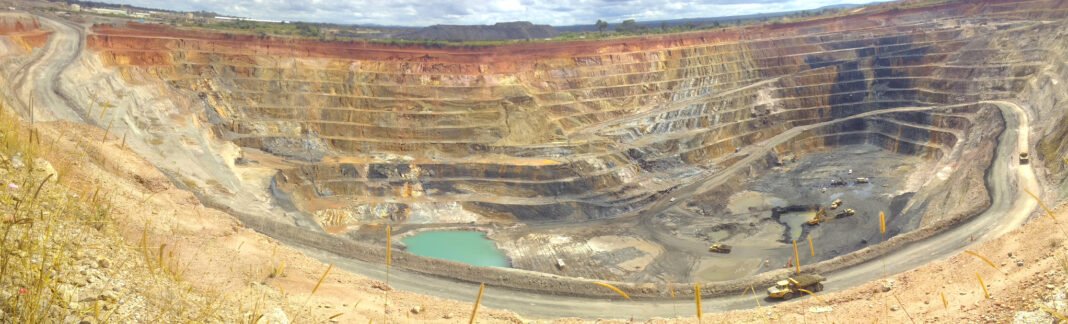
Banner Image: A copper mine in the Democratic Republic of Congo. Image by Fairphone via Flickr (CC BY-SA 2.0).
Source:
news.mongabay.com