



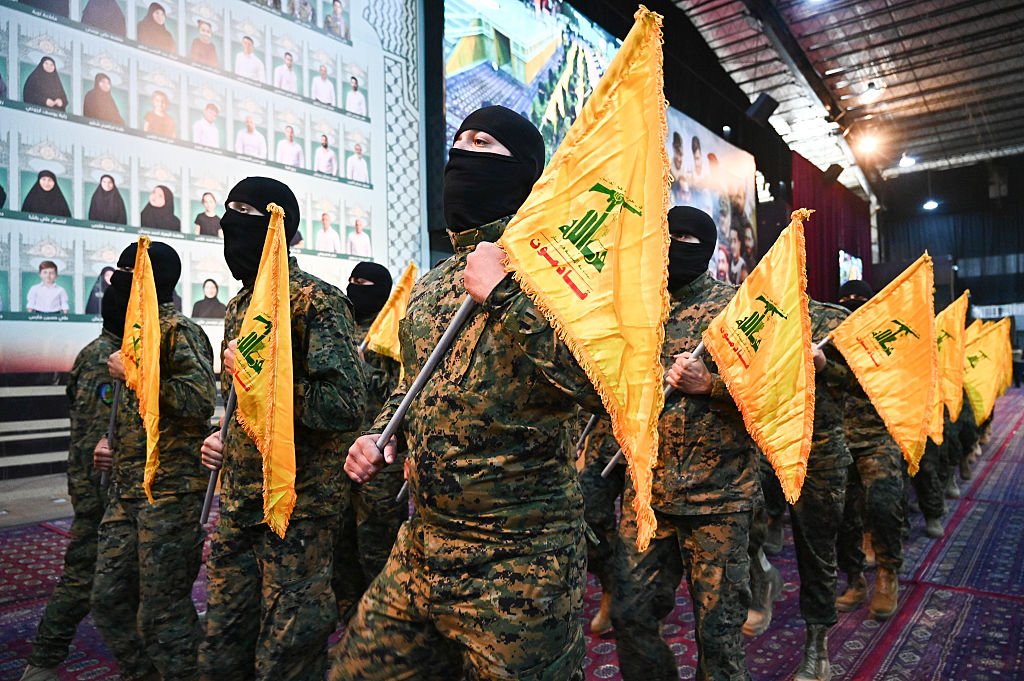
Lebanese militant group Hezbollah has brought reinforcements and weapons to the south of the country since the start of the war with Israel on 2 March, the organisation’s director of media relations said on Friday.
The Lebanese army said that in January it had finished disarming the group near the Israeli border in southern Lebanon, the scene of multiple wars between Israel and Hezbollah, the most recent of which was brought to a halt on 17 April by a ceasefire.
The army had been enacting a plan that it drew up after a 2024 ceasefire agreement that ended the last war between the two.
Speaking during an interview with a group of journalists including from AFP, Youssef Al Zein said the group had been able to “introduce forces and arms in the course of the battle” with Israel.
Zein said the reinforcements did not use roads controlled by the Lebanese army.
“We are convinced that the army is a national army” that “will not enter into a confrontation with Hezbollah”, he said.
He said that if Israel had been able to penetrate deeper into Lebanese territory it was because Hezbollah had been disarmed south of the Litani river, which runs around 30 kilometres (20 miles) from the border, and its infrastructure there, including tunnels, destroyed.
Nevertheless, he insisted that Hezbollah was able to “reconstitute its forces” after the last war with Israel, and that it was “prepared for a long battle”.
Israel announced on 7 April that it had completed the deployment of its ground forces in southern Lebanon and would maintain a 10-kilometre-deep “security zone”.
Need to weaken Hezbollah
Meanwhile, Israel’s ambassador to Greece, Noam Katz, emphasised the need to support Lebanon’s legitimate government, which, he said, “certainly” has the will to bring Hezbollah under control.
“There is a need to strengthen this Lebanese government and make it more capable,” he noted.
At the same time, Katz stressed that the other side of the equation is weakening Hezbollah by reducing its military power, something that Israel is actively doing, he said.
He also pointed to the importance of breaking the connection between Iran and Hezbollah, including Tehran’s ability to provide the resources that have enabled the group to grow so strong.
Finally, the diplomat underscored the need to foster conditions within Lebanon in which the Shiite community views the Lebanese government, not Hezbollah, as responsible for their well-being and future.
(mk)
Source:
www.euractiv.com