



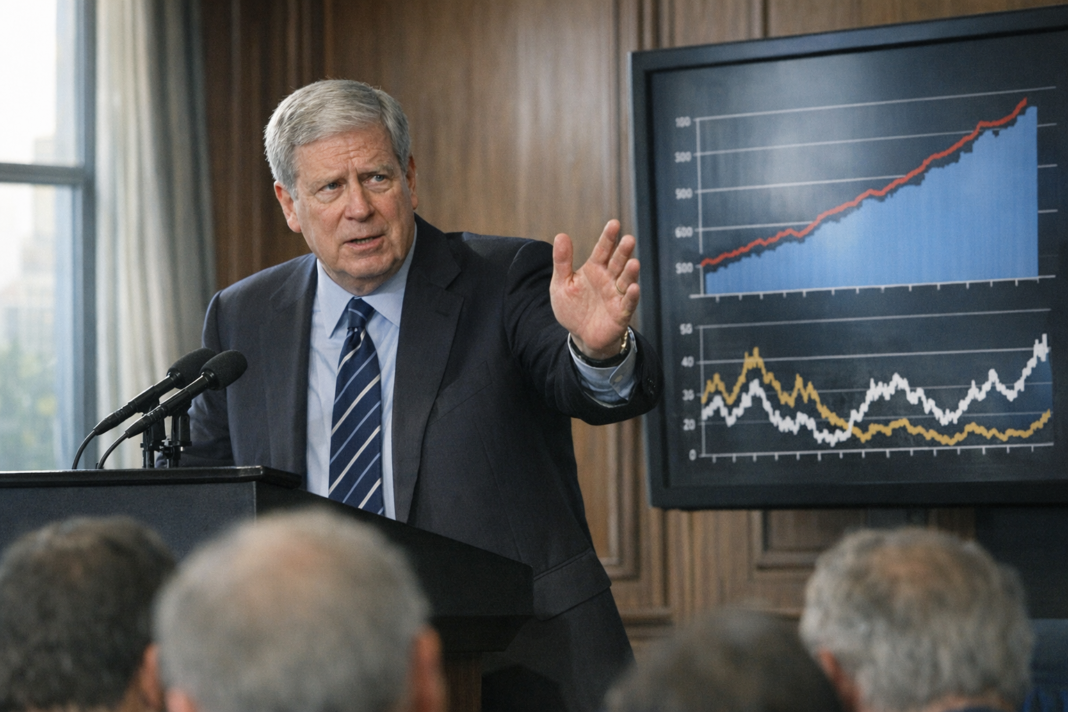
Stanley Druckenmiller has warned that Scott Bessent, the head of the US Treasury, faces a difficult challenge in trying to bring down government borrowing costs by intervening in debt markets. Druckenmiller, a billionaire investor who worked with Bessent at George Soros’s fund in the 1990s, criticised the strategy as likely to encounter resistance from market forces and recommended a different policy emphasis.
Druckenmiller has urged that attention be redirected toward reducing the federal budget deficit rather than attempting to prop up yields through direct market action. The investor framed his advice as a call for fiscal restraint to address the underlying drivers of rising borrowing costs, arguing that efforts to control rates themselves may prove unsustainable. His comments have heightened scrutiny of the Treasury’s approach to calming bond markets and lowering the cost of finance for the United States.
The exchange underscores a broader policy dilemma: whether monetary and fiscal authorities should seek to influence yield levels directly or focus on structural measures to restore investor confidence. Officials pursuing yield suppression typically aim to reduce near-term volatility and borrowing costs, but critics say such tactics can clash with market expectations and fiscal realities. Observers note that public criticism from a high-profile former colleague adds weight to doubts about the durability of a hands-on yield management strategy.
The debate is being watched for its implications on Treasury operations and on investor sentiment more widely. If policymakers favour deficit reduction, attention could shift toward spending and revenue choices that affect long-term debt dynamics; if they persist in attempts to ease borrowing costs, markets will test the credibility and limits of those interventions. The exchange between a veteran investor and the Treasury chief highlights competing paths to stabilising borrowing costs without prescribing specific policy moves or outcomes.