



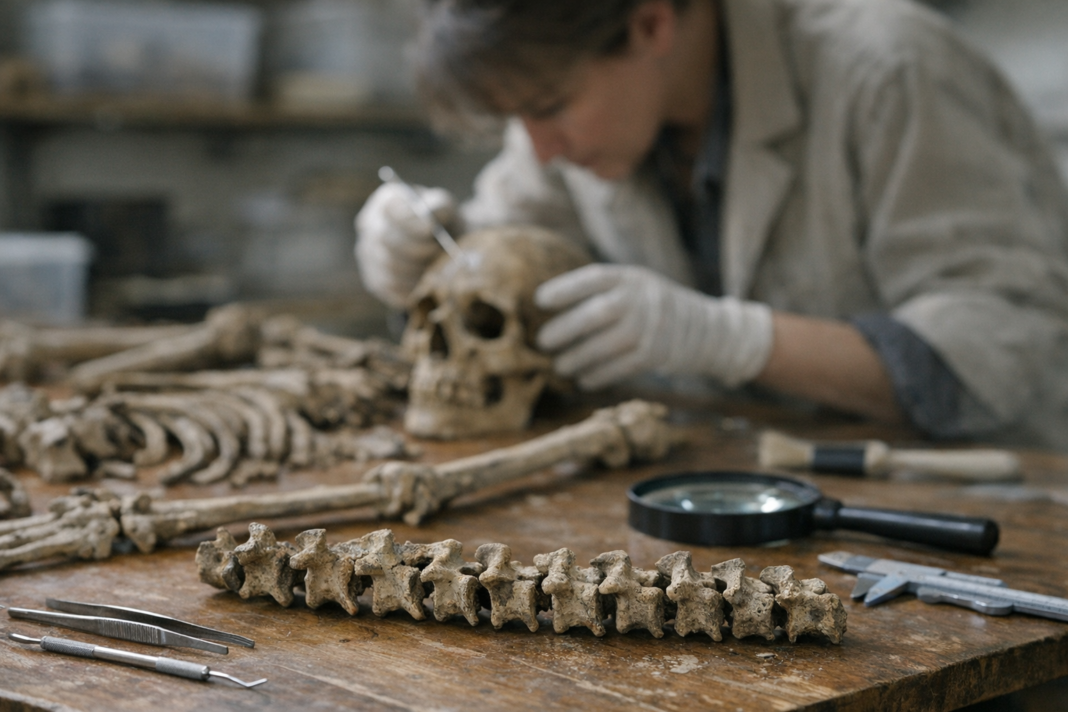
New research shows that children who joined the postmedieval Dutch workforce endured physical strain severe enough to produce lasting spinal damage. The study, published in International Journal of Paleopathology, reports evidence of worn and deformed vertebrae in young individuals, with some signs appearing before the loss of deciduous teeth.
Authors of the paper document that the skeletal changes were consistent with heavy, repetitive workloads placed on developing bodies. The findings illuminate how labour practices in the Netherlands affected children’s physical development across generations and provide concrete anatomical markers for researchers studying past populations. The study therefore adds measurable data to debates about the lived experience of young workers in historical economies.
The presence of spinal wear in children at such an early stage of development underscores how occupational stressors began to shape health outcomes long before adulthood. Specialists in paleopathology and social history can use these results to re-evaluate demographic and labour interpretations for the postmedieval period. The research also highlights the value of osteological evidence for reconstructing the interplay between childhood, work and health in earlier centuries.
While the paper focuses on a specific historical context, its contribution lies in clarifying the biological footprint of child labour over time. By documenting deformations and wear in juvenile spines, the study offers a baseline for further comparative investigations into occupational stress in past societies. Publication in the International Journal of Paleopathology ensures the findings enter ongoing scholarly conversations about labour, childhood and health in historical research.