



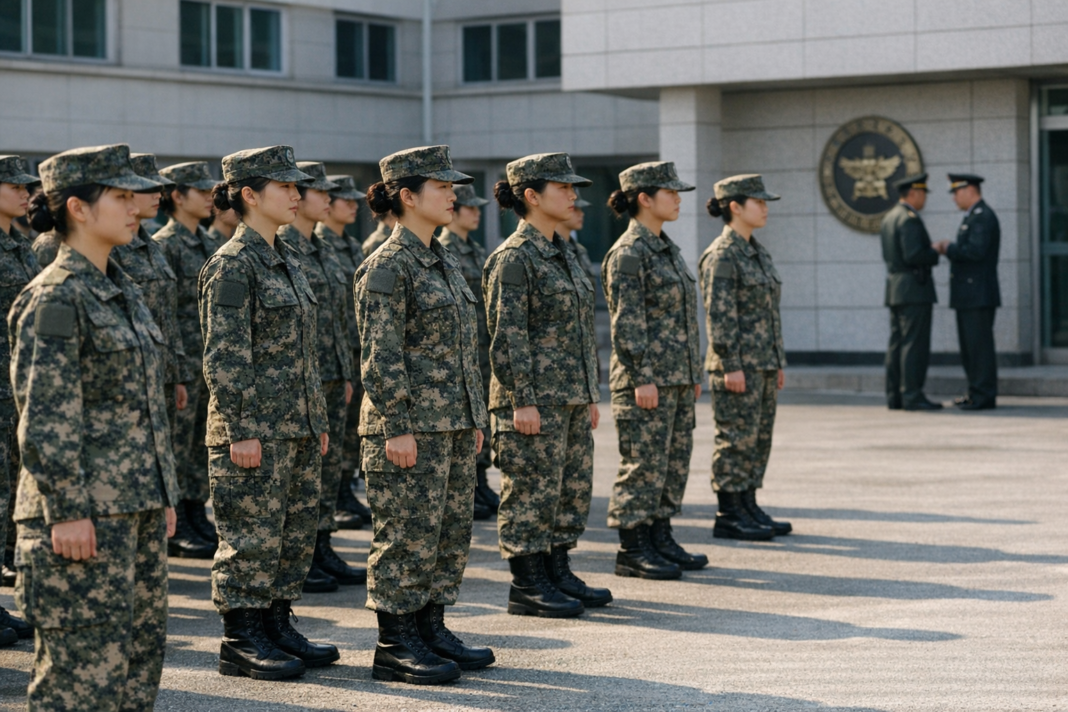
South Korea is increasingly examining the possibility of extending compulsory national service to women as demographic trends reduce the pool of eligible male recruits and public debate about gender equality intensifies. The discussion has moved from speculative comment to formal study within government and military circles, reflecting concerns that current manpower trends could affect long-term force levels and readiness. South Korea‘s changing population structure has become a central factor in planning discussions.
Under the present system, military service is mandatory for male citizens and remains a defining element of national defense policy. Policymakers and defence planners are assessing how a broadened obligation might affect recruitment, training pipelines and the allocation of roles across the armed forces. The Ministry of National Defense and other agencies are reported to be evaluating legal, logistical and budgetary implications as part of that review.
The move toward potential female conscription is framed both as a response to shrinking numbers of eligible men and as a call for equal civic obligations. Advocates for extension argue that broader participation would distribute the burden of national defence more evenly, while analysts highlight practical challenges such as infrastructure adaptation, revised training programs and revisions to exemptions and deferments. Public attitudes and parliamentary debate are expected to shape any legislative pathway.
Any decision to implement compulsory service for women would represent a significant shift in a system long centred on male conscription. The process ahead is likely to include further government studies, stakeholder consultations and legal revisions before policymakers reach concrete proposals. Meanwhile, the security environment on the Korean Peninsula and long-term demographic forecasts remain key reference points in assessing whether and how to change national service arrangements. Military conscription and questions about the role of women in the armed forces are now prominent items on the national policy agenda.