



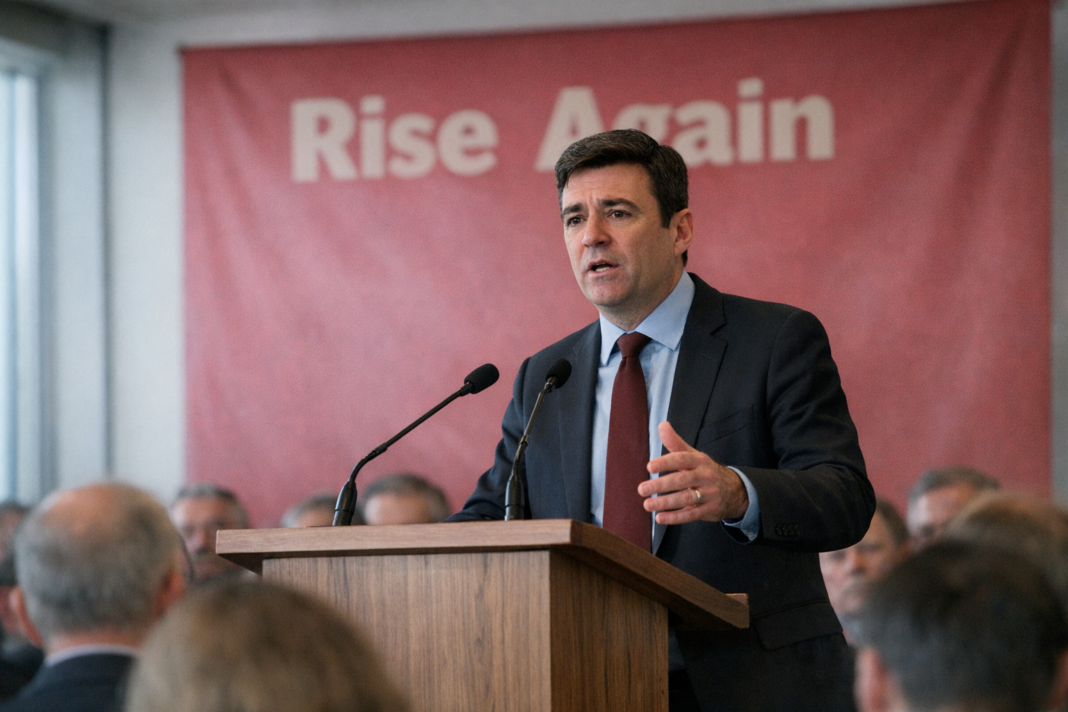
Andy Burnham has laid out a wide-ranging progressive programme aimed at reshaping the party’s priorities on social care, electoral reform and the United Kingdom’s relationship with Europe. Delivering a speech at the annual conference, the leader presented these measures as a deliberate break with policies of the past four decades and framed them as central to a project he described as allowing the country to “rise again”.
The address, delivered in a personal tone, doubled as the opening lines of what party strategists say will be the next general election manifesto. Mr Burnham acknowledged that some elements of the plan will be technically and politically difficult to deliver and conceded he might “pay a political price” for drawing sharp new distinctions in public life. The thrust of the intervention was to prioritise long-term structural change over short-term electoral calculation.
Policy areas flagged in the speech carry distinct practical and parliamentary challenges. Proposals on social care require detailed funding and delivery mechanisms; proposals for electoral reform touch on constitutional questions and would demand cross-party consent or substantial public endorsement; and any shift on Europe risks reopening debates that have defined UK politics in recent years. The leader positioned these measures as a response to long-standing frustrations, arguing they would redraw fault lines that have shaped British politics for decades.
Labour faces a short-term test in translating conference pledges into parliamentary strategy and public persuasion. Implementing the package would require sustained legislative effort and, in many cases, broad public backing. For now, the speech marks a clear strategic choice: pursue ambitious reforms with the attendant risk of political cost, while seeking to convert those risks into renewed public support at the next election.

