



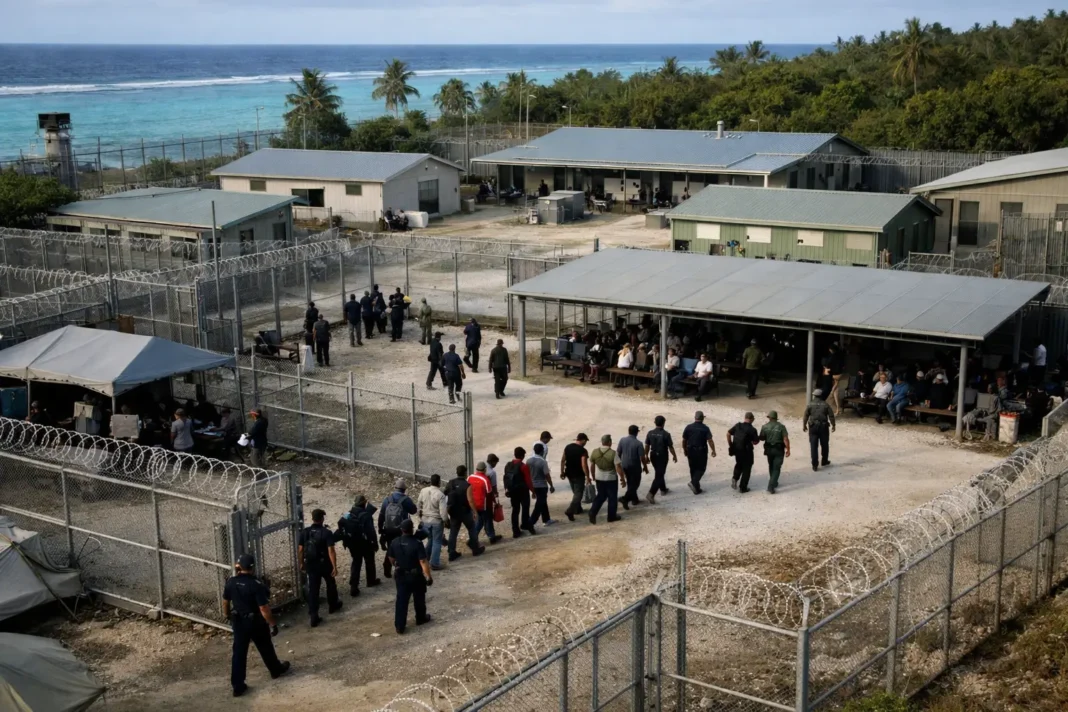
Australia’s offshore processing has been in place for more than two decades as a policy tool to deter irregular arrivals and manage asylum claims outside the mainland. The model, built around reception and processing centres located in third countries, is now cited in policy debates as the EU and the US weigh comparable third‑country arrangements. That transnational interest has focused attention on what the Australian experience actually produced in operational, legal and humanitarian terms.
The Australian approach was designed to interrupt irregular maritime movements by diverting arrival processing to partner states. Implementing such a model required complex logistics, sustained funding and agreements with host governments. Over time, the policy generated regular scrutiny of conditions in remote facilities, the length of stays for those transferred, and the capacity of third countries to carry out reception and decision‑making functions at scale.
Several practical challenges have emerged. Offshore processing can create protracted administrative timelines when on‑site capacity is limited or legal avenues are extended. Oversight and independent monitoring prove harder when facilities are remote or under the authority of a third government. The model also ties migration management to the stability and willingness of partner states, making outcomes sensitive to diplomatic shifts and local conditions. These operational realities have implications for states considering similar arrangements, including cost escalation and the need for durable solutions such as resettlement or safe return pathways.
For policymakers in the EU and the US, the Australian record highlights several considerations: ensure clear legal safeguards for people transferred, build credible independent monitoring mechanisms, define timebound processing procedures, and secure firm commitments from partner countries on standards and burden‑sharing. Equally important is planning for long‑term outcomes for those who cannot be returned quickly, including alternatives that respect international protection obligations.
The debate over third‑country processing is shaping international migration governance. Lessons drawn from Australia’s long‑standing practice underscore that deterrence objectives interact with complex operational, legal and humanitarian dynamics — factors that will determine whether similar schemes in other regions are administratively viable and compatible with global protection norms.
