



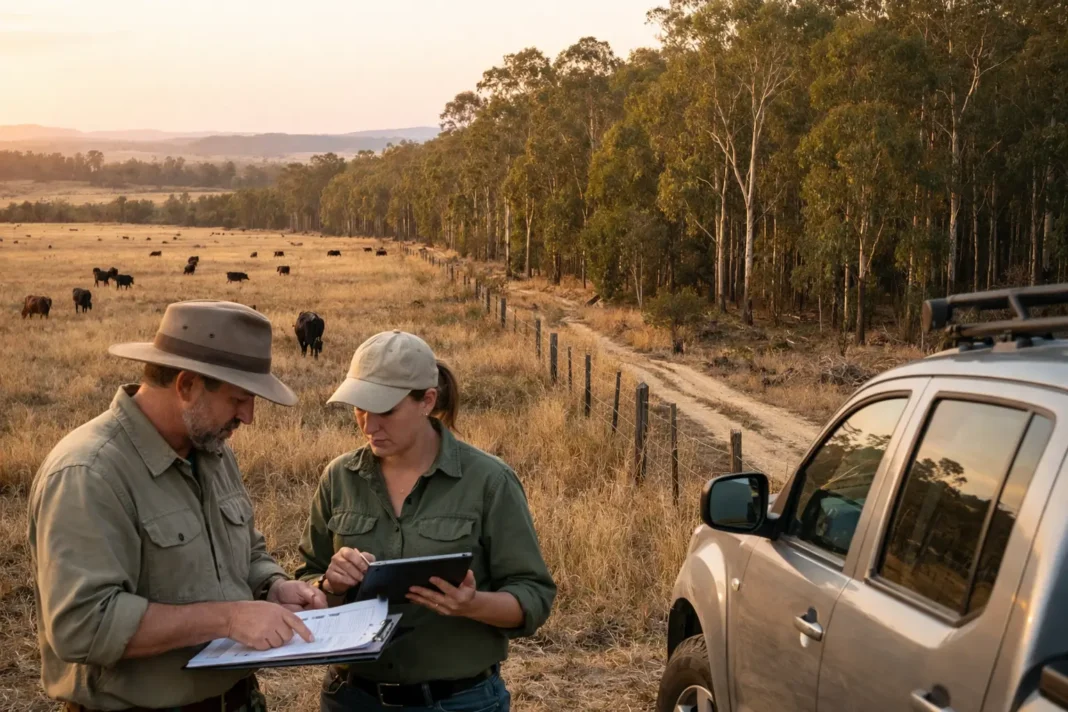
Australia’s deforestation debate has gained new momentum after the Australian Conservation Foundation released its report “Bulldozers and Broken Promises”, an investigation examining links between land clearing, beef production and lending by major banks. The report places Australia at the centre of a wider environmental question: how the expansion of agricultural activity is financed, monitored and reconciled with public commitments on nature protection.
The central finding highlighted by the foundation is the connection between deforestation and cattle-related land use. Beef farming has long been associated with pressure on native vegetation in parts of the country where land is cleared for grazing. The investigation argues that the issue extends beyond farms and properties, reaching into the financial system when bank loans support businesses or operations tied to land clearing. This makes the matter not only an agricultural concern, but also a question of corporate responsibility and environmental risk management.
For banks, the report adds scrutiny to the gap between climate and biodiversity commitments and the practical consequences of lending decisions. Financial institutions increasingly publish sustainability policies, yet environmental groups continue to press for clearer standards on how credit is assessed when it may be linked to habitat loss. The role of lenders is important because finance can shape business choices across supply chains, including in sectors such as beef, where production depends heavily on land access and long-term investment.
The investigation also underscores the broader challenge of tracing responsibility in complex supply chains. Land clearing may occur far from consumers, investors and boardrooms, but its environmental effects are local and immediate: loss of native vegetation, pressure on ecosystems and greater difficulty in meeting conservation goals. The report’s focus on bank lending brings attention to the need for due diligence that looks beyond direct emissions and includes impacts on biodiversity and land-use change.
While the foundation’s report does not by itself resolve policy or legal questions, it raises a clear issue for regulators, lenders and the beef industry: environmental pledges are increasingly being measured against the realities of financing and production. In a country where deforestation remains a contested and visible problem, the link between bulldozers, cattle supply chains and bank credit is likely to remain under close examination.
