



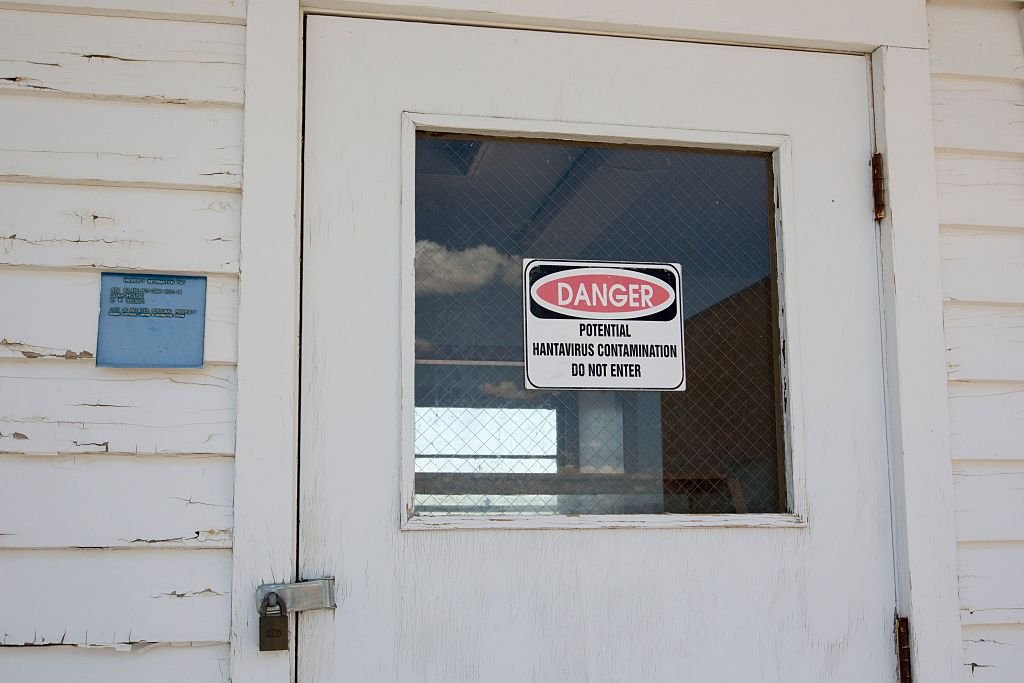
The European Centre for Disease Prevention and Control (ECDC) has deployed an expert to the cruise ship affected by the Andes hantavirus outbreak, as the likely source becomes clearer.
“It is important that we take a precautionary approach at this point in time to reduce the likelihood of further transmission,” said ECDC Director Pamela Rendi-Wagner in a statement.
The ECDC has also published an assessment of the risk to Europe. “Based on the current evidence, the risk to the general population in Europe remains very low,” the statement reads.
The paper outlines the hypothesis that some passengers were exposed to the virus while spending time in Argentina before embarking and may subsequently have transmitted it to other passengers on board the cruise ship.
A WHO expert elaborated: “The incubation period – the time between infection and the onset of symptoms – is between one and six weeks”, but it is typically more like “two to three weeks”, Anais Legand, a technical expert on viral haemorrhagic fevers at the WHO, told news agency AFP.
The polar expedition ship left Ushuaia in Argentina on 1 April for a cruise across the Atlantic Ocean to Cape Verde, where it arrived on Sunday, with around 150 passengers and crew on board.
Out of eight confirmed and suspected hantavirus cases, a 70-year-old Dutch passenger was the first to fall ill.
He began showing symptoms including fever, headache and mild diarrhoea on 6 April, and developed respiratory distress on 11 April, dying on board the same day, the WHO said.
The man “very clearly had exposure before boarding the ship”, an exposure “certainly linked to a rodent”, she said.
The WHO says that before boarding the MV Hondius, the man and his wife travelled in South America, including Argentina.
According to data published on Monday by the Argentine health ministry, 42 new cases of hantavirus have been reported in the country this year.
The ministry also reported a family cluster in the southern Chubut region, with suspected human-to-human transmission.
Three suspected cases evacuated
Among the three ship passengers who have died, only the Dutch man’s 69-year-old wife has been confirmed positive so far for hantavirus.
She had been suffering gastrointestinal symptoms when she accompanied her husband’s remains ashore on the remote British territory of Saint Helena on 24 April, before flying to Johannesburg on 25 April, and dying the following day.
A third passenger, a German national, is also suspected of having died from hantavirus on the ship on 2 May.
Two others who were on the ship and are being treated in hospitals in Johannesburg and Zurich have also tested positive, while three suspected cases have been evacuated from the ship and are being flown to the Netherlands. One German passenger was then transported to Düsseldorf.
The vessel, which has been anchored off the Cape Verde capital Praia since Sunday, set sail on Wednesday bound for Spain’s Canary Islands.
Hantavirus is usually spread from infected rodents, typically through urine, droppings and saliva.
There is documented human-to-human transmission for only one strain, Andes virus, detected in both living confirmed cases.
(cs, sma)
Source:
www.euractiv.com