



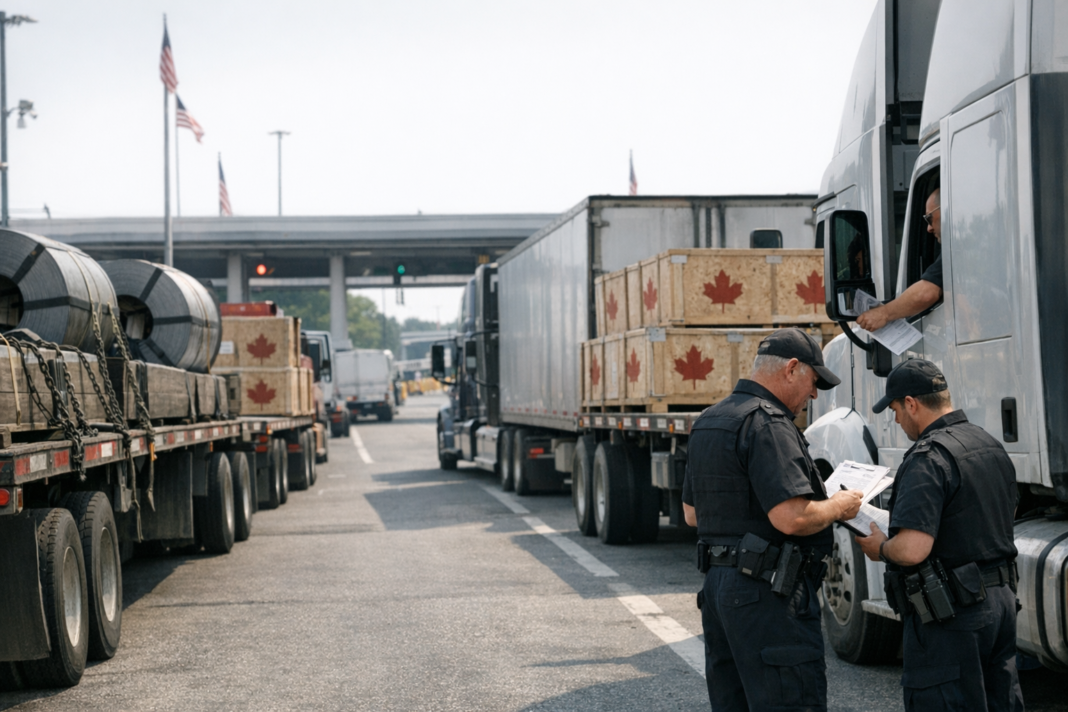
President Donald Trump announced a sweeping 50% tariff on imports of cars, trucks, automobile parts and steel from Canada, to take effect on 1 January 2027. The measure, communicated via social media, characterised Canadian trade measures as unfavourable to the United States and repeated a claim that Canada has been “ripping off” American producers and farmers. The tariffs target both finished vehicles and key raw materials used in manufacturing.
The decision represents a significant shift in trade policy between neighbours whose economies are deeply integrated. North American automobile production relies on cross-border flows of parts and steel; changes in tariff rates could raise costs across assembly lines and complicate sourcing strategies for manufacturers. Analysts note that tariffs of this scale would affect not only major automakers but also smaller suppliers that operate on thin margins and depend on predictable trade rules. The move comes amid an already tense period in bilateral economic relations.
For consumers and businesses the most immediate effect would likely be higher prices and uncertainty. Higher import duties on vehicles and inputs typically filter through to retail costs, and companies may face difficult decisions about relocating production, absorbing costs or passing them to buyers. The measure also carries implications for agricultural sectors previously mentioned by the president, where cross-border shipments and market access are important. Changes to duties on steel and auto parts could reshape procurement and inventory planning across North American supply chains.
Politically, the imposition of steep tariffs raises the prospect of diplomatic pushback and renewed negotiations to ease commercial frictions. With the tariffs set to begin in January 2027, governments and industry groups have a limited window to seek exemptions, pursue dispute settlement or open talks to mitigate disruption. The announcement marks the latest episode in a deteriorating trade relationship and will be closely watched by policymakers, producers and markets on both sides of the border as they assess next steps.