



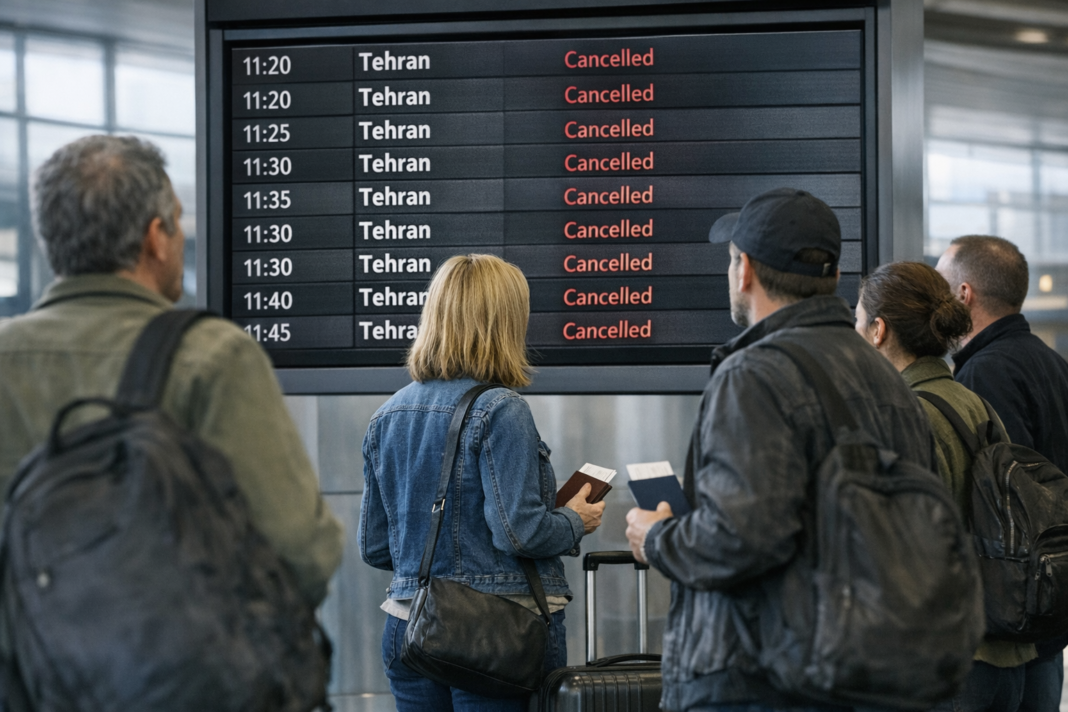
US secondary sanctions aimed at Iran’s aviation sector are prompting airports, fuel providers and maintenance firms to reevaluate commercial ties with Iranian carriers, producing a growing pattern of cancellations and operational uncertainty. The measures increase the legal and financial exposure of third-country companies that service aircraft, and that risk aversion is now reshaping routings, timetables and the availability of essential services.
The mechanics are straightforward: secondary sanctions threaten penalties against non‑US entities that continue specified business with designated Iranian firms, creating incentive for suppliers to suspend support rather than face potential restrictions. Airlines depend on an international chain for fuel, spare parts, insurance and leased aircraft; interruptions at any link can force carriers to delay flights, reduce frequencies or withdraw services entirely. The situation has highlighted how regulatory tools can have immediate ripple effects through the global aviation ecosystem.
Several countries have already canceled regular services to Iran, citing commercial and compliance considerations, and some carriers have announced schedule changes. For passengers this has translated into fewer direct connections, longer travel times and increased reliance on indirect routings. Cargo operators and humanitarian movements can also be affected when providers hesitate to certify fuel, perform maintenance or underwrite insurance, increasing logistical complexity for goods and people moving in and out of the country.
The emerging disruption carries wider implications for trade, medical travel and regional connectivity. Past episodes involving extraterritorial enforcement have sometimes prompted governments to seek clarifications, exemptions or transitional arrangements to limit unintended fallout; such measures can reduce uncertainty but typically require diplomatic negotiation and regulatory adjustments. For now, companies and travelers will need to monitor compliance guidance closely and expect continued variability in schedules as providers weigh commercial needs against enforcement risks.
