



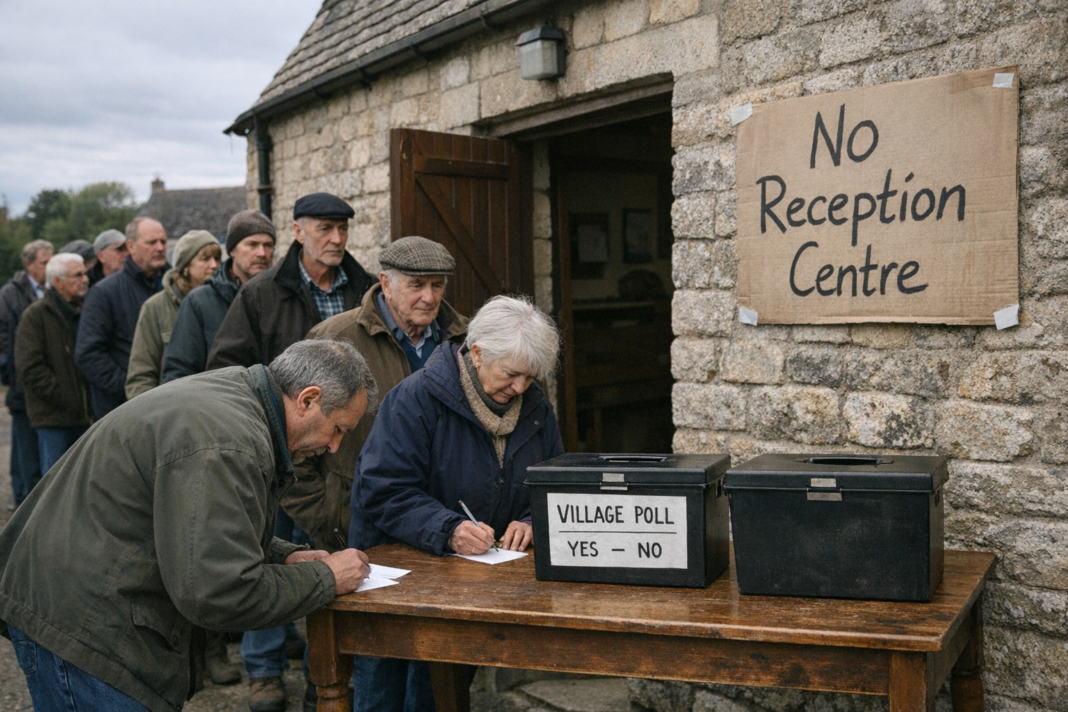
Piddington residents staged a symbolic referendum to protest plans to open an asylum reception centre at a disused military base close to their community. The informal poll, organised locally, framed leaving the United Kingdom as a form of protest, reflecting the strength of local feeling rather than creating any legal change.
The village, located in Oxfordshire, is small and remote, and organisers said they wanted to draw attention to the planned use of nearby military property for migrant accommodation. Residents participating in the vote voiced concerns about the potential impact on local services and the character of their community. The action presents a visible demonstration of opposition without formal standing in planning or national policy processes.
Local referendums of this kind carry no statutory force over planning decisions, which are determined through established application, consultation and approval procedures. Any proposal to convert military land for civilian use typically requires engagement with planning authorities and, where relevant, national agencies responsible for migration and accommodation. The village vote is likely to be used to amplify community views during those procedural stages rather than to halt the process on its own.
The episode underlines the wider tensions that can arise when national strategies interact with small communities. Debates over the siting of accommodation for people seeking protection involve operational, logistical and social dimensions, and often prompt heightened local mobilisation. While the Piddington initiative is primarily symbolic, it may shape local dialogue and attract political and media attention as officials and residents move into formal consultations about the future of the nearby site.