



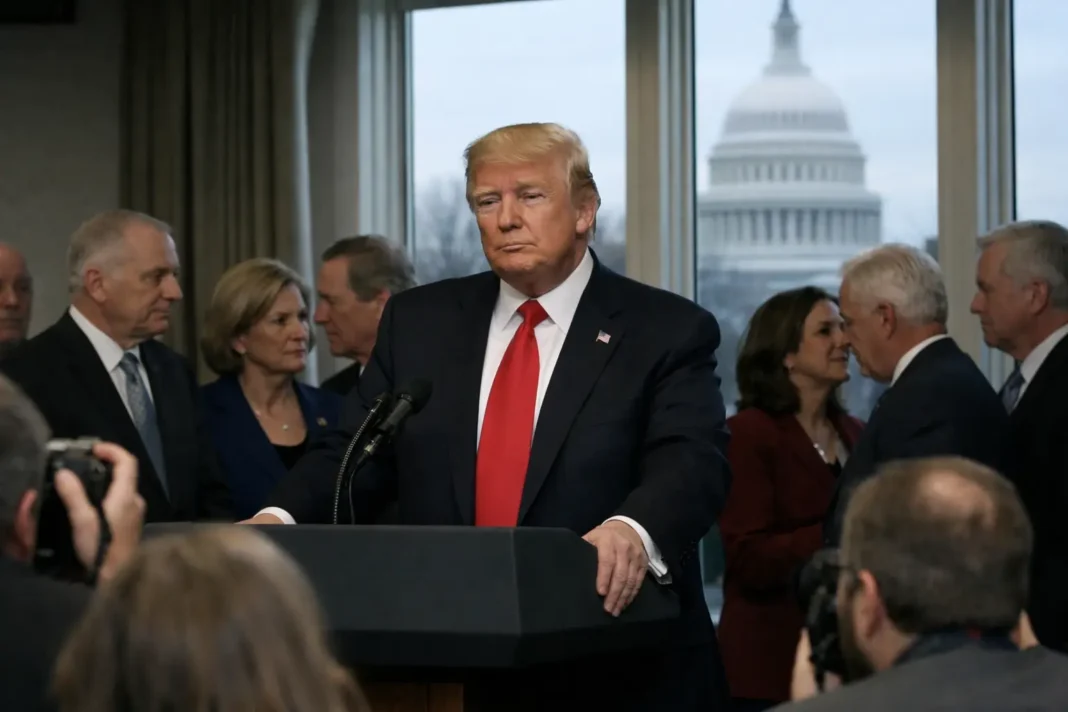
The midterm verdict has sharply altered the political landscape in the United States, with Donald Trump’s Republicans suffering a major setback and the Democrats taking control of Congress. The result gives the opposition party a stronger institutional platform at the halfway point of Trump’s term, turning what was framed as a national test of his presidency into a concrete shift in governing power.
For the White House, the immediate consequence is a more constrained domestic agenda. A Congress controlled by Democrats can challenge legislative priorities, demand greater scrutiny of executive decisions and place political pressure on the administration through hearings and investigations. That does not remove the president’s authority, but it changes the operating environment in Washington: every major initiative now faces a more difficult path and a higher level of public examination.
The result also exposes diverging pressures inside both main parties. Democrats gain momentum and a clearer route to influence national debate, but they must translate an electoral victory into disciplined congressional action. Republicans, meanwhile, face the task of assessing how closely their fortunes remain tied to Trump’s political style and priorities. Midterm defeats often force parties to reconsider strategy, messaging and candidate selection before the next national contest.
Beyond Washington, the vote matters because US domestic politics shape the room available for foreign policy. The presidency retains leading authority over diplomacy, security and trade, yet a stronger Democratic presence in Congress can affect the tone and oversight of America’s international commitments. For the European Union and its institutions, including the European Union, the election signals a more complex American political landscape rather than an automatic policy reversal.
The broader takeaway is that the midterms have not ended political conflict in the United States; they have redistributed it. Trump remains in office, Republicans remain a central force, and Democrats now hold a powerful congressional position from which to oppose, investigate and negotiate. The balance of power has shifted, and with it the rhythm of US politics at home and abroad.
