



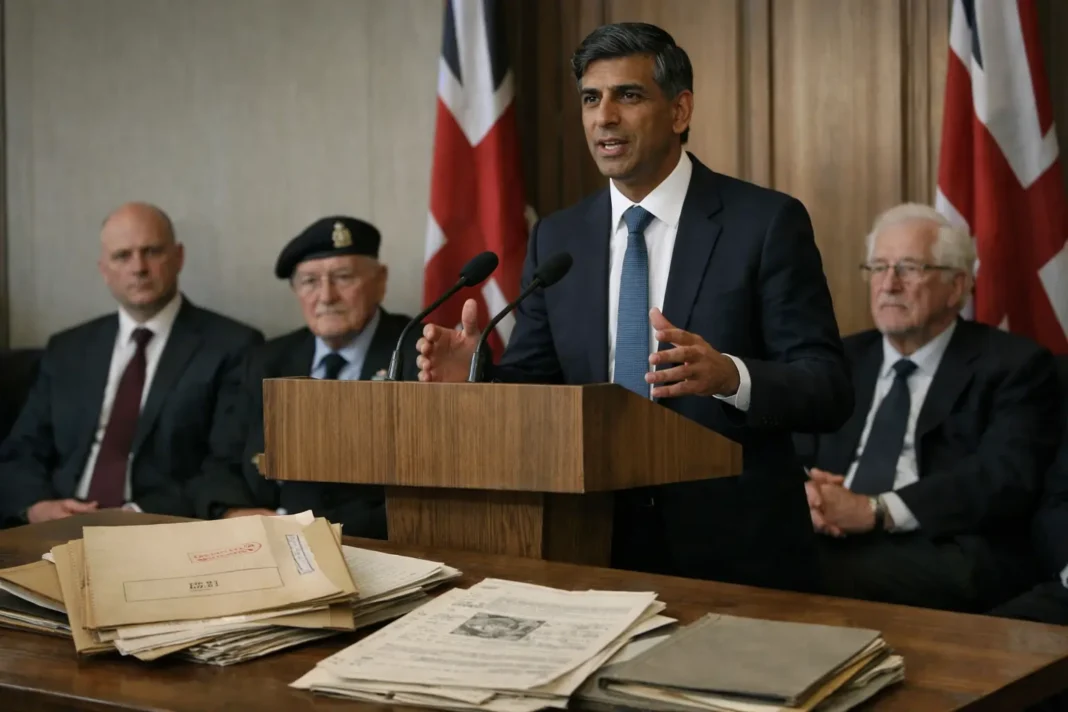
Britain’s nuclear test veterans are to have their claims examined by an independent panel after the prime minister confirmed a Hillsborough-style process focused on the health legacy of the country’s Cold War atomic programme. The announcement places renewed attention on former service personnel who have long sought a clearer public account of what they were exposed to and what records exist about the consequences.
The panel’s purpose will be to review the available evidence surrounding the programme and its possible impact on those who served during that period. By invoking a Hillsborough-style model, the government is signalling an approach associated with independent scrutiny, access to documentation and public confidence in the handling of sensitive historical material. The commitment, presented by Burnham as a route to the “full truth,” will be judged by veterans and their families on the breadth of its access and the clarity of its conclusions.
The issue has remained politically and morally significant because it sits at the intersection of national defence secrecy, medical accountability and the treatment of former personnel. Britain’s atomic programme belonged to the strategic landscape of the Cold War, when nuclear capability was treated as central to security policy. Decades later, the question is no longer only what the state did, but how openly it is prepared to confront the human legacy for those who took part in operations linked to testing and development.
An independent panel does not in itself determine responsibility or compensation, but it can change the terms of the debate by establishing a more authoritative record. For nuclear test veterans, the central expectation will be transparency: the release or examination of relevant files, a credible assessment of health concerns and a process that families can trust. For the UK government, the decision creates a public test of how far official institutions are willing to go in revisiting one of the most sensitive chapters in post-war defence policy.
The confirmation also reflects a wider trend in British public life: historical grievances involving the state are increasingly being addressed through mechanisms designed to establish facts outside the normal political cycle. In this case, the outcome will matter not only to veterans in the United Kingdom, but also to the broader public understanding of how national security decisions are documented, scrutinised and explained long after the events themselves have passed into history.
