



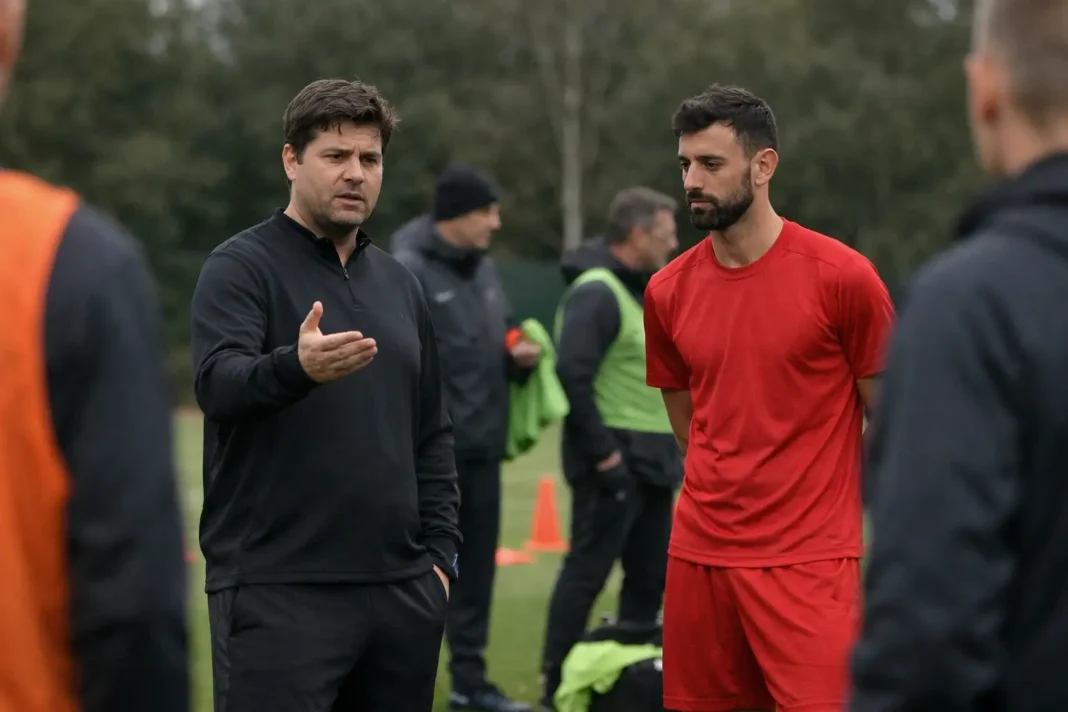
Mauricio Pochettino arrives at Manchester United with three immediate questions shaping the start of his tenure: how to reset the culture, how to restore defensive reliability, and how to define the role of Bruno Fernandes. For a club under constant scrutiny, the appointment places a coach known for demanding intensity and cohesion into one of the most pressured jobs in football.
The cultural challenge is the broadest and perhaps the most important. United’s recent years have been marked by repeated attempts to rebuild identity, standards and consistency. Pochettino’s reputation was built on structured training, collective commitment and a clear tactical language, notably during his Premier League work before taking charge of clubs such as Paris Saint-Germain and Chelsea. At Old Trafford, that approach will be judged not only by performances but by whether the squad shows a more stable competitive edge week after week.
Defence is another immediate priority. Manchester United’s ambitions in the Premier League depend on a team structure that protects the back line and limits chaotic passages of play. Pochettino’s sides have often relied on pressing, compact distances between units and full participation without the ball. Translating that into a United squad will require clarity over positioning, workload and selection. The issue is not only about defenders; it concerns the balance between midfield, attack and the spaces left when the team tries to play on the front foot.
The role of Bruno Fernandes will be central to that balance. The Portugal international has been one of United’s most influential players and a leading creative presence, but he also embodies a wider tactical question: how much freedom should the team’s main playmaker have in a system built on collective control? Pochettino must decide how to use Fernandes’ passing range, movement and leadership while ensuring that the side remains connected in transition. That decision could influence the shape of the midfield and the rhythm of United’s attacking play.
For Pochettino, the early phase at Manchester United will be measured through signs of order as much as results. Supporters will look for a recognisable plan, players will need defined responsibilities, and the club’s hierarchy will expect progress that feels sustainable. Culture, defence and Fernandes are not separate debates; together they form the framework of the project now placed in the Argentine coach’s hands.