



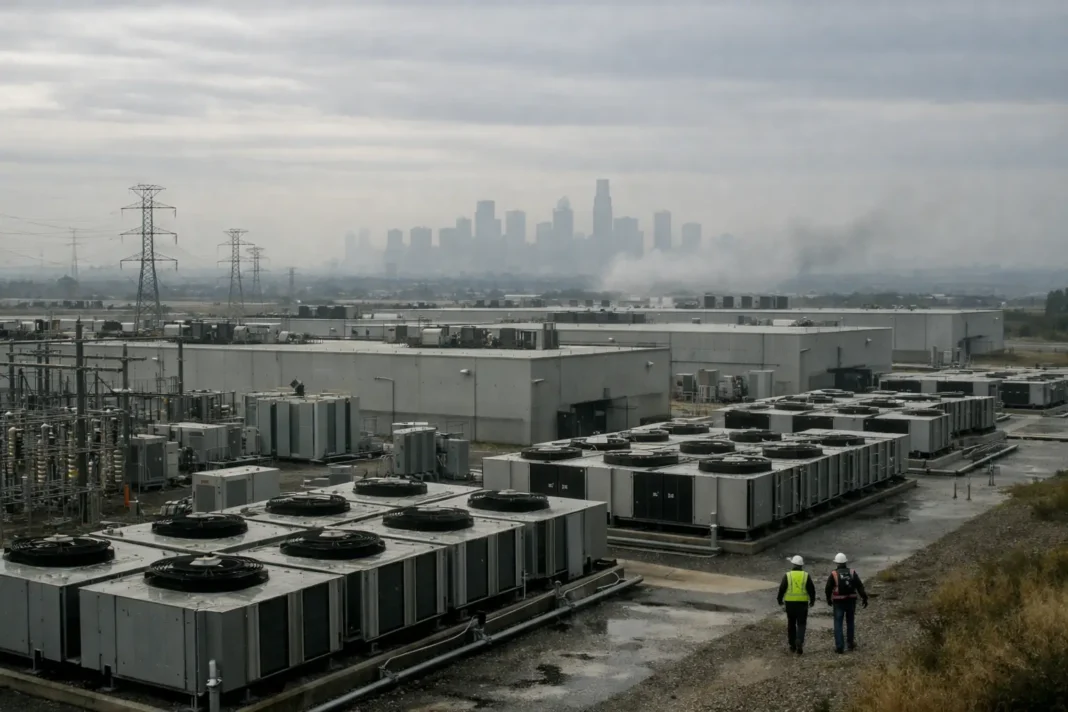
AI data centers are becoming a larger part of the digital economy, but their environmental effects may extend well beyond the communities that host them. A new study by researchers at MIT finds that the rapid buildout of facilities supporting artificial intelligence can contribute to health and air quality impacts in regions located far from the physical sites where the computing infrastructure is installed.
The research adds a wider geographic dimension to the debate over data centers, which are often assessed through their local demands on land, power and cooling systems. As AI models require substantial computing capacity, the infrastructure behind them is expanding quickly. The MIT findings indicate that the environmental burden linked to this growth cannot be understood only by looking at the immediate surroundings of a facility.
Air-quality impacts can travel across administrative and regional boundaries, meaning that communities distant from a data center may still experience consequences associated with the energy and emissions profile of the systems that serve it. This is especially relevant for policymakers and planners because siting decisions are usually made at local or state level, while pollution exposure may not follow the same boundaries. The study therefore places public health considerations at the center of infrastructure planning for the AI sector.
The findings also sharpen questions for companies and public authorities expanding digital infrastructure. Data centers are essential to the services that increasingly shape business, research and public administration, yet their growth creates environmental responsibilities that reach beyond the facilities themselves. For governments, the MIT study underscores the need to evaluate AI infrastructure through broader air-quality and health frameworks, not only through economic development or local permitting criteria.