



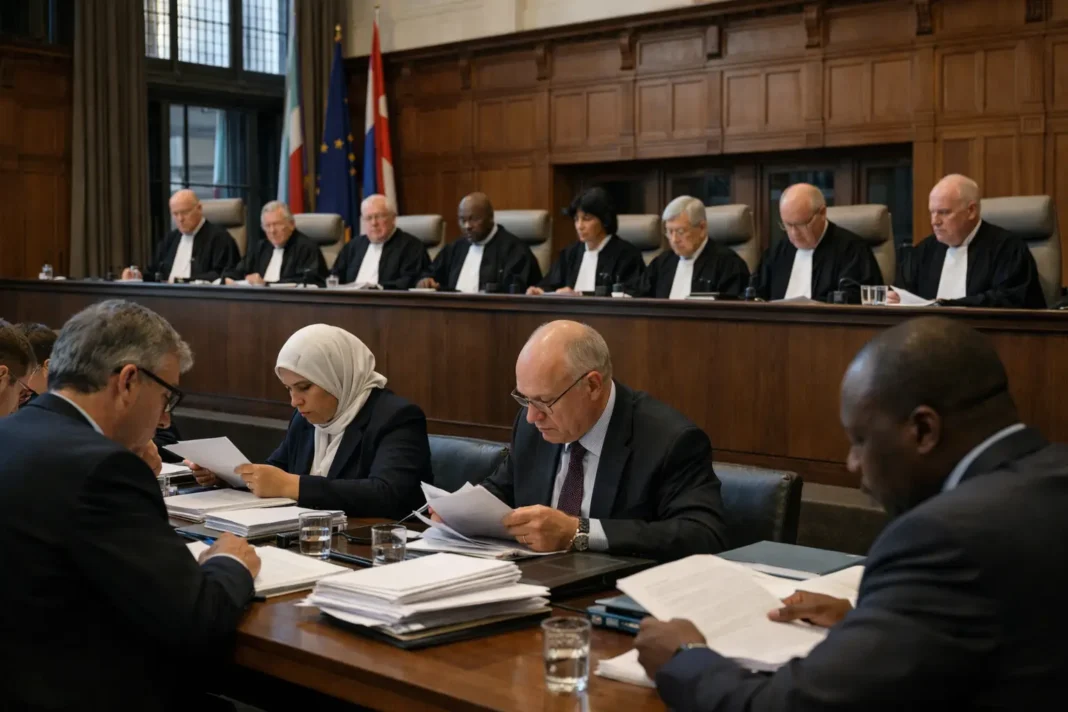
The landmark judgment by the International Court of Justice has established, by nine votes to six, that Myanmar committed genocide against the Rohingya in connection with the 2017 military operations in Rakhine State. The decision gives formal legal weight to a crisis that has driven repeated waves of displacement, including major flights into Bangladesh in 1978, 1991-92 and again after the violence of 2017.
For the Rohingya, recognition does not yet translate into return or restitution. More than 1.2 million Rohingya remain in refugee camps in Bangladesh, with no concrete pathway back to Myanmar under conditions they consider safe. The core obstacle remains citizenship. Since Myanmar removed Rohingya citizenship rights in 1982, the community has faced severe limits on movement, schooling, health care and family life. A return to Rakhine without legal status and protection would leave many refugees exposed to the same system that pushed them out.
Myanmar’s political landscape makes implementation even more difficult. The military has controlled the state since the 2021 coup that removed Aung San Suu Kyi and the National League for Democracy from power. Min Aung Hlaing, long associated with the armed forces’ campaign against the Rohingya, later moved from commander-in-chief to the presidency through a military-dominated parliament. In Rakhine itself, the situation is further complicated by the rise of the Arakan Army, which has controlled large areas since late 2023 and has imposed harsh restrictions on Rohingya communities living under its authority.
The court’s authority is significant, but its power is limited. The International Court of Justice can determine state responsibility and order reparations or compensation, yet it has no independent enforcement arm. Coercive action would have to pass through the United Nations Security Council, where China and Russia hold veto power and have maintained political, diplomatic and military ties with Myanmar’s military leadership. That gap between judgment and enforcement remains the central weakness of international accountability in the case.
The ruling may still shape the crisis beyond the courtroom. Renewed attention could help address shrinking humanitarian support in Bangladesh, where the World Food Programme has provided food assistance of US$7 to US$12 per person per month. It may also increase scrutiny of regional policies, including Malaysia’s deportations of refugees to Myanmar since September 2026, at a time when the UNHCR has lacked access to verify whether returns are voluntary. Above all, the judgment rejects Myanmar’s portrayal of the Rohingya as illegal migrants and recognises them as a distinct people subjected to genocide.