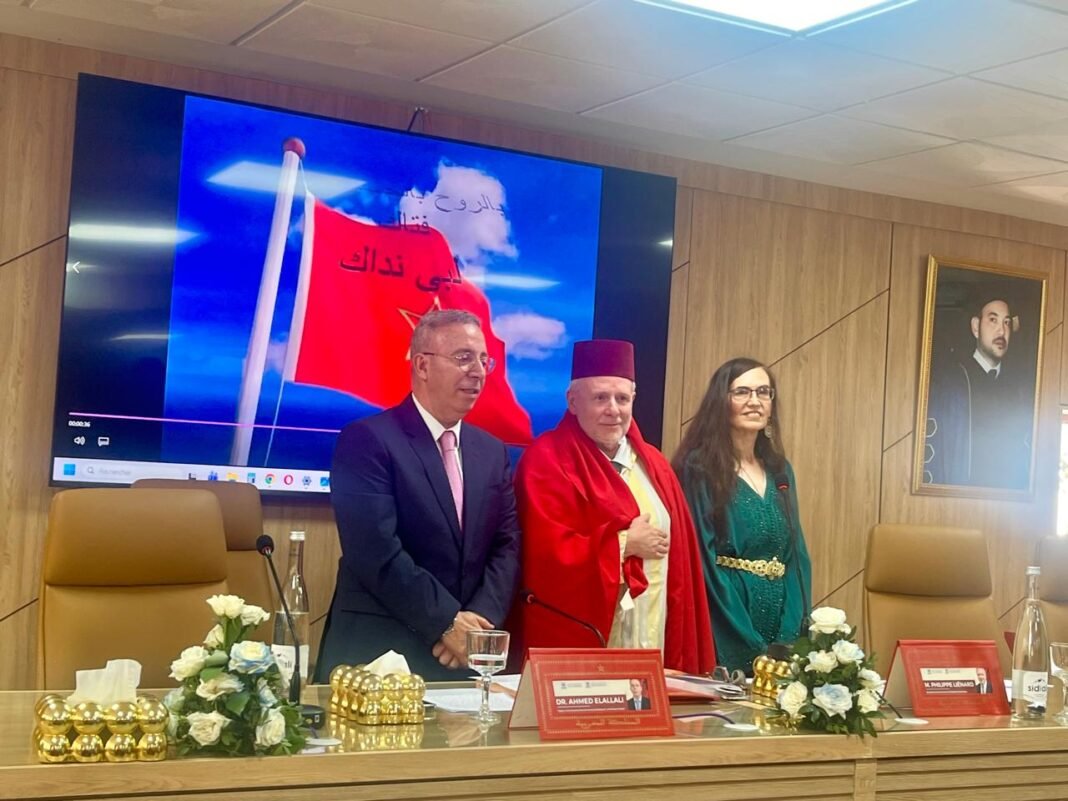
A landmark literary and academic gathering in Tangier brings together history, international law and geopolitics as Belgian author Philippe Liénard presents his latest work, “Sahara, Terre du Maroc,” during Morocco’s Unity Day celebrations.
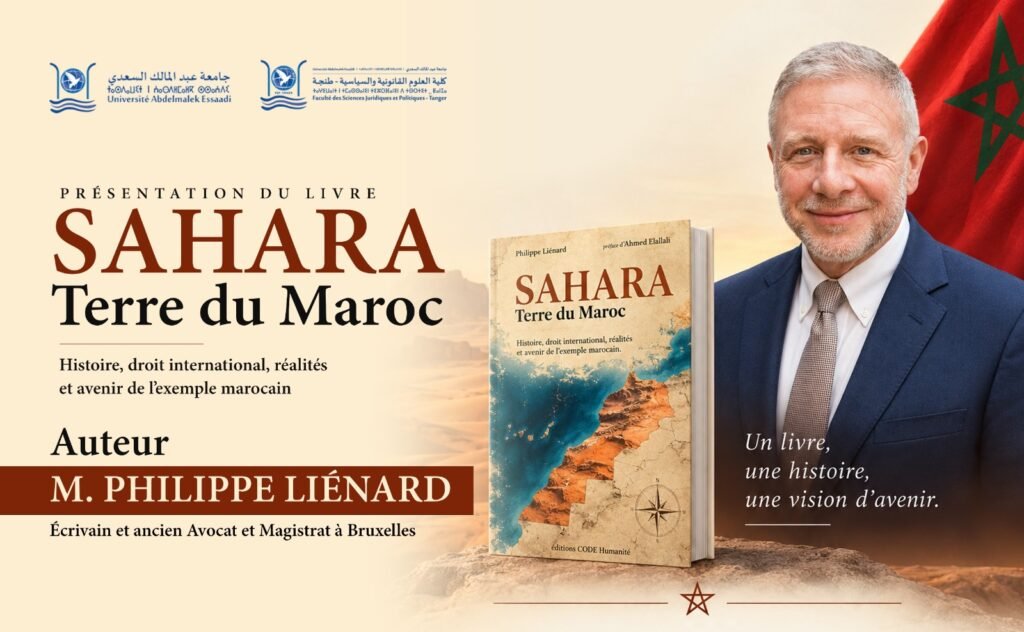
TANGIER, Morocco — October 31, 2026. The Faculty of Legal and Political Sciences in Tangier hosted a significant academic and cultural event on Saturday as Belgian legal expert, author and former magistrate Philippe Liénard officially presented his latest book, Sahara, Terre du Maroc (Sahara, Land of Morocco).
Organised as part of Morocco’s Unity Day celebrations, the event brought together members of the academic community to examine the historical, legal and geopolitical dimensions of the Moroccan Sahara.
The publication offers a European legal scholar’s perspective on a subject that has long occupied a central place in Moroccan diplomacy and regional political discussions.
Beyond the presentation of a new book, the gathering provided an opportunity to reflect on the relationship between historical heritage, international law and the evolving diplomatic environment surrounding the Moroccan Sahara.
A Book Connecting History, International Law and Geopolitics
In Sahara, Terre du Maroc: History, International Law, Realities and the Future of the Moroccan Model, Philippe Liénard explores four interconnected dimensions of the Moroccan Sahara question.
The first concerns history, examining the development of the Moroccan state and the historical connections between the Kingdom and its southern territories.
The second focuses on international law, including the legal arguments advanced by Morocco and the role of international institutions in addressing territorial disputes.
The third examines contemporary geopolitical realities, particularly the strategic importance of the Sahara for regional stability, economic development and relations between Africa and Europe.
Finally, the author considers future prospects, including Morocco’s autonomy initiative and the wider implications of diplomatic developments for the region.
Throughout the book, Liénard presents an interpretation supportive of Morocco’s position, while addressing a question that remains part of an ongoing United Nations political process.
His work seeks to provide readers with a broader historical and legal framework rather than focusing exclusively on the latest diplomatic developments.
Philippe Liénard: A Belgian Voice in an International Debate
Philippe Liénard brings extensive professional and academic experience to the subject.
A former magistrate, honorary lawyer, legal scholar and essayist, he has devoted much of his career to the study of law, history, international relations and geopolitical developments.
According to his publisher’s biography, Liénard has authored more than 25 books and participated in numerous conferences in Belgium, France and Morocco.
His professional background includes legal practice, international public law and research into the historical foundations of contemporary political questions.
With this new publication, the Belgian author offers a European perspective on Morocco’s historical and legal arguments concerning the Moroccan Sahara.
The book also reflects his broader interest in the relationship between national identity, historical continuity and international legal principles.
Ahmed Elallali Highlights the Academic Importance of the Publication
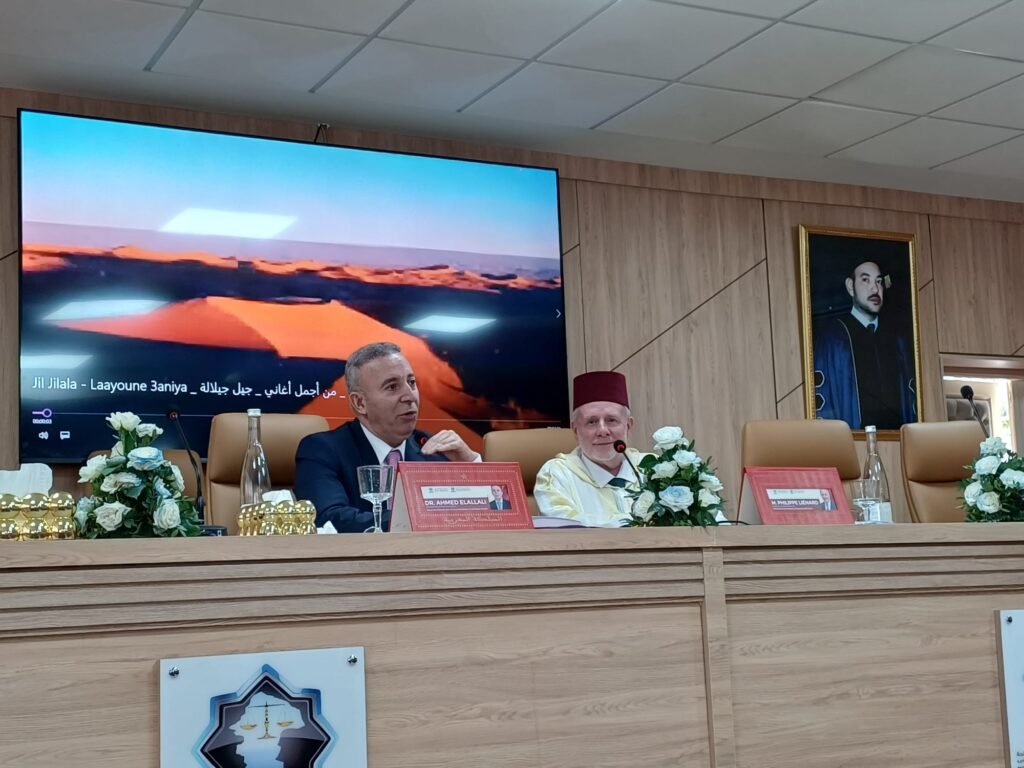
The presentation was attended by Ahmed Elallali, Dean of the Faculty of Legal and Political Sciences in Tangier, who also wrote the foreword to the book.
His involvement underlined the academic dimension of the publication and the importance of examining major political and legal questions through historical research and scholarly analysis.
During the event, the value of transmitting historical and legal knowledge to younger generations was highlighted as an important element of university education.
The gathering also demonstrated the role that academic institutions can play in encouraging informed discussion about subjects of national and international significance.
By bringing together legal analysis, historical perspectives and geopolitical considerations, the event reflected the interdisciplinary nature of the questions explored in Liénard’s work.
A Cultural Ceremony Reflecting Moroccan Traditions
The Tangier gathering was also marked by moments celebrating Moroccan cultural heritage.
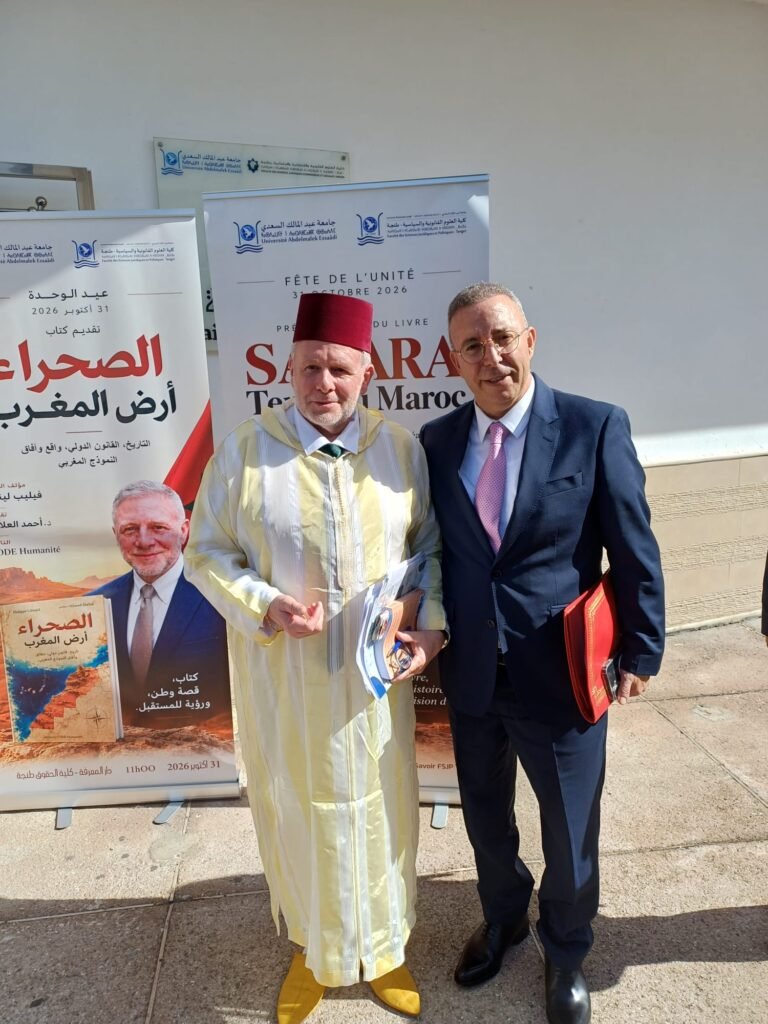
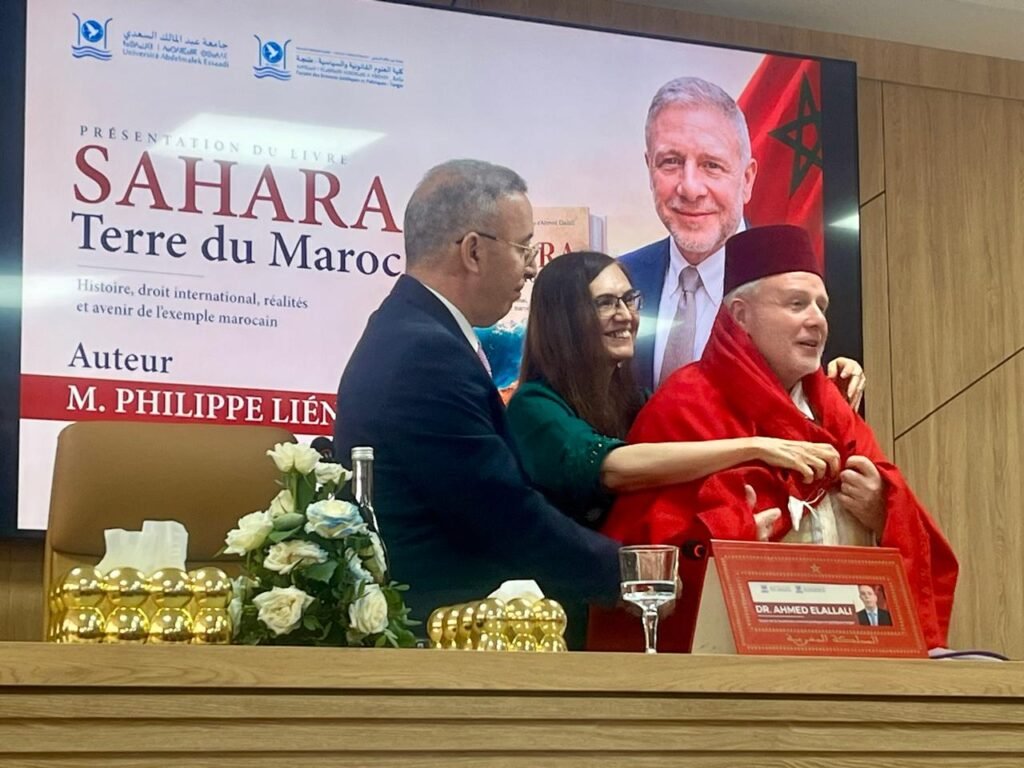
Photographs taken during the event show Philippe Liénard wearing traditional Moroccan attire, including a red fez, alongside university representatives.
The images capture a ceremony that combined academic discussion with expressions of Moroccan hospitality and cultural identity.
The traditional elements of the occasion added a distinctive dimension to the presentation, reflecting the cultural significance attached to Unity Day celebrations.
For the Belgian author, the event also represented an opportunity to engage directly with Moroccan academics and participants in a setting dedicated to intellectual exchange.
The Moroccan Sahara and a Changing Diplomatic Landscape
The publication comes at a time when Morocco continues to advance its autonomy initiative as a proposed political solution to the Sahara question.
The diplomatic environment has evolved considerably in recent years, with growing international attention to Morocco’s proposal and its potential role in a negotiated settlement.
The adoption of United Nations Security Council Resolution 2797 on October 31, 2025, was welcomed by Moroccan authorities as an important diplomatic development.
Nevertheless, the United Nations process remains the international framework for pursuing a political solution, with questions of sovereignty and self-determination continuing to form part of the broader discussion.
Against this background, Liénard’s book examines how historical arguments, international legal principles and contemporary diplomatic developments interact.
It also considers the importance of the Moroccan Sahara for regional cooperation, investment opportunities and the wider strategic relationship between North Africa and Europe.
Tangier as a Meeting Point Between Europe and Africa
The choice of Tangier as the setting for the book presentation carries particular cultural and geographical significance.
Situated at the crossroads of Europe and Africa, the city has long been associated with international exchange, intellectual encounters and cultural diversity.
Hosting the presentation at a university institution reinforced this tradition by creating a platform for discussion between European legal scholarship and Moroccan academic perspectives.
The event also highlighted the importance of educational and cultural cooperation in strengthening dialogue across the Mediterranean.
In this context, the participation of a Belgian author provided an additional international dimension to the gathering.
A Publication That Encourages Historical and Legal Reflection
More than a conventional book launch, the Tangier presentation placed the Moroccan Sahara at the centre of a wider discussion about history, international law and geopolitical change.
Through Sahara, Terre du Maroc, Philippe Liénard seeks to contribute to the understanding of Morocco’s position by bringing together historical documentation, legal reasoning and analysis of contemporary international relations.
The publication is intended for readers interested in Moroccan history, international diplomacy, legal studies and the strategic challenges facing North Africa.
Its presentation on October 31, during Morocco’s Unity Day celebrations, gave the occasion particular symbolic importance.
For Tangier’s academic community, the gathering offered another opportunity to connect scholarly research with major international questions.
For Philippe Liénard, it marked the public presentation of a work that places the Moroccan Sahara within a broader historical and geopolitical perspective, while inviting readers to examine the legal and diplomatic arguments shaping its future.