



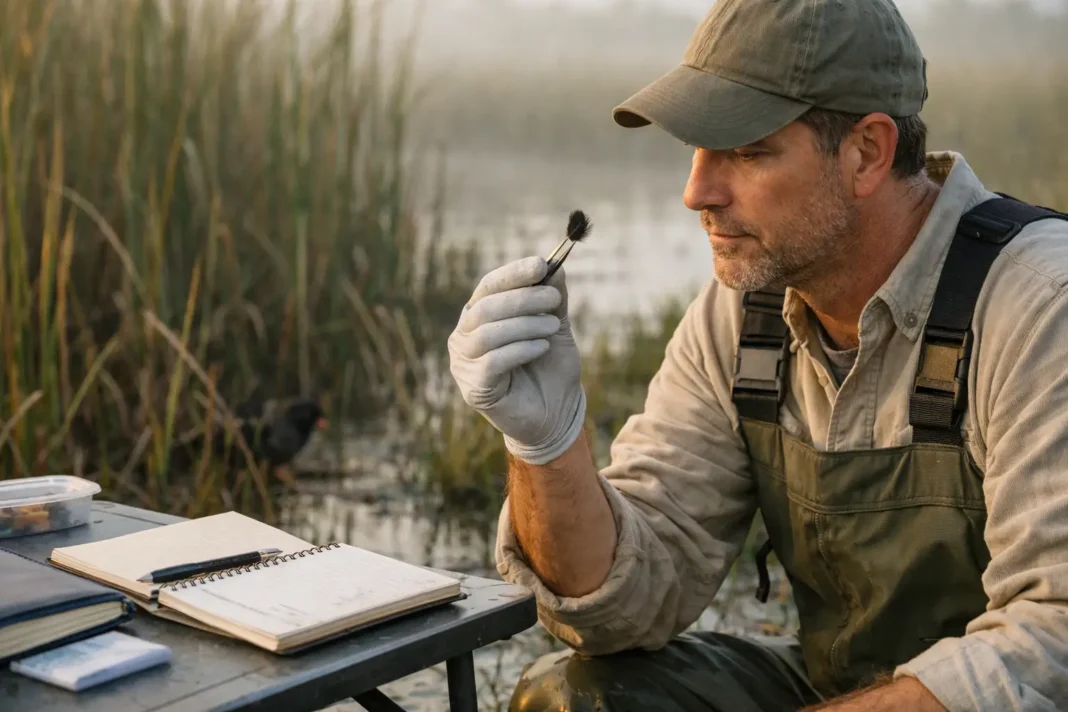
In Texas wetlands, the search for the eastern black rail can unfold in complete darkness. Field teams move through marsh grass at night, using a rope fitted with plastic bottles that contain rattling cat toys. The noise is designed to disturb the dense vegetation enough to detect one of North America’s most elusive wetland birds, a species better known for remaining hidden than for offering researchers a clear view.
The practical challenge is linked to a larger scientific question: whether some eastern black rails found in Texas stay there year-round, or whether they move north as part of a broader seasonal pattern. The possibility that a single feather may help answer that question is significant because observing the bird directly is exceptionally difficult. Feathers can preserve biological information from the period in which they grew, making them valuable evidence for understanding movement without repeatedly capturing or tracking the same individual.
The eastern black rail, a small marsh bird associated with shallow wetlands, has become a conservation concern across parts of its range. The U.S. Fish and Wildlife Service lists the eastern black rail as threatened under the Endangered Species Act, reflecting pressure from habitat loss, degradation and changing water conditions. For conservation planning, knowing where birds come from and where they go is not a minor detail. A population that remains in coastal Texas would require different priorities from one that connects the state to breeding areas farther north.
That is why feather-based research matters for migration studies. It can help connect scattered records from marshes that are often hard to access and difficult to survey consistently. In a species that calls from dense cover and is active when visibility is poor, even modest gains in information can improve how agencies and land managers understand habitat needs across seasons. The method also underscores how conservation science often depends on patient fieldwork rather than dramatic discoveries.
For the eastern black rail, the question is not only where the bird can be heard on a given night, but what that presence represents. A feather collected in the marsh may help distinguish a local resident from a traveler passing through a wider network of wetlands. As coastal habitats face growing pressure, that distinction could shape future decisions about protection, restoration and monitoring for one of the least visible birds in the American marsh landscape.