



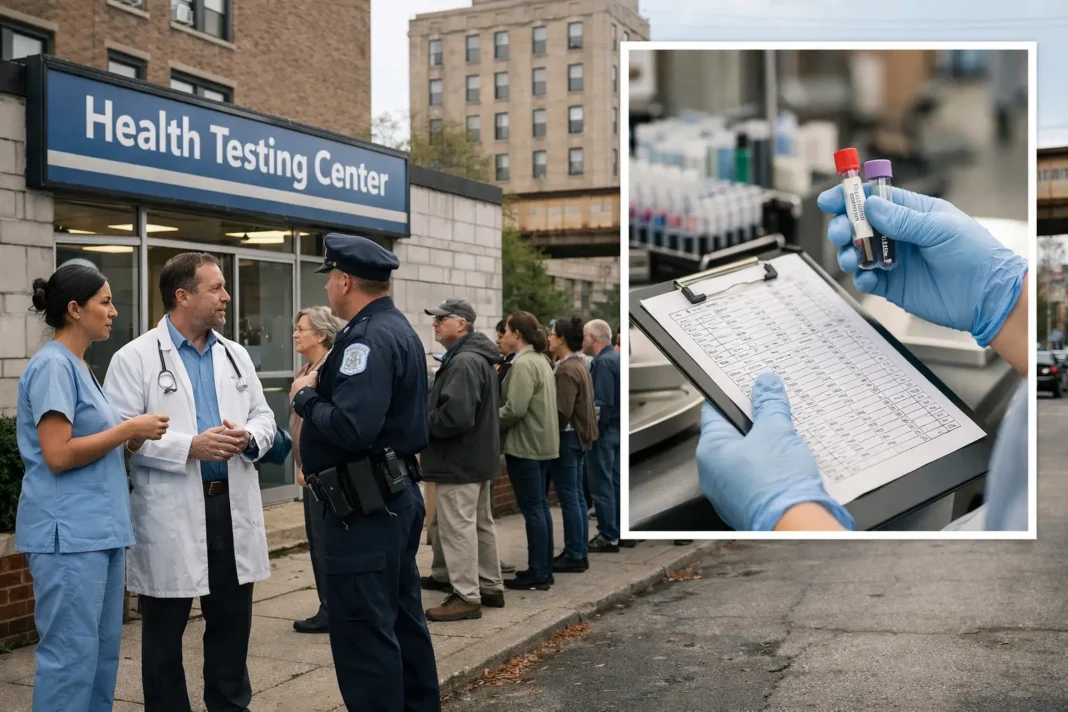
Chicago faces a growing challenge as a new wave of synthetic drugs reaches neighbourhoods across the city. Reporting from the ground, BBC correspondent Quentin Sommerville described how residents, health providers and first responders are confronting substances that are often difficult to identify and increasingly unpredictable in their effects. Local communities say the character of the problem — in which chemically altered products circulate quickly — complicates both prevention and treatment efforts.
Health services and emergency teams in Chicago report that the clinical presentations associated with these compounds vary, creating urgent demand for toxicology resources and rapid testing. Community organisations and outreach groups are focused on harm reduction measures, trying to provide information and access to support without waiting for slower criminal-justice responses. At the same time, frontline workers describe the strain placed on already stretched services as they attempt to keep pace with changing supply and patterns of use.
Authorities point to the broader context across the United States, where synthetic drugs have appeared in diverse forms and supply chains. Public-health institutions such as CDC publish guidance on responding to emerging substances, but local officials in Chicago say practical challenges remain: identifying the compounds quickly, sharing laboratory data, and coordinating responses that combine enforcement, treatment and prevention. Community leaders emphasise the need for greater access to testing, training for clinicians, and support for harm reduction initiatives.
The situation in Chicago underscores wider policy and public-health questions: how to detect novel substances more rapidly, how to ensure access to care for affected individuals, and how to support communities hit hardest by what they describe as a shifting drug landscape. For residents and services on the front line, the immediate priority is meeting demand for treatment and accurate information while authorities and public-health bodies work to adapt monitoring, guidance and resource allocation.
