



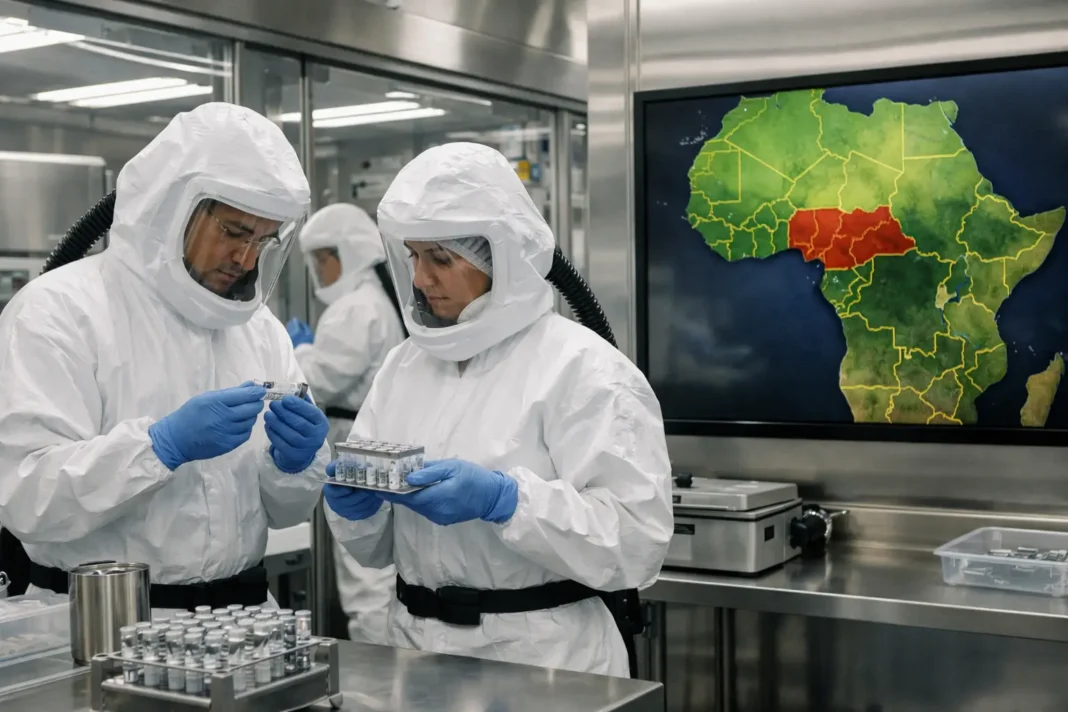
For nearly five decades, Ebola has stood as one of the most feared viral diseases in global health. Yet the current outbreak linked to the Bundibugyo strain highlights a critical weakness in the world’s medical defenses: there is still no licensed vaccine specifically designed to protect against this form of the virus. The gap matters because Ebola is not a single uniform threat, but a group of related viruses with important biological differences.
The best-known progress in Ebola prevention has focused on the Zaire ebolavirus, the strain responsible for some of the deadliest outbreaks recorded. A vaccine exists for that strain and has become an important tool in outbreak response. It does not, however, provide a universal shield against every type of Ebola. Bundibugyo ebolavirus, which is causing the present outbreak, remains outside the protection offered by currently approved products.
The World Health Organization classifies Ebola virus disease as a severe illness with a high fatality risk, transmitted through direct contact with infected bodily fluids and contaminated materials. In outbreak settings, vaccination is only one part of the response. Case identification, isolation, contact tracing, safe care practices and community engagement remain essential, particularly when no strain-specific vaccine is available. The absence of a Bundibugyo vaccine therefore places more weight on traditional public health measures.
New scientific work is drawing attention because it points toward the possibility of broader protection across different Ebola virus types. That goal has long been central to vaccine research: a shot capable of covering multiple strains would make outbreak response faster and less dependent on identifying the exact virus before deploying a targeted product. The latest findings do not change the immediate reality for communities affected by the current outbreak, but they strengthen the rationale for investing in vaccines that are not limited to a single Ebola subtype.
The challenge is both scientific and practical. Viruses in the Ebola family share features, but immune responses that work well against one strain may not be strong enough against another. Turning promising research into a usable vaccine also requires clinical testing, manufacturing capacity, regulatory review and systems to deliver doses rapidly when outbreaks occur. Until that pathway is completed for Bundibugyo and other strains, the world will continue to face an uneven arsenal against a disease it has known for decades.
