



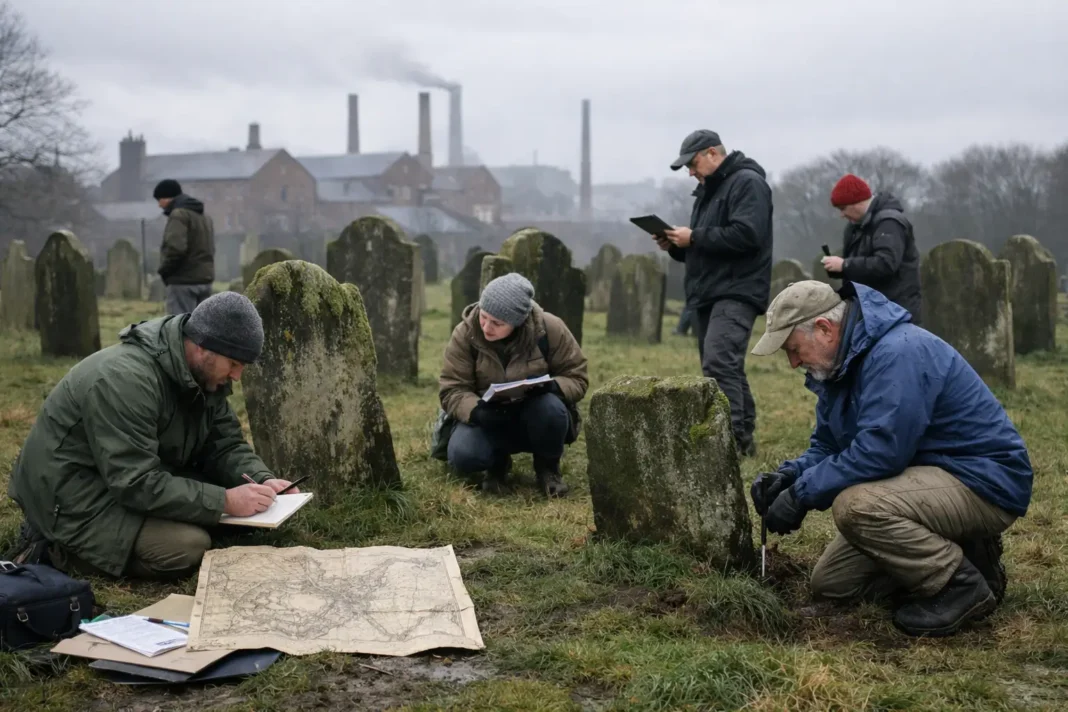
A centuries-old cemetery is reshaping how scientists read one of the most familiar health crises of Industrial Revolution England. The period, generally placed between about 1760 and 1840, transformed a largely farming-based economy into an industrial one. That shift brought dense towns, factory labour, polluted air, poor housing and limited sunlight, all conditions long associated with childhood disease. New attention to burial evidence adds another element to that picture: climate shocks may also have influenced the spread and severity of rickets.
Rickets, described by the NHS as a condition affecting bone development in children, occurs when the growing skeleton does not mineralise properly. In Industrial Revolution communities, it was widespread enough to become one of the defining illnesses of childhood poverty. Lack of sunlight mattered because it reduced a key natural pathway linked to healthy bone formation, while smoke-filled streets and cramped indoor lives deepened the problem for many children.
The historical explanation has usually centred on three forces: urbanisation, latitude and social status. Growing industrial towns placed families closer to pollution and farther from open space. Northern locations limited seasonal sunlight. Poverty shaped diet, housing and working conditions. The cemetery evidence does not erase those causes. Instead, it points to climate as a neglected pressure that could have interacted with them, worsening already fragile living conditions during periods of environmental stress.
The significance of climate lies in its ability to connect human health with wider environmental disruption. In a society already under strain from industrial growth, even temporary changes affecting weather, light or food systems could have had uneven consequences. Children in poor households would have been especially exposed because they had fewer protections against bad housing, inadequate nutrition and limited access to outdoor environments. The burial record therefore offers more than a medical clue; it helps link skeletal disease to the conditions of daily life.
For historians and scientists, the finding broadens the study of industrial-era disease without turning away from well-established social causes. It suggests that the health costs of industrialisation were shaped not only by factories, smoke and poverty, but also by environmental variability. A cemetery can preserve evidence of lives lived under multiple pressures, offering a more complete account of how industrial growth, climate and inequality converged in the bodies of children.
