



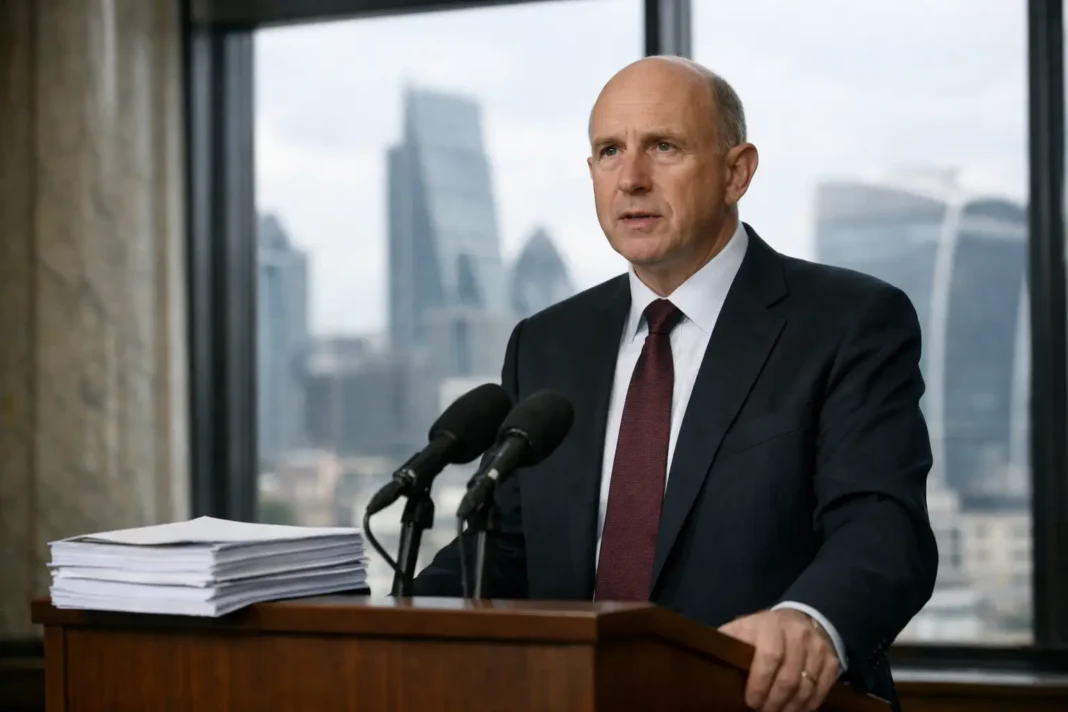
Chancellor John Healey is preparing to include a levy on banks in his budget scheduled for 28 October, seeking to shore up public finances weakened by recent events in the Middle East. The measure would be presented as part of broader efforts to restore fiscal balance after additional spending and economic pressures related to the conflict.
The chancellor made the move while in Bangkok for meetings at the annual assembly where the International Monetary Fund noted progress on deficit reduction and urged continued fiscal discipline. Officials say the step is intended to share the burden of consolidation across sectors, and follows international commentary on the need for steady policy as recovery plans are implemented in the UK.
Policymakers argue that a targeted tax on financial institutions can generate revenue without immediate cuts to public services, addressing costs attributed to emergency responses and security-related expenditures stemming from the situation in the Middle East. Industry figures typically warn that higher charges on banks may affect credit conditions and profitability, while ministers emphasise the priority of securing the public finances ahead of winter spending rounds.
Implementation will require parliamentary approval and detailed design to define the base, rate and duration of any new charge. The proposal is likely to prompt debate across party lines and among stakeholders in the financial sector, with scrutiny on how the proceeds will be allocated within the wider budget. With the 28 October timetable set, attention now turns to the formal budget documents and the exchanges they will trigger in Westminster and in financial markets as the government balances short-term pressures with its medium-term fiscal strategy.