



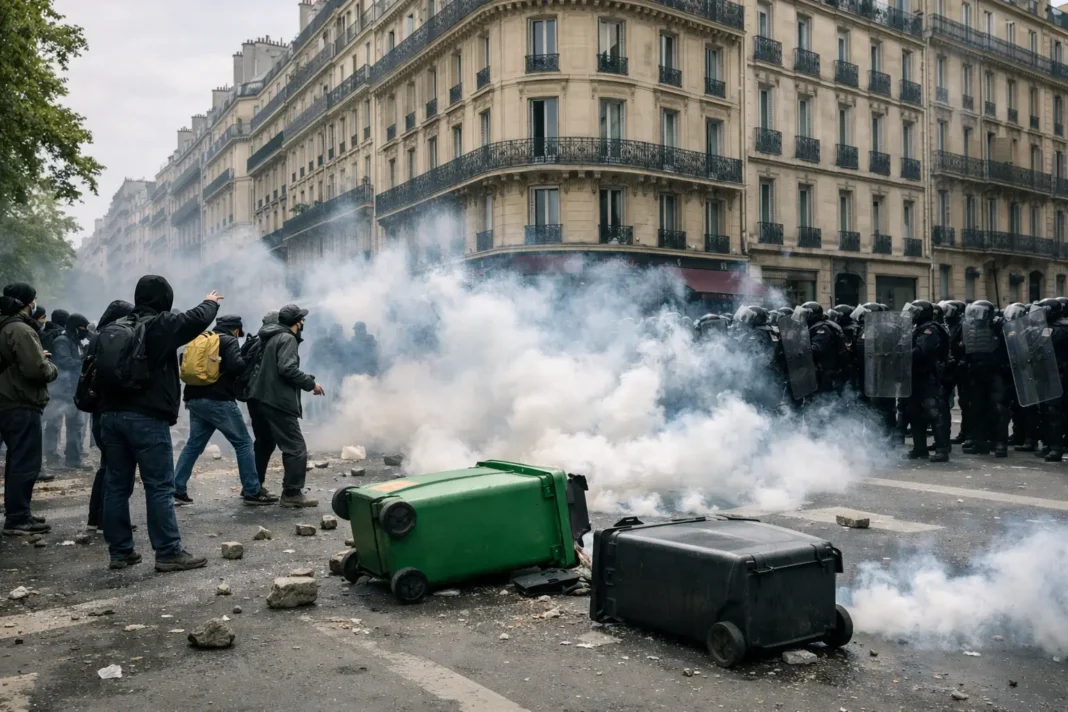
Mass demonstrations across France have escalated into episodes of violence and large-scale disorder, with estimates of between 500,000 and 800,000 participants nationwide, the majority of them students. Authorities report more than 100 police officers injured, many protesters hurt and as many as 2,000 arrests. Public buildings in several cities — including a town hall in Limoges and a tourist office in Lyon — were damaged and hundreds of shops looted during clashes that followed peaceful marches.
The unrest began in the Paris suburb of Créteil on 21 September, when high school pupils demonstrated over deteriorating facilities, teacher shortages and compressed timetables that leave little free time. Heat lingering from the summer added strain in classrooms without cooling, while older students also express frustration with the online university admissions portal Parcoursup. Many teachers share concerns about large classes and pay levels, and the unrest spread quickly to some 700 schools, reaching areas beyond traditionally working‑class neighbourhoods and suggesting broader grievances linked to education and opportunity. Education has emerged as the focal point of that mobilisation.
Alongside peaceful protesters, small groups of violent individuals, often described in France as casseurs, carried out arson, looting and attacks on police. Observers note echoes of the 1968 student upheavals in the mood of blocked prospects among young people, while similar demonstrations in Spain, Italy, Portugal and Belgium show the phenomenon is not limited to France. Longer-term pressures — from pandemic disruptions to cost-of-living and housing strains, compounded by energy and geopolitical shocks — form the background to the current wave of dissent.
The political consequences are already visible as the country heads toward the April 2027 presidential contest. Right‑wing leaders have seized on the disorder to argue for tougher school discipline, increased policing and stricter immigration enforcement; these messages align with the platform of Marine Le Pen and the Rassemblement National. The unrest poses a challenge for the incumbent Emmanuel Macron administration and risks undermining left‑wing figures such as Jean‑Luc Mélenchon, whose party supported the protests. How the government responds to legitimate student demands while containing violence will be decisive for public sentiment and the shape of the campaign. 2027 presidential elections remain in focus as the situation evolves.
