



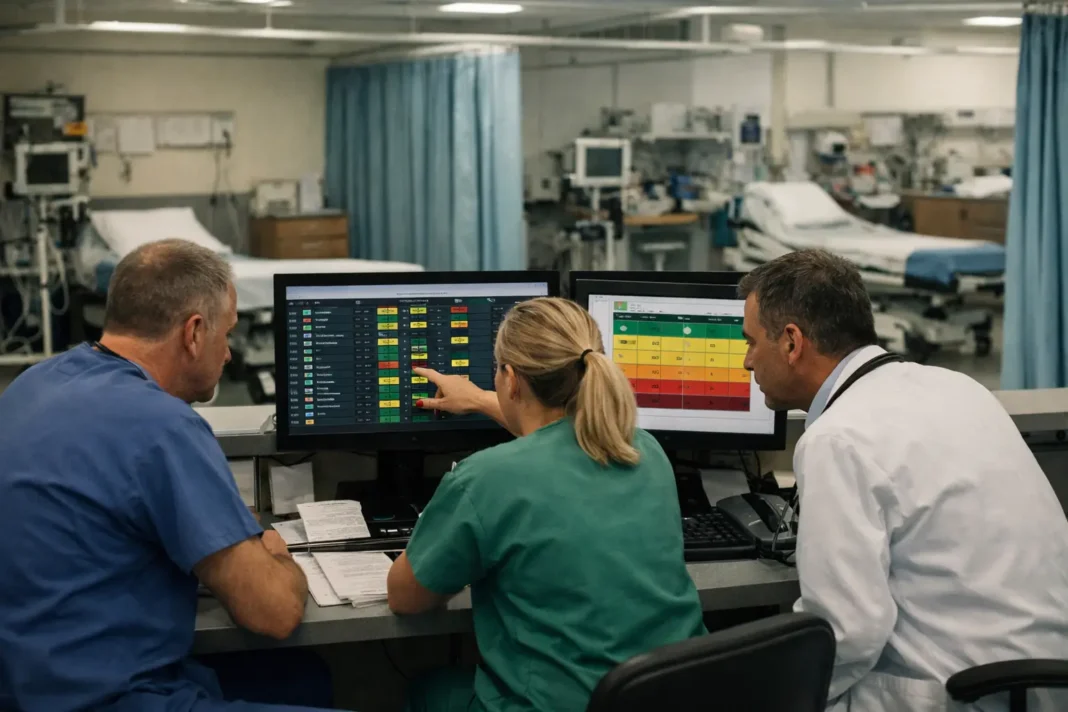
A new warning system in England is being introduced to help emergency departments identify children whose condition is worsening while they wait for treatment. The initiative is designed for A&E settings, where clinical teams must assess patients quickly while managing constant pressure on capacity. Its central purpose is to make deterioration in sick children more visible to staff before emergency care begins.
The measure is aimed at supporting busy teams in emergency care, where delays between arrival, assessment and treatment can create added risk for vulnerable patients. Children can deteriorate rapidly, and signs of worsening illness may be harder to detect in crowded departments when staff are handling multiple urgent cases at the same time. A structured alert system can help ensure that changes in a child’s condition are not missed while they are still waiting to be seen.
NHS England, the body responsible for the health service in England, oversees national planning and standards across urgent and emergency services. More information about its work is available through NHS England. The warning system fits into a broader effort to strengthen safety in frontline healthcare environments by giving clinical staff clearer prompts when a patient needs reassessment or faster attention.
For families, the change addresses a particularly sensitive point in emergency care: the period after arrival but before definitive treatment. A child may initially appear stable, then become more unwell as time passes. The new approach is intended to reduce reliance on observation alone in overstretched departments and to support faster recognition when a child’s condition changes. It does not replace clinical judgment, but adds a further mechanism to help prioritise children at risk of rapid deterioration.
The initiative’s significance lies in its focus on the waiting period, a moment often shaped by demand, staffing levels and the severity of other cases arriving at the same time. By flagging children who may need urgent reassessment, the system is intended to help emergency teams direct attention where it is most needed. In a service where minutes can matter, improving the visibility of deterioration is a practical step toward safer care for young patients in England’s A&E departments.
