



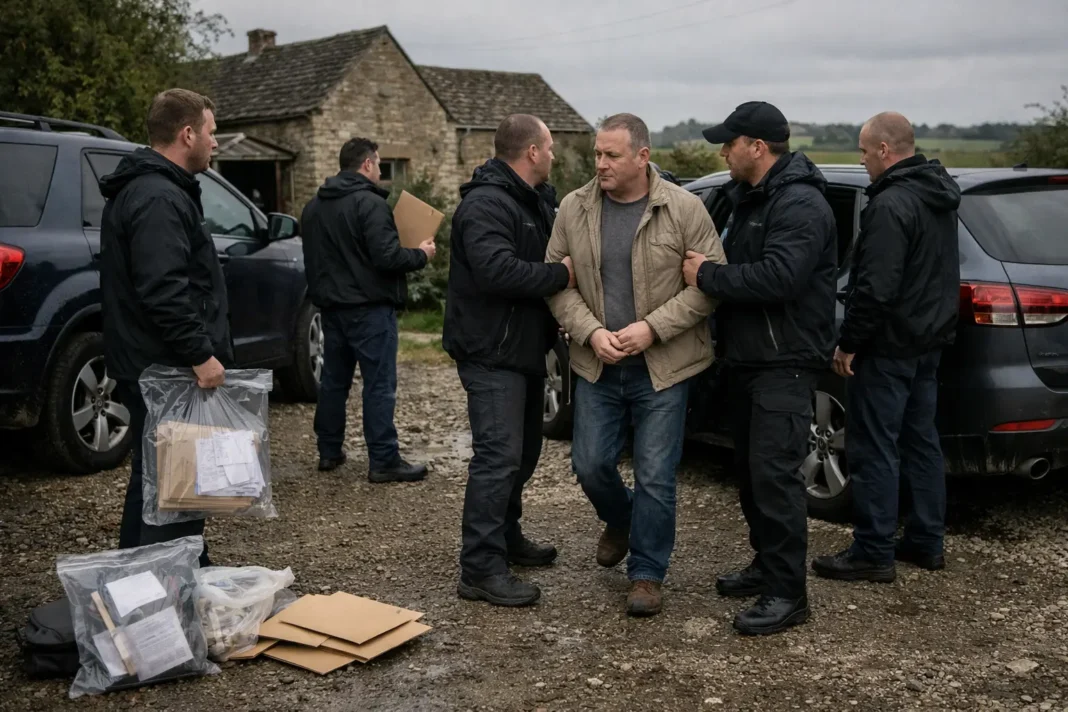
British counterterrorism police have arrested a member of the US Army near Gloucester, in western England, as part of an espionage investigation connected to Russia. The case involves investigators from both the United States and the United Kingdom, reflecting the sensitive nature of an inquiry that touches on military personnel, national security and allied intelligence cooperation.
The arrest was carried out by British officers working in the counterterrorism policing network, which also handles certain national security investigations. The soldier is suspected of espionage-related activity with a Russian connection. No further public details have been released about the individual’s rank, unit, assignment, or the precise conduct under examination. The limited information available leaves the operational scope of the case unclear, including whether the alleged activity involved classified material, contacts with intermediaries, or attempted intelligence collection.
The presence of both American and British investigators gives the case an immediate transatlantic dimension. When a serving member of the US armed forces is detained abroad over alleged spying, the investigation can involve overlapping legal, diplomatic and military channels. British authorities are responsible for the arrest and any proceedings on UK soil, while US officials have a direct interest because the suspect belongs to the American military. Cooperation between Washington and London is also central to wider security coordination between the two governments.
The location of the arrest, near Gloucester, places the inquiry within the UK rather than on a US military installation, an important distinction for jurisdiction and policing. Counterespionage cases often proceed with a high degree of confidentiality because investigators must protect intelligence sources, methods and ongoing lines of inquiry. That secrecy can limit the information available to the public in the early stages while authorities determine whether charges are warranted and what evidence can be presented in court.
The case comes against a broader backdrop of heightened concern over Russian intelligence activity in Western countries, particularly since relations between Moscow and allied governments deteriorated sharply in recent years. For the United States and Britain, allegations involving military personnel carry additional weight because armed forces members may have access to sensitive systems, operational planning or restricted communications. The investigation will now be watched for any formal legal steps, as well as for indications of how closely US and UK authorities coordinate the handling of the suspect and the evidence.
