



NICOSIA – Despite the warmth of the Mediterranean sunshine, a gathering of European leaders in Cyprus has delivered a cool assessment of any prospect of a quick or easy path to EU membership for Ukraine.
Even Ukrainian President Volodymyr Zelenskyy himself has appeared to acknowledge the limits of how quickly or easily his besieged country can find a European home.
“It’s a long process, a very hard one,” António Costa, president of the European Council, said after the EU leaders’ two-day summit, recalling his native Portugal’s nine-year accession path. “We cannot fix artificial moments, three months or ten years.”
His remarks reflect a broader mood shift among EU capitals. While Brussels has in recent months explored more flexible approaches, including a concept informally described as “reverse enlargement”, which would allow earlier political integration, there remains little appetite among leaders to depart from the EU’s established, merit-based framework.
However fast Ukraine moves, enlargement will remain, in Costa’s words, “a merit-based process”.
German Chancellor Friedrich Merz echoed Costa’s assessment. “It is clear to everyone that Ukraine’s immediate accession to the European Union is, of course, not possible,” he told reporters, adding that the EU should seek to “gradually bring Ukraine closer to the EU” by linking its integration to specific reforms.
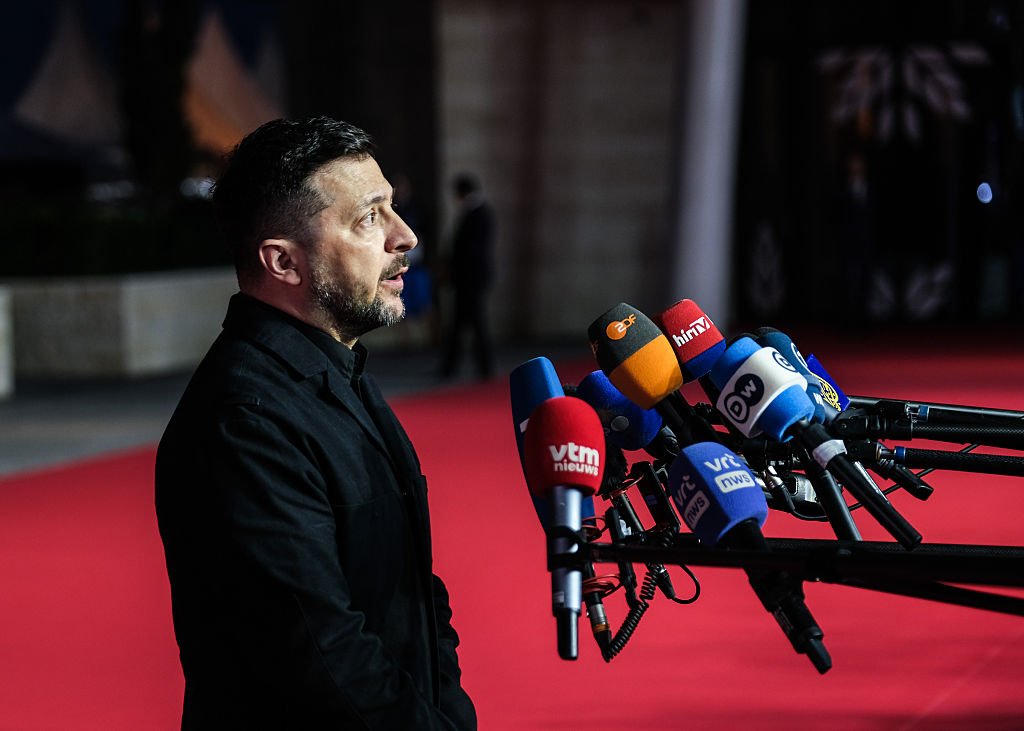
Zelenskyy, who joined the leaders for Thursday’s evening dinner in Ayia Napa, appeared to concede that Kyiv’s accession will not be possible anytime soon.
“We want [it] very much, I always love specific things,” the Ukrainian president said, only half-jokingly, when asked whether his country could join the EU by 2027, as he has previously urged – a timeline even Commission President Ursula von der Leyen has treated with caution.
As night fell over Cyprus, Zelenskyy’s tone turned sombre. “A lot depends not only on President Costa and President von der Leyen. We need unanimity from all the allies.”
Von der Leyen’s Iran energy crisis plan falls flat with EU allies
Ayia Napa, CYPRUS – EU leaders gathered in Cyprus on Thursday night to discuss Ursula…
3 minutes
The Cyprus summit
EU leaders arrived in Cyprus on Thursday in notably buoyant spirits – looking forward to one diplomat described as a “very short holiday” – after agreeing, just hours earlier, on a long-delayed loan package for Ukraine and a fresh round of sanctions on Russia.
The gathering, the first since the electoral defeat of Hungary’s Viktor Orbán, was widely seen as an opportunity to turn the page.
Yet the mood in Ayia Napa proved more nuanced. “I think there is a little bit too much euphoria about the fact that Viktor is no longer there,” Belgian Prime Minister Bart De Wever said ahead of Thursday’s dinner, cautioning against expectations of automatic future consensus on the bloc’s Russia policy.
That note of restraint carried into discussions on energy, where divisions resurfaced over how best to respond to the energy crisis sparked by the US-Israeli war on Iran. The day before the summit, the Commission had proposed tighter coordination on strategic fuels such as diesel and jet fuel, alongside targeted adjustments to state aid rules.
Several leaders signalled unease with aspects of the approach. Italian Prime Minister Giorgia Meloni was among those voicing reservations, suggesting the Commission’s proposals do not yet fully reflect the concerns of member states. “I don’t think I’m alone in the Council,” she said.
Divisions also surfaced on the EU’s policy toward Iran, with Merz suggesting that the bloc should ease sanctions on Tehran as part of a ceasefire deal. “It’s too early, we don’t have a good experience with Iran,” he said. “We cannot ignore the nature of the regime, the violence of the regime against their people, and the thousands of people they killed very recently.”
(bw, aw)
Source:
www.euractiv.com