




See All Key Ideas
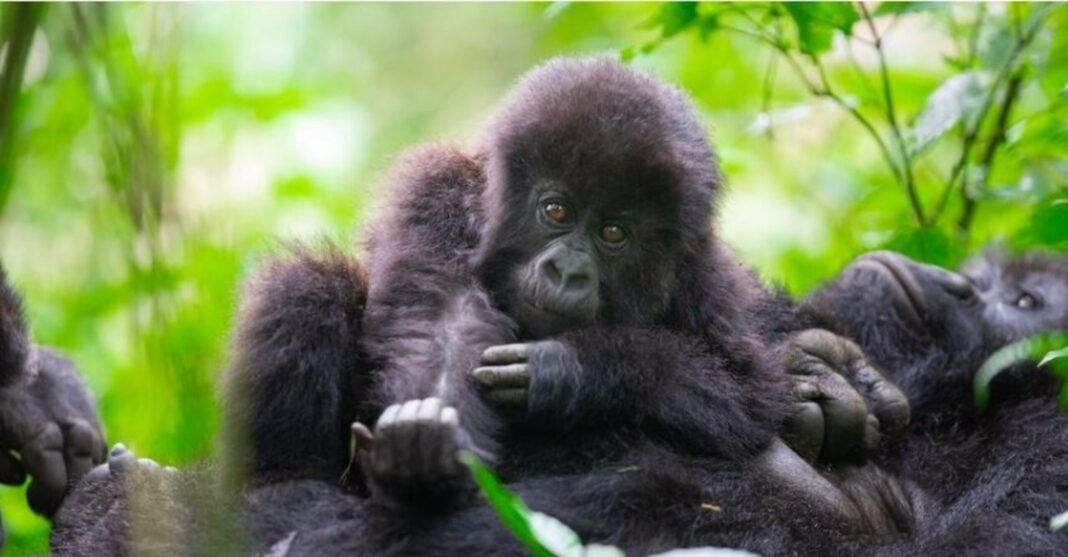
The population of the world’s last mountain gorillas has rebounded by 73% since 1989, allowing the subspecies to be reclassified from critically endangered — one step away from extinction — to endangered. But they remain imperiled, with about 1,063 left.
They live in just one place: the Greater Virunga Landscape that straddles Rwanda, Uganda and the Democratic Republic of Congo (DRC). Conservation here has been extremely challenging, that’s been periodically embroiled in war, beset by armed groups, poachers and a plethora of other serious threats.
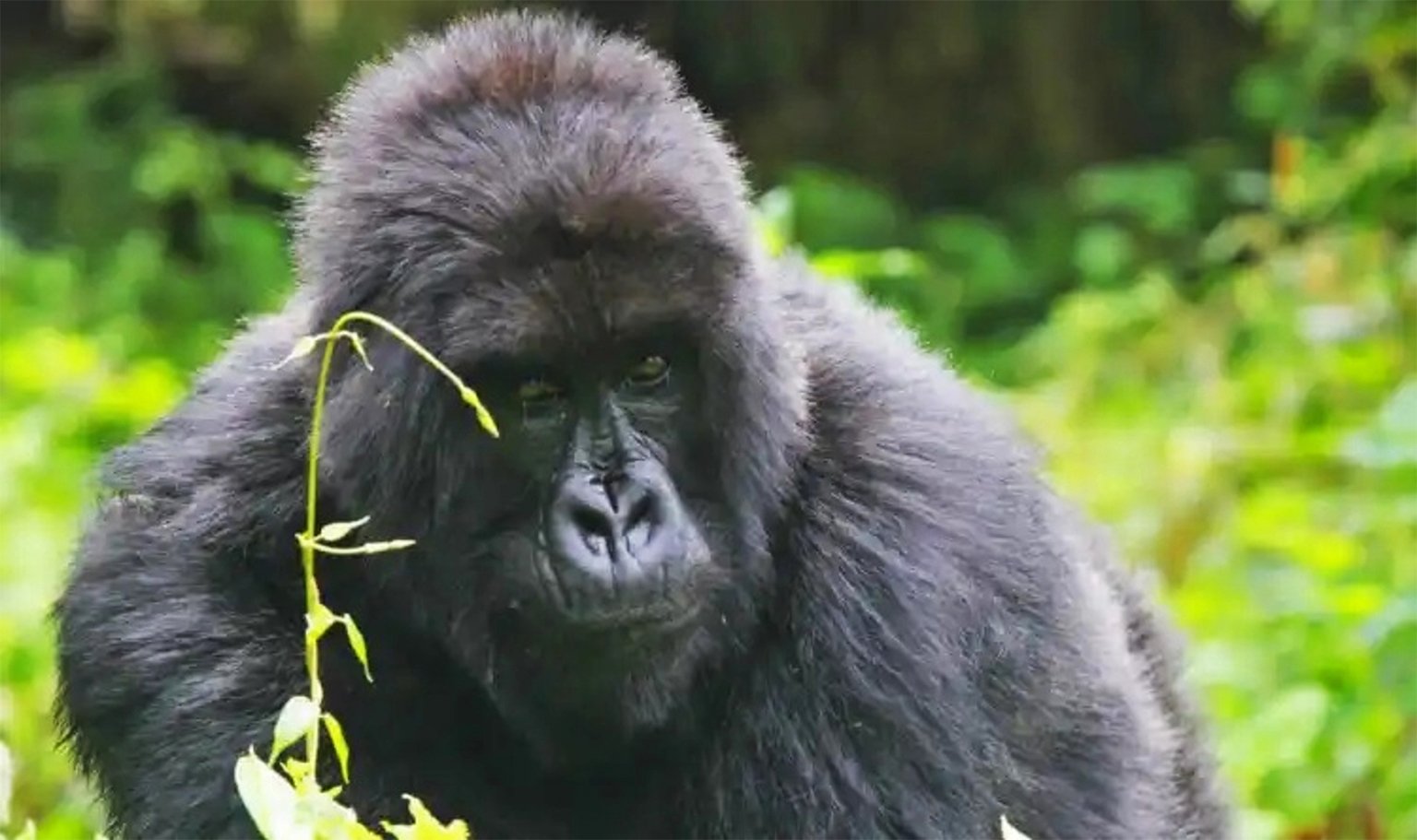
Though these apes dwell at high altitude, from about 2,400-4,000 meters (8,000-13,000 feet) andoften deep within steep valleys and gorges, they’re still in the crosshairs. These apes are poached for their meat and body parts. Their infants are snatched for attractions that entertain tourists. Sometimes they’re trapped in snares set by bushmeat hunters for other wildlife. Meanwhile, their habitat falls to farmers and loggers.
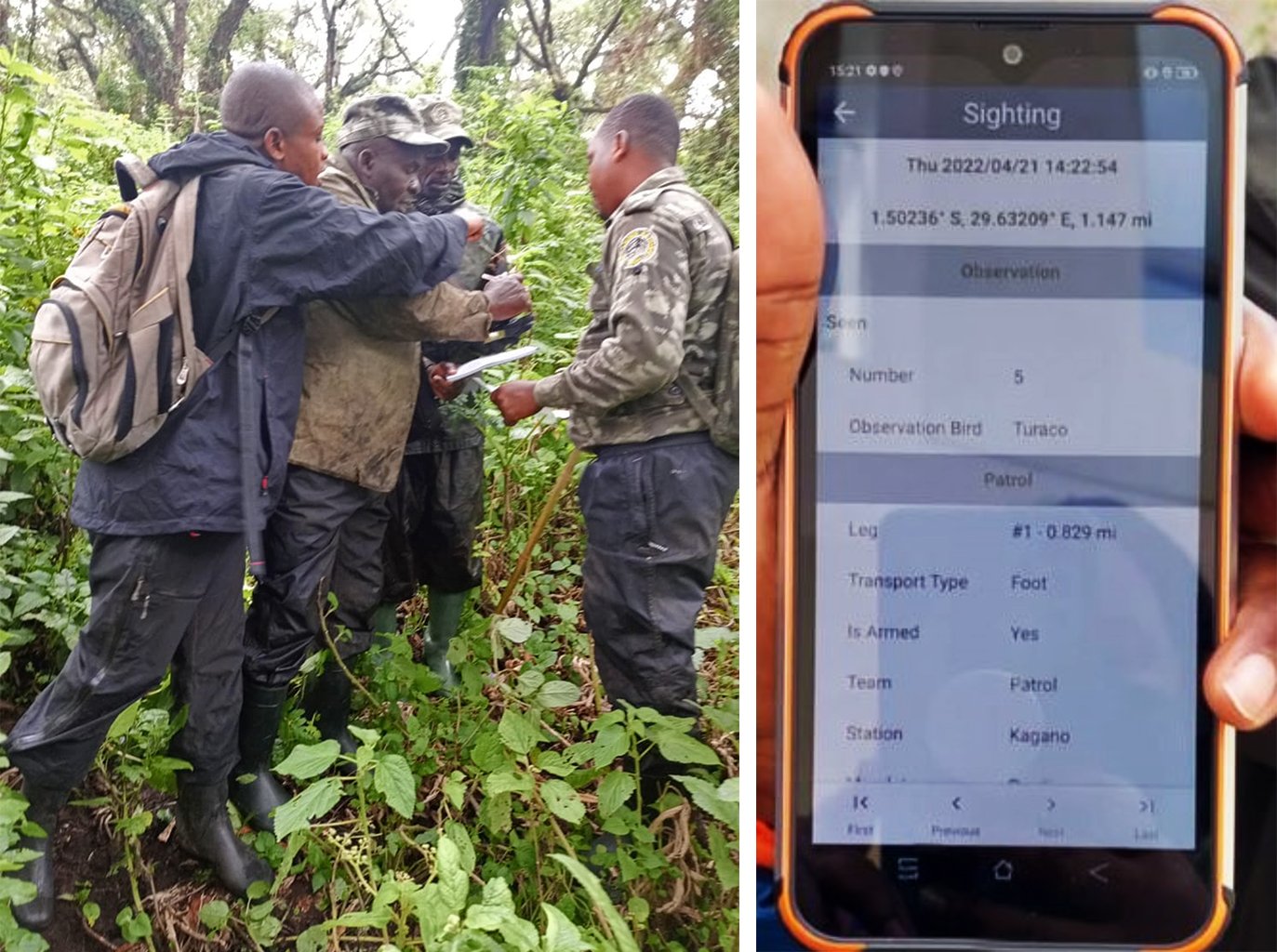
Rangers working in the region are increasing the use of cellphone-based software as part of broad efforts to protect mountain gorillas (Gorilla beringei beringei) and the lands they inhabit.
This platform, known as the Spatial Monitoring and Reporting Tool (SMART), can be programmed to the specific needs of a species or landscape, incorporating the boundaries of protected areas, wildlife corridors, patrol routes and so much more. It builds maps, has navigation capabilities, incorporates photos, and organizes and analyzes data. This information sometimes is used as evidence for prosecution of poachers.
This information also helps pinpoint where to deploy personnel, and how to best to use limited resources in Virunga’s vast hillside forests.
“With this innovative tool, every patrol conducted by park rangers informs the field teams about the threats in order to make plans and draw strategies to overcome these challenges,” said Eustrate Uzabaho, a field officer at the International Gorilla Conservation Programme (IGCP), who works in the Greater Virunga Landscape, an interconnected network of protected areas that straddle this tri-border region.
Targeted, coordinated monitoring is crucial across the gorilla’s 777-square-kilometer (300-square-mile) habitat. There are two locations: the Virunga mountain range, which includes the Mikeno sector of the DRC’s Virunga National Park, Rwanda’s Volcanoes National Park, and Uganda’s Mgahinga Gorilla National Park. The other habitat is Uganda’s Bwindi Impenetrable National Park and the Sarambwe Nature Reserve in the DRC. In all, 11 parks dot the region.
The SMART platform continues to improve with advancing technology, though it’s been a tried-and-true tool since its initial launch in 2012. Since then, it’s helped focus conservation actions at more than 1,000 sites in 70-plus countries.
Combatting poaching
SMART is equipped with powerful query and summary functions and generates reports that help protect gorillas and other wildlife within the Greater Virunga Landscape. In the field, rangers input all pertinent information, from natural history data and wildlife sightings to evidence of poaching activity, such as snares, traps, extinguished campfires, animal carcasses or footprints.
Those targeting gorillas aren’t the only threat. Bushmeat hunters set snares to catch ungulates — antelopes, bushpigs, duikers, bushbucks and others — that share the landscape with mountain gorillas. But snares aren’t selective, and sometimes gorillas are caught, leading to loss of limb or even life.
Rangers also log data on other damaging incursions. The region is home to a growing human population, with people coming in to harvest bamboo, collect herbs and honey and cut trees for firewood. Guards also monitor areas where people regularly encounter wildlife in the parks’ buffer zones and adjacent community fields and villages
The SMART platform allows the data to be transmitted directly from the field to a database, without the need to upload it at the end of a patrol. In locations that lack cell service, rangers can use satellite internet to upload data. It’s stored in the cloud and accessible on computer, tablet and cellphone.
Real-time updates offer hope of enforcement for large areas, many of them remote. SMART monitoring can also help mitigate growing wildlife-human conflict across the region.
The platform enhances monitoring in the Virunga region, said Jonah Ratsimbazafy, president of the International Primatological Society (IPS). “These tools are currently assisting in monitoring and mapping poaching at the source. But they still require specialized training and expertise for effective use,” he told Mongabay.
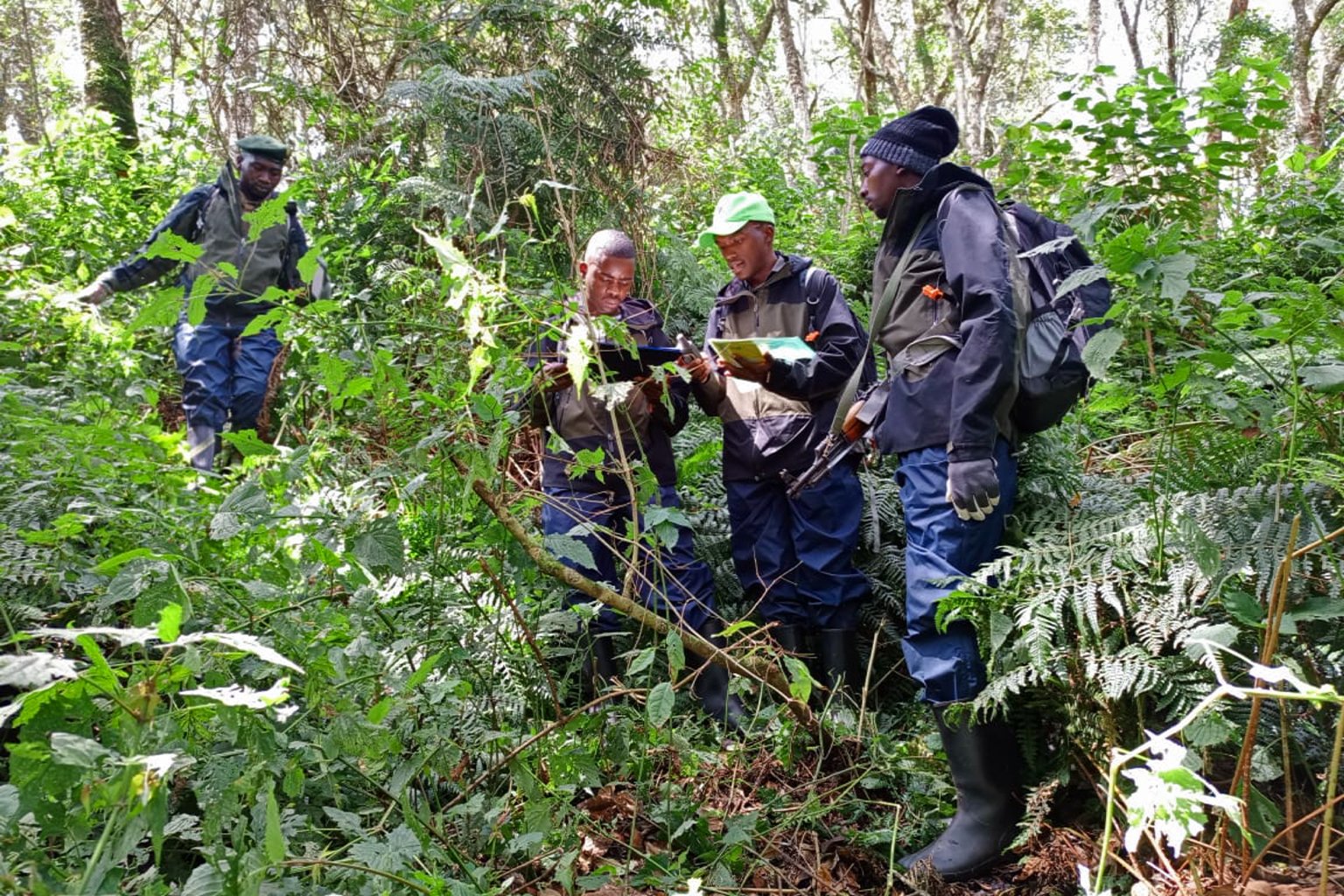
At least 1,400 park rangers across three parks —Virunga National Park, Volcanoes National Park and Mgahinga Gorilla National Park — have now been trained to use SMART. “The wide deployment of such technologies requires many park rangers be trained to effectively support conservation efforts to protect gorillas,” Ratsimbazafy said.
An unlikely rebound in a dangerous land
Mountain gorillas teetered perilously close to extinction in 2010, when just 480 remained in the wild. But a suite of efforts, technology including SMART and broad coalitions of conservationists, scientists and government agencies are bringing them back.
In 2025, conservationists estimated numbers at 1,063, a jump of more than 120% from 2010. In 2018, mountain gorillas were reclassified from critically endangered to endangered on the IUCN Red List.
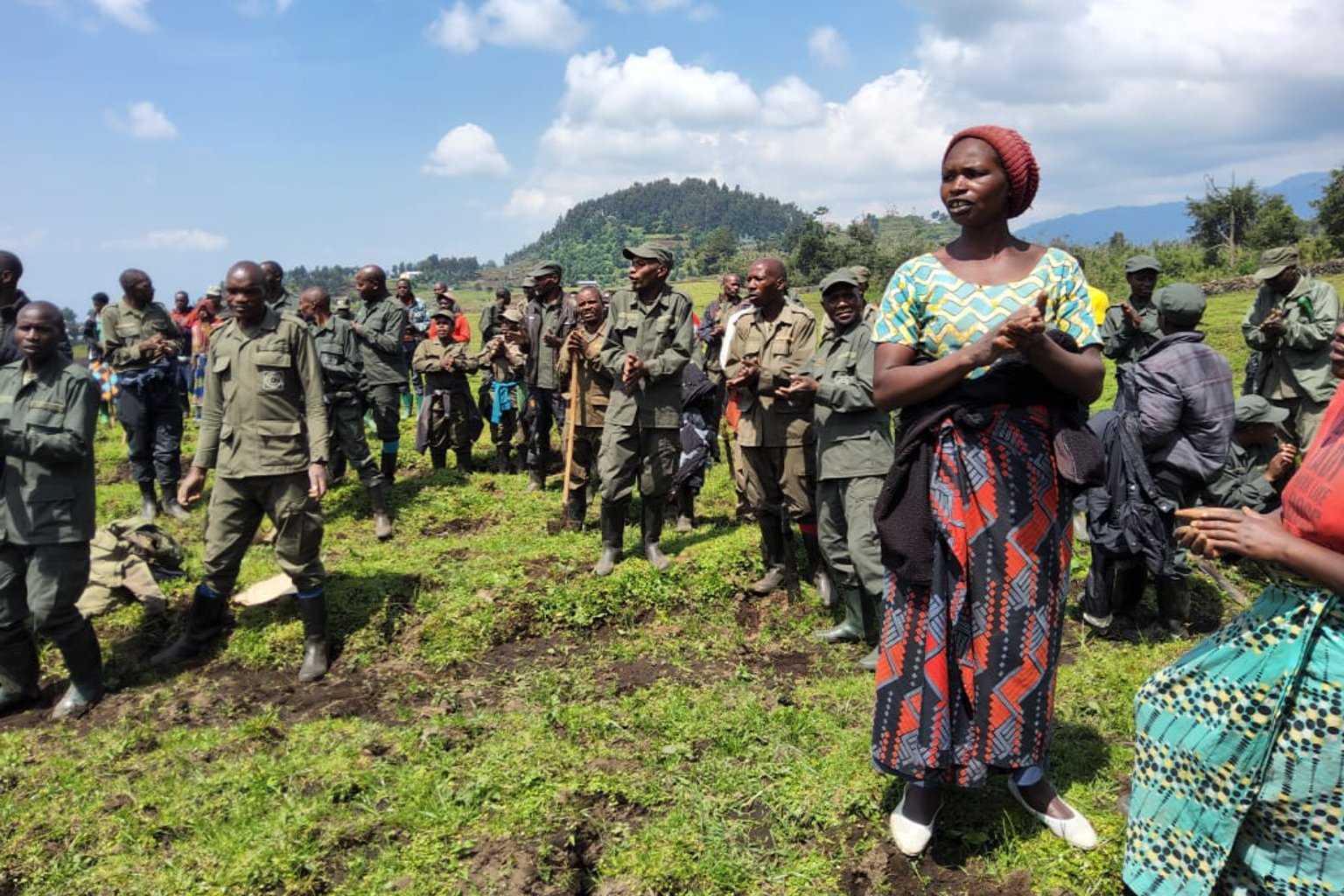
Building the protection force has been among the most important initiatives, alongside veterinary care for the gorillas, working with communities and creating a thriving ecotourism industry that feeds money into local economies.
But it’s taken more than 40 years to accomplish this, and mountain gorillas are not yet safe.
Primatologist Dian Fossey brought their plight to world attention with her book, Gorillas in the Mist, after 20 years studying them in Rwanda. She reported relentless poaching and warned that the mountain gorilla faced grave danger of extinction. She was murdered in her cabin in Rwanda in 1985; her book was made into a movie in 1988.
Conflicts have long raged in this region. The 1994 Rwandan genocide was followed by two wars that involved multiple African nations fighting in the DRC, then called Zaïre.
Virunga sits within a high-conflict zone used by militarized rebel groups including the Democratic Forces for the Liberation of Rwanda (FDLR) and M23, both of which are listed on the U.N. Security Council’s sanctions list for mass murder and violation of international law. Much of Virunga National Park has fallen within M23’s operational zone in the eastern DRC since late 2021.
This is among the most dangerous places to conserve wildlife. Rangers here are heavily armed, yet more than 200 have been killed in the line of duty in the DRC’s Virunga National Park alone, according to Andrew Seguya, executive secretary of the Greater Virunga Transboundary Collaboration (GVTC).
Despite all this, mountain gorillas are rebounding.
Government support has played an important role, and the GVTC, which is a treaty that was ratified in 2015, formalized wildlife conservation between the three Virunga countries.
The increase in numbers is particularly dramatic considering the mountain gorilla’s biology. Females don’t reproduce until the age of 8 to 10, and they normally give birth to a single infant only once every four to six years.
Looking to the future
Managing protected areas across the Greater Virunga Landscape is complicated by the fact that the region falls under the jurisdictions of three nations. This has sometimes led to shortfalls in field-level efficiency, said Uzabaho from the International Gorilla Conservation Programme, adding that sometimes “operational and logistical challenges [hinder] the target of achieving zero poaching.”
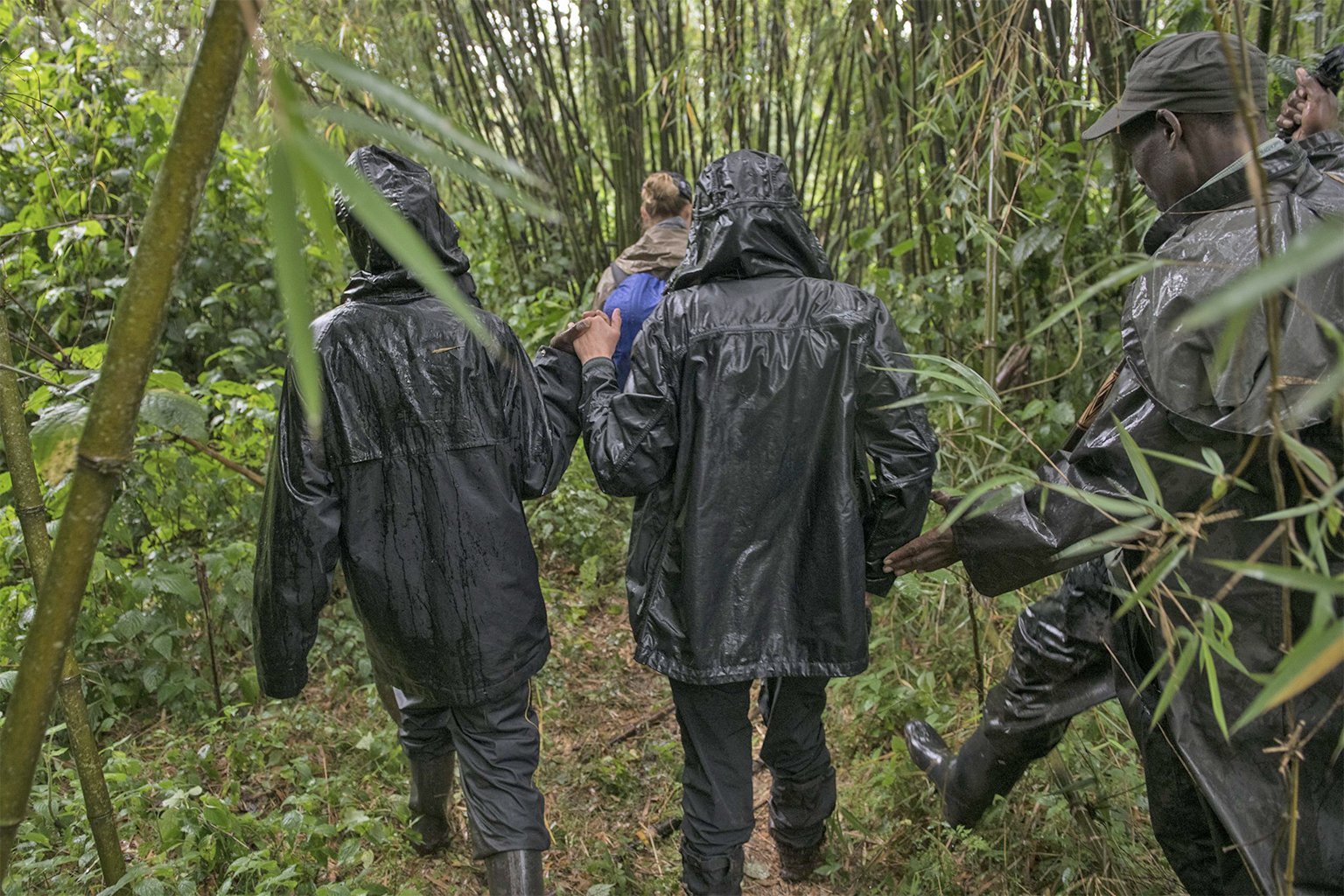
Trained rangers, scientists and wildlife veterinary teams monitor the gorilla families daily, working together to deter illegal activities and keep the great apes healthy by treating injuries and preventing disease.
However, Uzabaho noted that many rangers don’t have data collection devices or need better training in SMART technology, including at the management level.
SMART data collected by park rangers also need cleanup and assessment. “There is a capacity gap to be filled in data analyses,” but there’s also a dearth, he said, of “highly skilled manpower who understand the value and importance of unbiased and scientific data and how these data can translate into policy change,” Uzabaho said.
A group of conservation and wildlife trafficking nonprofits launched the “Towards Zero Poaching in the Greater Virunga Landscape” project in 2024 to improve monitoring, enforcement and cross-border collaboration. The coalition includes the IGCP, World Wildlife Fund (WWF), the Wildlife Conservation Society (WCS) and the wildlife trade watchdog TRAFFIC.
The current security situation across the transborder region remains a significant concern, said the GTCV’s Seguya. “Under the prevailing situation, poaching remains a significant threat to wildlife.”
Amid ongoing threats, all conservation efforts are crucial, and monitoring is at the forefront. “With the adoption of new tools, rangers are the first to witness change, determine impact and adapt to evolving challenges,” Uzabaho said — and, hopefully, protect the world’s last mountain gorillas.
Banner image: Mountain gorillas continue to face serious threats as they lose habitat and are stalked by poachers who target them for their meat and body parts, or traffic their infants for zoos and entertainment. Image by Aimable Twahirwa.
Twin infant mountain gorillas born in DRC
Without room to expand, mountain gorillas’ population growth could backfire
FEEDBACK: Use this form to send a message to the author

Source:
news.mongabay.com