



Powered by RTX
Looking to the future of EU aviation through collaboration
Ambition alone is not enough. European Union’s aerospace policy must champion clean technologies, research leadership, and international cooperation to remain at the cutting edge. Find out more.
Europe’s position is becoming increasingly uncomfortable as the confrontation over Iran escalates, posing a tough choice for the bloc’s leaders: support the US in any operation around the Strait of Hormuz, or risk losing American support for a deal to end the war in Ukraine.
US President Donald Trump has hinted that European reluctance to help keep the Strait of Hormuz open could yet carry consequences for Ukraine, presenting a serious conundrum for capitals ahead of this week’s summit.
Former US Secretary of State Colin Powell once said that differences with Europe are inevitable, but these should not be equated with American unilateralism or arrogance. “When we feel strongly about something, we will lead. We will act even if others are not prepared to join us,” he said.
More than two decades later, that logic still defines transatlantic relations.
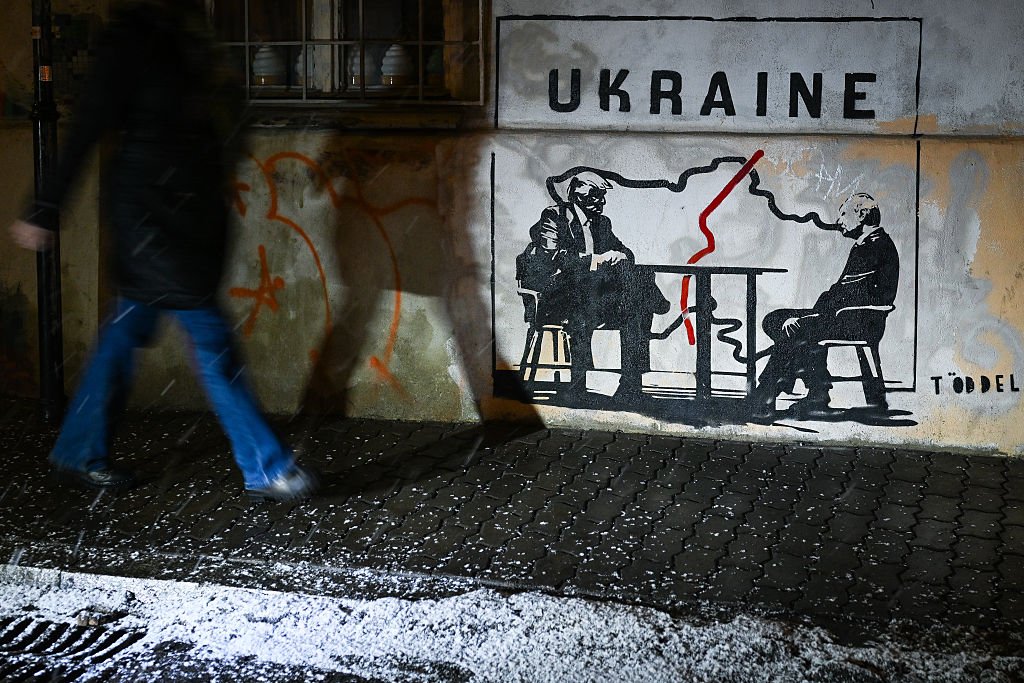
Today, Washington is leading on Iran, while Europeans continue, at least rhetorically, to claim leadership on Ukraine. The asymmetry is obvious. The United States can act in Iran without Europe; Europe cannot act in Ukraine without the United States.
Everything is quickly becoming more and more interconnected. Ukraine still relies heavily on American satellite intelligence, for example. Russia, meanwhile, provides similar support to Iran. Should Washington and Moscow reach a deal to curb these activities, Europe will once again find itself excluded.
Backing the US in keeping the Strait of Hormuz open would allow Europeans to reinsert themselves into the geopolitical equation – and perhaps begin to repair the strained transatlantic relationship.
Europe has a rare opportunity to weaken Iran’s regime – something EU leaders themselves have called for – while restoring Europe’s relevance in discussions on Ukraine, and, at least partially, safeguard Ukraine’s future.
If Europe fails to seize this moment, it should brace for further American strategic disengagement from Ukraine – if they haven’t done already – applying a form of constructive silence over any future US-Russia satellite exchange agreements.
Some in Brussels argue that Europe can simply wait out the current moment – relying on other actors in Washington, particularly Congress, to slow policy shifts until the US midterm elections. That calculation may prove dangerously optimistic.
After all, the shift in tone across the Atlantic did not begin with Trump. It was already visible under Democrat Joe Biden – from the AUKUS security pact to the chaotic US withdrawal from Afghanistan, all of which occurred without prior notification to European allies.
A short-sighted Europe should be careful not to lead Ukraine into an irreversible geopolitical situation.
Roundup
EU won’t import ‘one molecule’ of Russian gas, Jørgensen says – The EU will not resume Russian gas imports, Energy Commissioner Dan Jørgensen said on Monday, rejecting a suggestion by Belgian Prime Minister Bart De Wever that relations with Moscow could normalise to restore cheap energy. “We cannot help indirectly financing Russia’s brutal illegal war,” Jørgensen said. Germany and Sweden backed the stance, warning renewed imports would mean returning to dependence on Moscow.
Hungary doubles down in Druzhba pipeline feud – A planned meeting between Hungary, Slovakia and Ukraine in Brussels collapsed on Monday, with Budapest blaming Kyiv, though officials said Ukraine had never confirmed attendance. Hungary is demanding that Ukraine restore Russian crude flows via the Soviet-era Druzhba pipeline, which has been offline since late January. Hungary and Slovakia are blocking tougher Russia sanctions and a €90 billion EU loan to Ukraine while rejecting a Commission proposal to import oil via Croatia’s Adria pipeline.
Spain nominates agriculture minister for FAO chief – Spain will nominate Agriculture Minister Luis Planas to lead the UN’s Food and Agriculture Organisation (FAO). Planas, Spain’s farm chief since 2018 and a former ambassador to Morocco and the EU, joins a growing list of European candidates to replace China’s Qu Dongyu. Ireland has put forward former EU commissioner Phil Hogan, while Italy nominated Maurizio Martina, Qu’s current deputy. Spain says the bid reflects its commitment to multilateralism, but EU officials warn multiple candidacies risk weakening the bloc’s chances.
Across Europe
Czechia offers to lead EU expert mission to Ukraine – Czech Industry and Trade Minister Karel Havlíček said on Monday that Prague is ready to lead an EU expert mission to Ukraine to assess the Druzhba pipeline. After Kyiv reportedly declined to recognise a Hungarian delegation, Havlíček proposed that Czechia head an EU technical team to inspect the pipeline and determine possible repair timelines. He stressed the EU must protect member states’ interests and move the dispute away from “emotional politics” toward practical, technical solutions.
Iran war ‘nothing to do with NATO’, Berlin says – Germany has ruled out military involvement in the Middle East conflict triggered by US-Israeli strikes on Iran, insisting the war has “nothing to do with NATO” after US President Donald Trump has urged allies to help reopen the key shipping lane. Chancellor Friedrich Merz’s spokesman Stefan Kornelius said the alliance’s mandate is limited to territorial defence. While Berlin will not deploy forces, Defence Minister Boris Pistorius said Germany is ready to support diplomatic efforts to ensure safe passage through the Strait of Hormuz.
Nordics, Iberia defend EU carbon pricing – Sweden, Denmark, Finland, Spain and Portugal have urged EU leaders not to weaken the bloc’s carbon pricing system ahead of Thursday’s summit on competitiveness and energy prices. In a letter to European Council President António Costa, the five countries said the EU Emissions Trading System remains the most effective tool to cut emissions and steer investment. The intervention comes as the ETS faces political pressure, with Italy calling for its suspension amid rising energy prices linked to geopolitical tensions.
(cs)
Source:
www.euractiv.com