



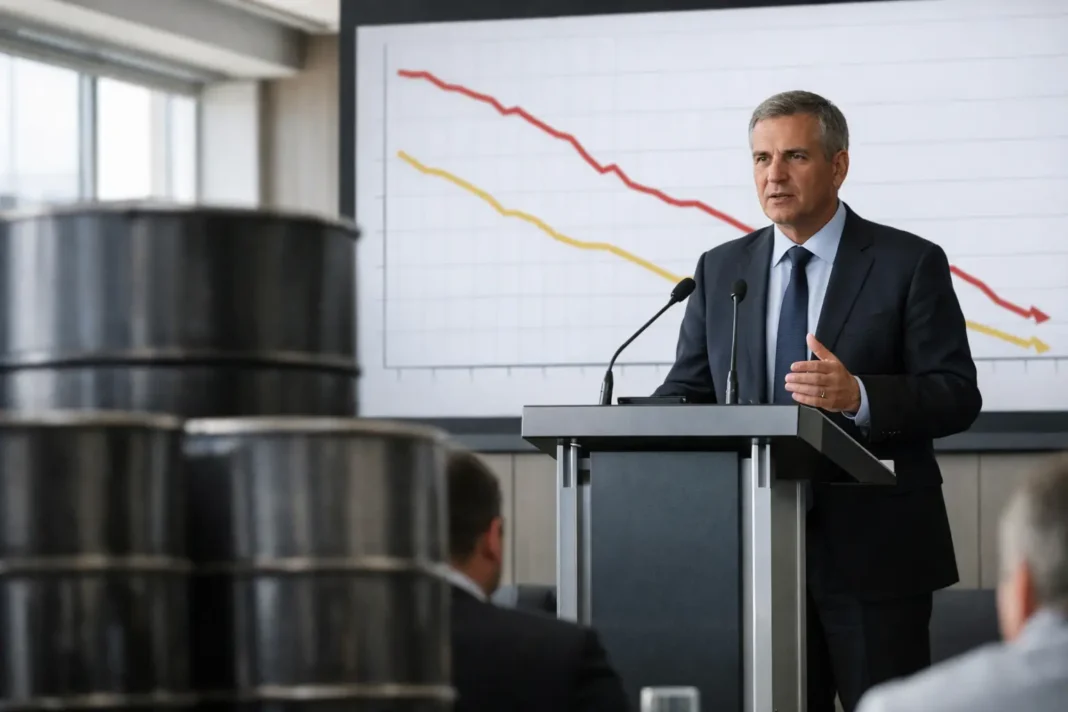
IMF warns global economy could soon face heightened strain as emergency oil reserves shrink and national budgets come under pressure, the fund said in its latest outlook. The assessment, published in the International Monetary Fund’s twice-yearly World Economic Outlook, highlights a narrowing margin for policy responses to new shocks. International Monetary Fund analysts underline that while near-term growth has held up in the face of recent disruptions, underlying vulnerabilities are increasing.
The report notes that global growth has proved more resilient than anticipated amid tensions in the Middle East, prompting a modest upward revision for some advanced economies. Among those, the outlook for the United Kingdom was revised higher for 2026, reflecting stronger activity than previously projected. Nonetheless, the fund cautioned that this resilience is fragile and dependent on stable energy markets and manageable financial conditions.
Key concerns identified include low levels of emergency oil stocks and increasingly constrained public finances, which together reduce the capacity of governments to respond to new crises. The combination of limited reserves and tight budgets is particularly acute for lower-income and emerging markets, where fiscal space and safety nets are thinner. The report emphasises that reduced buffers make it harder to absorb price spikes, supply disruptions or other external shocks without broader economic fallout.
Officials and market participants will be watching how these pressures evolve, as narrower policy room raises the risk that future disturbances could have larger and more persistent effects. The IMF’s analysis underscores the importance of rebuilding fiscal and strategic reserves over time and of international cooperation to manage energy and liquidity strains. For now, the fund portrays a global economy that has so far endured recent shocks but may be approaching limits to its resilience if adverse developments multiply.