



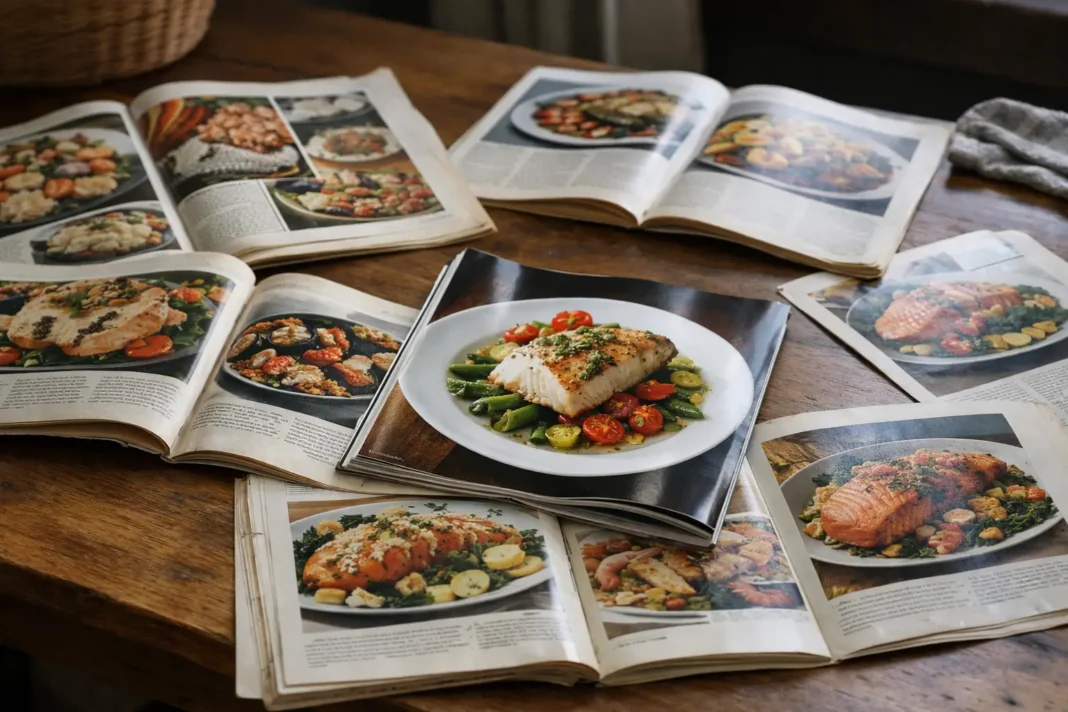
One hundred years of recipes in the magazine Good Housekeeping reveal a sustained narrowing in the range of seafood dishes offered to U.K. readers, a new study shows. The analysis examined recipes published across a century and found that, while earlier decades showcased a broader assortment of species and preparations, more recent issues concentrate on a smaller set of familiar fish and shellfish.
The researchers measured variety by cataloguing the species names, preparation methods and the frequency of recipes over time. Patterns in the data indicate a consolidation around staples that reappear more often, while rarer or locally known seafood items decline in presence. The paper frames these changes as shifts in the magazine’s culinary offerings rather than as direct measures of national consumption, using the magazine archive as a cultural record of what publishers chose to present to home cooks.
Context offered by the study points to the value of long-running publications for tracking how tastes and culinary education evolve, though it does not assign single causes. Editorial decisions, supply chains, retail availability and reader demand are all factors that can influence which ingredients appear in magazine recipes. The narrowing documented in the archive raises questions about how print media may shape familiarity with different species and preparation styles over generations.
Beyond cultural implications, the findings intersect with discussions on food literacy, consumer choice and how culinary exposure can affect marketplaces and conservation awareness. By highlighting a century-long trend in a widely read title, the research invites further investigation into whether similar patterns appear across other outlets and what they mean for cuisine diversity and sourcing practices. The study underlines the usefulness of historical recipe collections for researchers seeking to trace the lived history of food in the United Kingdom and beyond.