



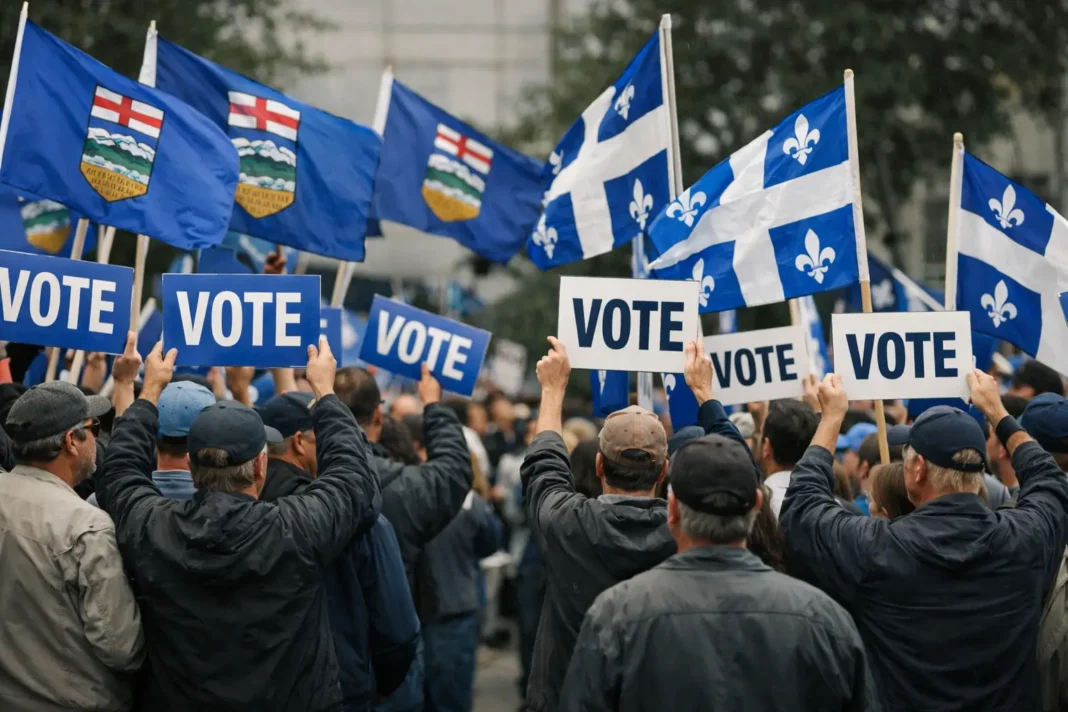
Alberta and Québec are moving to put questions of membership and sovereignty before voters, in a test that stretches beyond provincial borders. An Alberta referendum is under way offering residents a choice about pursuing a binding path to independence, while Québec’s governing party has signalled plans for a future vote. Opinion surveys show roughly seven in ten respondents in both provinces favour remaining within Canada, even as debates about identity, resources and representation intensify. At the same time, tensions with the United States, driven by rhetoric from the White House and new tariffs on Canadian exports, form a fraught international backdrop.
The disputes in the two provinces rest on different foundations. In Alberta, political conflict centres on federal economic and energy policies, climate rules, immigration and a sense of under-representation. Premier Danielle Smith framed the referendum as a way to consolidate her party and offered a binary question aimed at resolving internal divisions; she has indicated she will vote to remain in the federation. In Québec, the driving concern is protection of the French language and distinct culture. Paul St‑Pierre Plamondon and the Parti Québécois have long advocated sovereignty and, after a recent minority win, have committed to pursuing another referendum.
Economic pressures from U.S. trade policy have affected the provinces unevenly. Alberta’s exports of oil, gas and beef have been less exposed to recent tariffs, while Québec’s manufacturing, aluminum, steel and forestry sectors have reported heavier damage. Negotiations with U.S. officials have also touched on Québec’s language requirements for products and services, a sensitive domestic issue. Public attitudes toward the U.S. administration remain largely negative in both provinces, with a notably low proportion of residents expressing a positive view of Donald Trump.
The unfolding votes carry tangible political risks. A strong separatist showing in Alberta could unsettle the provincial government, reshaping party alignments and opening space for rivals. In Québec, a minority government must secure cooperation from other parties before a binding referendum can proceed, making the timeline uncertain. Disputes over equalization payments, pipeline routes and interprovincial trade further complicate the picture. Through these challenges, the Government of Canada faces the task of preserving cohesion at home while managing a strained relationship with its southern neighbour, leaving the future of Canadian unity in a precarious balance.