



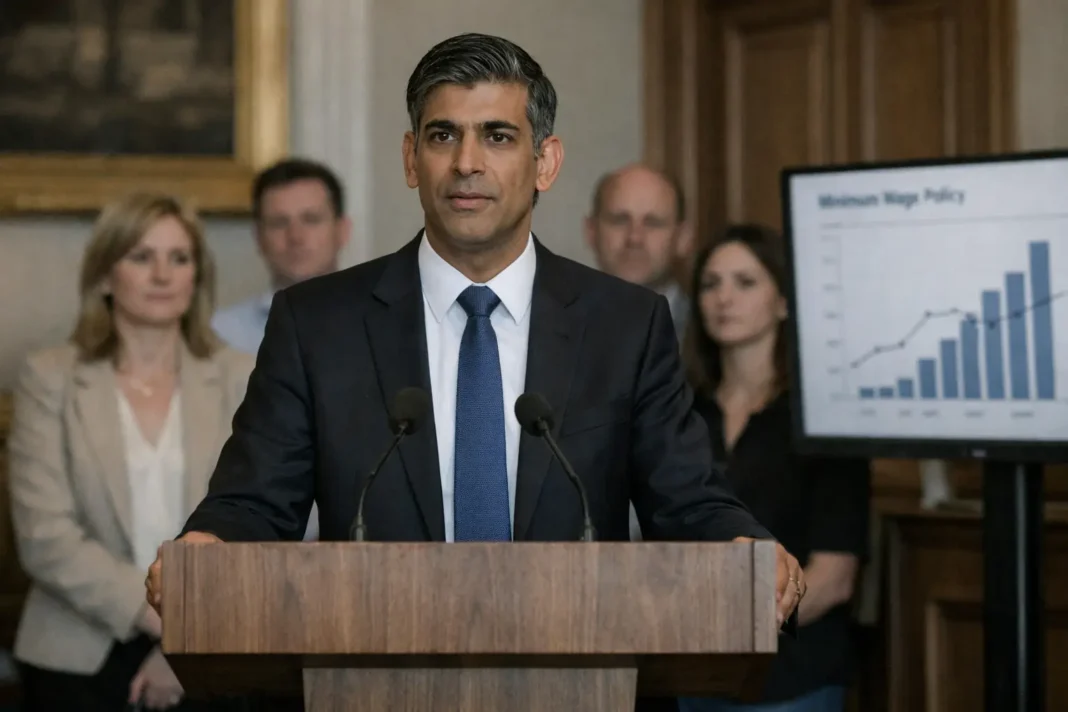
The Chancellor’s latest remarks have placed the government’s position on youth pay under renewed scrutiny, after an indication that younger workers may not receive the same statutory minimum wage as older employees before the next general election. The issue, highlighted in the political debate by Laura Kuenssberg, matters because it touches both a clear workplace commitment and the broader question of how quickly pay protections should be extended across age groups.
Britain’s minimum wage system still distinguishes between workers by age. The adult rate applies from a set threshold, while lower bands remain in place for younger employees and apprentices. The current structure is published by the UK Government, and annual recommendations are shaped by the Low Pay Commission. Any move to equalise rates would therefore require not only a political decision, but also a timetable that employers, payroll teams and workers could rely on.
The Chancellor’s suggestion falls short of confirming that equal treatment for younger workers will be achieved within the current parliamentary cycle. That creates a political difficulty: a promise on pay standards is especially visible because its effects are immediate and measurable in wages. For young workers, the difference between age-based rates and a single adult rate can shape disposable income at a time when housing, transport and basic living costs remain central pressures. For employers, particularly in labour-intensive sectors, the timing of any change would influence wage bills and hiring decisions.
The debate also intersects with wider questions in UK politics about living standards, work incentives and the credibility of economic pledges. Maintaining lower statutory rates for younger workers has historically been defended as a way to protect entry-level opportunities, while critics argue that people doing comparable work should not be paid less because of age. The Chancellor’s comments leave that tension unresolved and make implementation, rather than principle alone, the central issue.
Until the government sets out a firm path, the promise remains exposed to challenge. The next test will be whether ministers provide a clear schedule for reform or continue to leave open the possibility that younger workers will still be on separate minimum wage rates when voters next go to the polls.
